LEGO Blog
All the latest Brixbox news, straight from the team.
A Guide to Premium LEGO Displays That Stand Out
That finished UCS starship, Technic supercar or Hogwarts centrepiece deserves more than a spare patch of shelving. A guide to premium LEGO displays starts with one simple idea: the display should feel like the final stage of the build, not an afterthought. The right case, stand and backdrop can turn thousands of carefully placed elements into a proper focal point while keeping dust, accidental knocks and everyday handling at a distance.
For collectors, presentation is part of the enjoyment. You chose the set for its engineering, story, nostalgia or sheer shelf presence. Giving it a display designed around its shape and theme lets every angle earn its place.
Start with the set, not the shelf
A premium display begins with the build itself. Before measuring a cabinet or clearing a bookcase, look closely at the set’s footprint, height, fragile details and best viewing angle. A wide, low Millennium Falcon needs a very different approach from a vertically dramatic Eiffel Tower, a line of helmets or a small but characterful BrickHeadz collection.
Think about how you naturally look at the model. Vehicles often look strongest at a slight angle, where their profile, wheel detail and cockpit can be appreciated at once. Larger scenes benefit from a straight-on view with enough room around the edges to read the whole composition. Builds with a detailed rear, such as many modular buildings and Technic models, may deserve an accessible position rather than being pressed against a wall.
This is where set-specific display solutions make a genuine difference. A generic acrylic box may protect a model, but it can leave excessive empty space, obscure the intended presentation or force awkward positioning. A case designed for a particular set number gives the build a more considered fit and creates a cleaner, gallery-style finish.
Choose protection that still lets the build shine
Dust is the enemy that arrives quietly. It settles into studs, catches around antennae and turns transparent elements dull over time. Cleaning a complex LEGO model is rarely a quick job, particularly when it includes delicate greebling, exposed decals, fabric pieces or a forest of minifigure accessories.
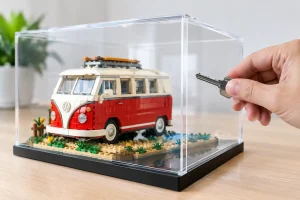
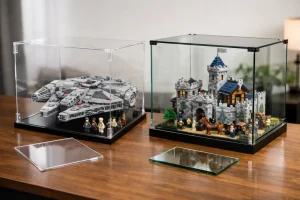
An acrylic display case provides a practical barrier without hiding what you paid to build. Clear panels preserve sightlines from the front and sides, allowing light to bring out the texture of bricks, printed pieces and intricate mechanisms. For premium sets, that visibility matters. The aim is protection that feels invisible from a normal viewing distance.
Not every model needs the same level of enclosure. A small run of minifigures may suit a compact wall-mounted or desktop display, while a large collector set benefits from a fully enclosed case with a stable base. Open stands work brilliantly for sets built to be seen in motion or at an elevated angle, but they are best in lower-dust areas and away from busy walkways.
Placement still counts, even inside a case. Avoid prolonged direct sunlight where possible. It can affect the colours of bricks, printed elements and paper instructions displayed nearby. Keep models away from radiators, humid kitchens and surfaces where doors or drawers create regular vibration. A premium case protects against dust and handling, but sensible positioning protects the collection for the long haul.
Build a scene, not just a storage solution
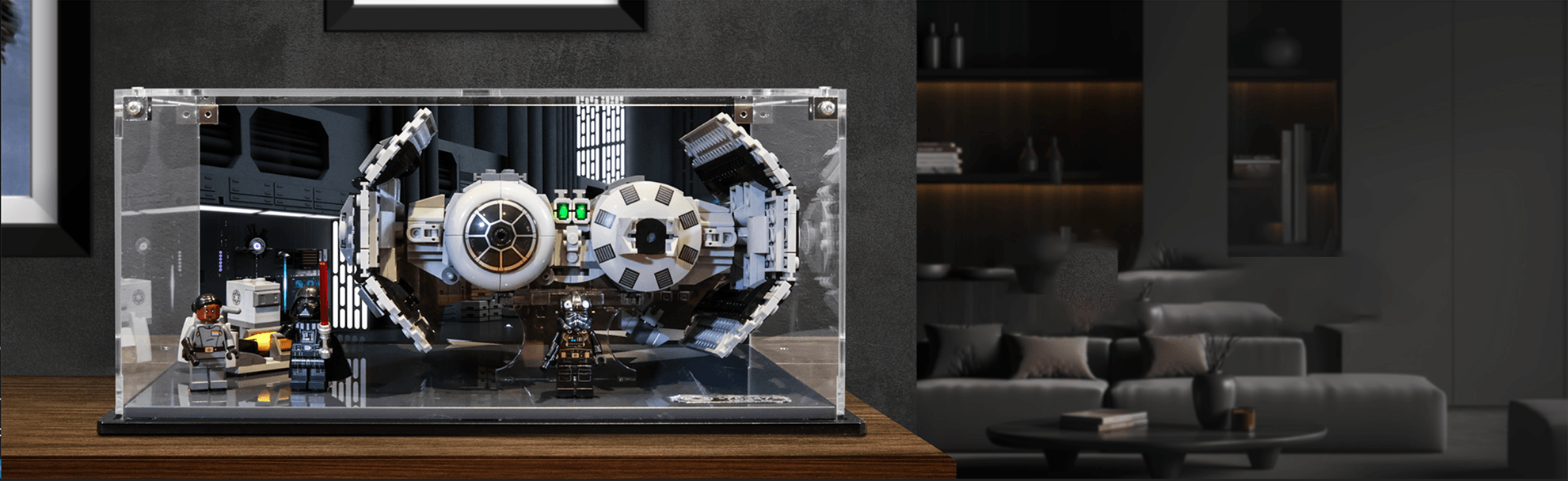
The difference between storing a set and showcasing it is atmosphere. A printed base can ground a model in its world: a hangar-inspired surface for a Star Wars craft, a road-style setting for a Technic car or a magical backdrop for a Harry Potter build. It gives the display purpose, framing the set without competing with it.
UV-printed backgrounds are especially effective for sets with a strong sense of place. They add depth behind the model, hide an uninspiring wall and make the collection feel more intentional in photographs as well as in person. A well-chosen design should support the story already present in the build. The model remains the hero; the artwork gives it a stage.
This is also the moment to decide how much visual drama suits your room. A bold themed background can make a single flagship set feel spectacular in a gaming room, office or dedicated collection space. In a living room, you may prefer a cleaner printed base and restrained backdrop that fits the wider décor. Premium does not always mean louder. It means every choice looks deliberate.
Let scale guide the arrangement
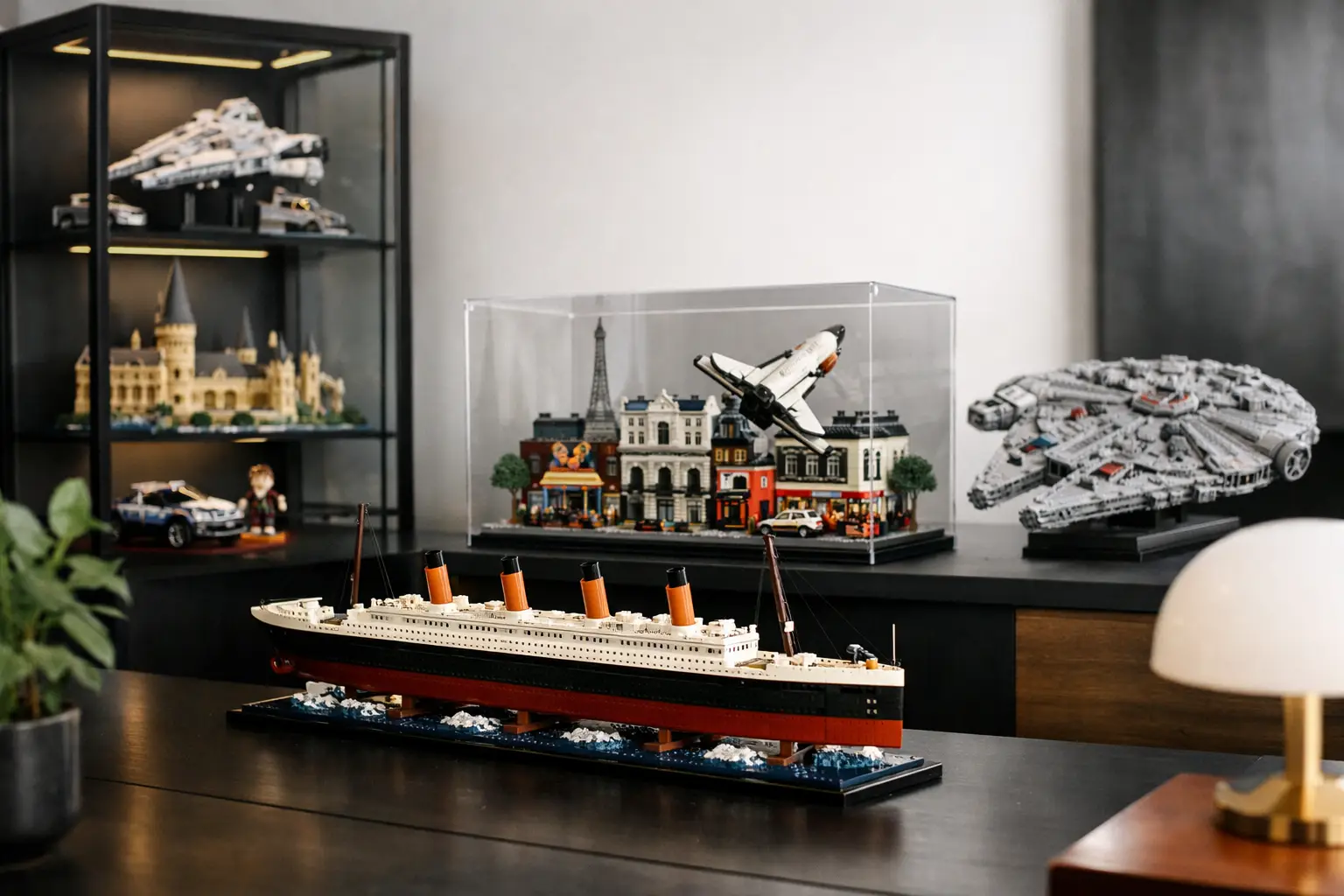
Collections look more polished when scale is considered. A row of similarly sized helmet cases can create a sharp, museum-like rhythm. Mixing a towering ship, several tiny vehicles and a handful of minifigures on one shelf can work too, but it needs breathing room and a clear hierarchy.
Choose one hero build for each section of shelving, then use smaller sets to support it. Keep enough space between cases for their outlines to remain distinct. When every display touches the next, even an expensive collection can look crowded. A little negative space makes the details inside each case easier to notice.
Lighting is the finishing touch, not the starting point. Soft, indirect light gives acrylic a crisp appearance and makes colours read well without creating harsh reflections. If you add LEDs, test the effect before committing. Too much light can flatten the scene, reveal every fingerprint on the panels or distract from the build itself.
A guide to premium LEGO displays for different collections
There is no single best display format because LEGO collections are wonderfully varied. The strongest choice depends on the theme, the model’s shape and how you want to enjoy it day to day.
For Star Wars collectors, a set-specific case with a cinematic background can turn a ship, helmet or diorama into a real display moment. Large vessels often benefit from a raised stand, which exposes the underside and gives the model the movement it has on screen. Smaller scenes and minifigure-focused sets usually gain more from a printed base that defines the setting.
Technic collectors should prioritise angles and access. The engineering is a major part of the appeal, so choose a display that shows off suspension, drivetrain details, wheel stance and bodywork. A low, sleek case suits supercars, while taller space is needed for machinery with lifting arms, booms or rotating components.
For Harry Potter, Disney and Lord of the Rings builds, themed artwork can carry more of the visual experience. These sets are often rich in architectural detail and storytelling, so a backdrop helps make the finished model feel like a window into the world rather than an object on a shelf. Just ensure it does not overwhelm smaller builds with too much visual detail.
Marvel models, helmets and BrickHeadz suit a more modular approach. Repeating case sizes or coordinated stands make it easy to expand the display as new favourites join the line-up. Consistency is particularly satisfying when you collect across several characters or releases, but leave room for the occasional centrepiece to break the pattern.
Plan for access, cleaning and future builds
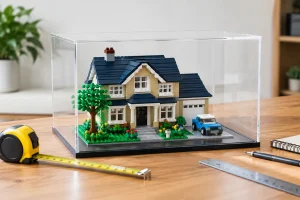
A display that looks excellent on day one should remain enjoyable six months later. Leave enough clearance above and around a case to lift its cover safely when you need to adjust a minifigure, replace a loose element or give the base a gentle clean. A cramped alcove may look tidy, but it can make routine access frustrating.
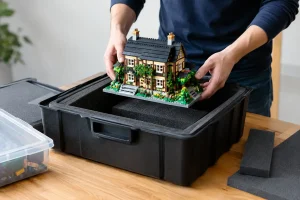
Before assembling an acrylic case, remove any protective film carefully and take a moment to clean the surrounding surface. Once the model is enclosed, occasional wiping with a soft microfibre cloth is usually enough to keep the exterior looking clear. Avoid abrasive cloths or household cleaners that could mark acrylic. Handle panels by their edges where practical to reduce fingerprints.
It is also wise to display with tomorrow’s collection in mind. Leave one shelf section open, or choose a layout that can grow without forcing a complete reshuffle every time a new release arrives. Collecting is rarely static. The display should be flexible enough to welcome the next build without making the current ones feel temporary.
Brixbox display cases, stands and printed presentation options are made for collectors who want that fit and finish to feel purposeful, whether the build is a single prized set or one chapter of a much larger saga.
A great display gives you a reason to look at a finished build again. Put your most meaningful set where you will see it often, give it the protection it deserves, and let the next person who walks into the room understand immediately why it earned that space.
RECENT POST