LEGO Blog
All the latest Brixbox news, straight from the team.
Minifigure Storage That Deserves Centre Stage
A favourite minifigure has a way of disappearing when it is needed most. It may be buried in a mixed tub after the last rebuild, knocked from a shelf during dusting, or separated from its cape, helmet or signature accessory. The right minifigure storage does more than clear clutter. It keeps characters complete, protects their condition and turns a loose collection into something worth looking at.
For collectors, that difference matters. A carefully chosen Jedi, a line-up of Hogwarts students or a full squad of Marvel heroes can carry as much character as the set they came with. They deserve more than a drawer full of loose parts.
Start by deciding what your collection needs to do
There is no single best storage solution because collections are built for different reasons. Some collectors want fast access to figures for play, photography or custom builds. Others are preserving retired figures, valuable variants and complete themed line-ups. Many need both: practical storage for everyday figures and a proper display for the characters they are proudest of.
Before choosing anything, separate your minifigures into working groups. Your display pieces are the figures that look strongest together, have sentimental value or are difficult to replace. Your active collection includes figures you regularly use in builds. Spare torsos, heads, hairpieces and accessories need their own system entirely, otherwise a simple search for one blaster can become a full-scale excavation.
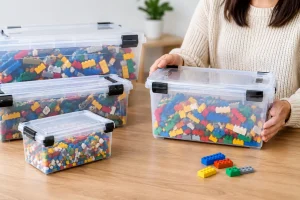
This first step prevents a common mistake: buying one large container and hoping it will solve everything. A bulk box is efficient for loose elements, but it is a poor home for figures with printed arms, fabric capes, fragile accessories or carefully assembled outfits.
Display cases make minifigures part of the collection
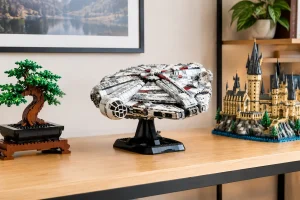
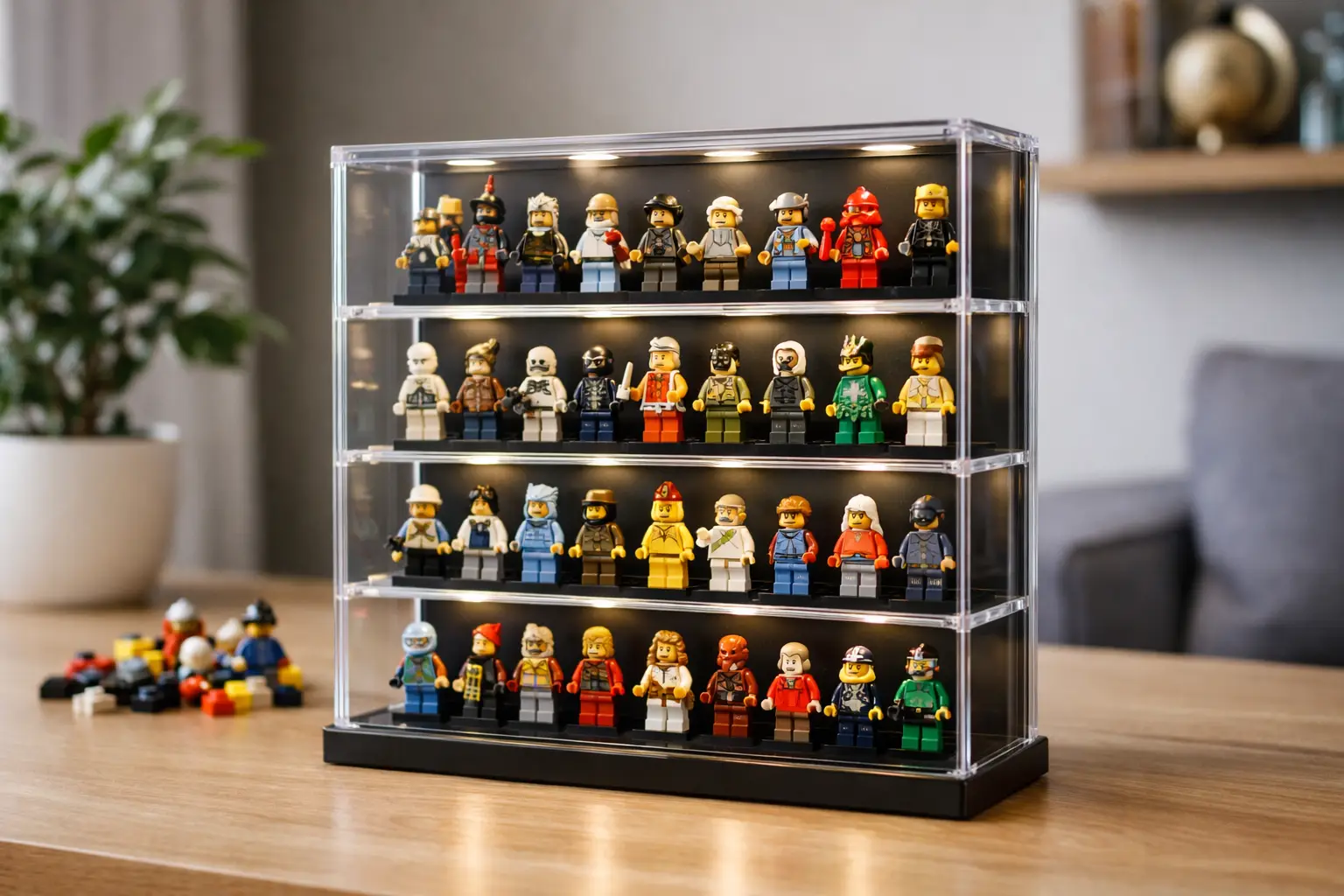
A minifigure display case is the obvious choice when presentation matters as much as protection. Rather than treating figures as leftovers from a larger build, it gives them a defined place in the room. Rows of heroes, villains, droids, racers or fantasy characters become a focal point, especially when arranged by theme, era or colour.
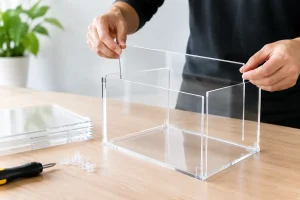
Clear acrylic is particularly effective because it allows the collection to remain visible while reducing exposure to dust, accidental handling and the general chaos of an open shelf. For a collector who has spent time tracking down a particular figure, that is not a minor upgrade. It is a way to enjoy it every day without repeatedly picking it up.
The best display approach depends on scale. A small, curated group can make a greater impact than dozens of figures crammed shoulder to shoulder. Give capes, wings, oversized weapons and dramatic helmets enough room to be seen properly. If you are building a themed arrangement, consider placing a central character slightly forward or using risers to create depth. A line-up should feel intentional, not like a roll call.
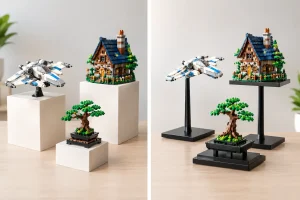
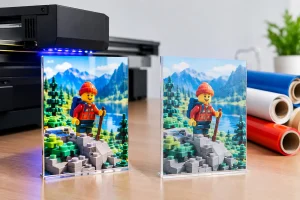
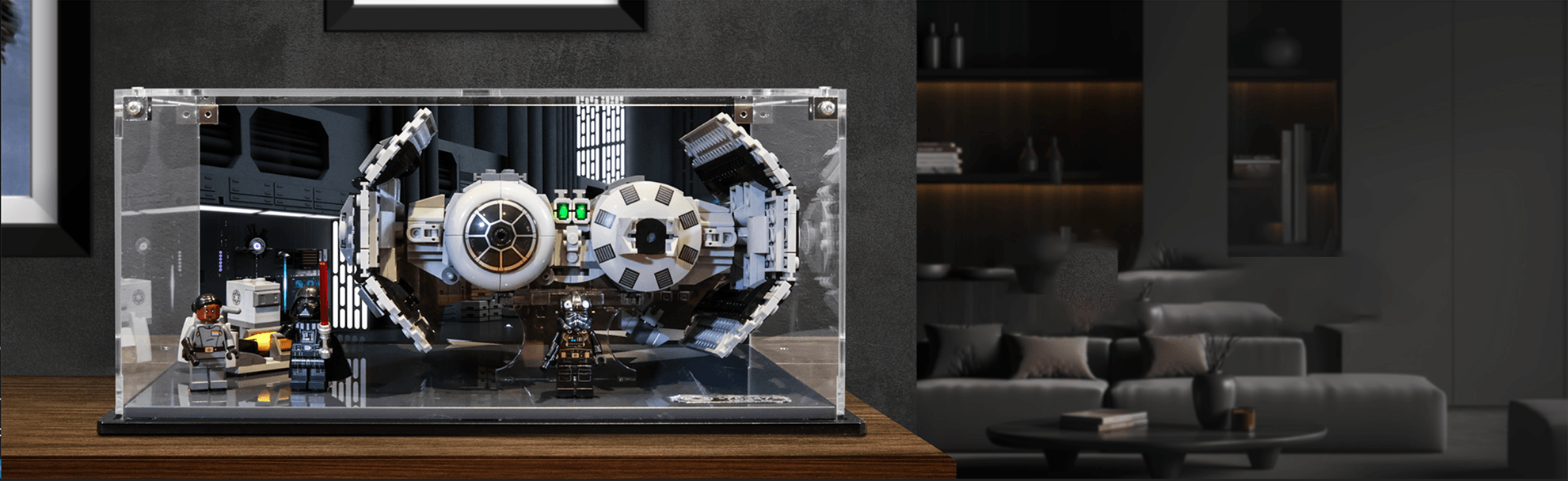
Printed backgrounds and bases can take this further. A Star Wars squad looks sharper against a scene that suits the galaxy it belongs to; a wizarding collection gains atmosphere when it is framed by the world that made it memorable. This is where a display becomes an extension of the build itself, rather than simply a clear box on a shelf.
At Brixbox, collector-focused cases and stands are designed around that principle: protect the pieces, but make the presentation worthy of them too.
Keep sunlight and heat in mind
Even a premium display deserves sensible positioning. Avoid placing figures in direct sunlight for long periods, particularly if they have white elements, fabric pieces or bright printed details. Strong light and heat can affect materials over time, while a sunny windowsill also makes dust more visible.
Choose a stable shelf, cabinet or wall-mounted position away from radiators and busy walkways. A display case helps reduce handling, but it cannot prevent damage if the whole display is easy to knock.
Practical minifigure storage for active collections
For figures that need to be reachable rather than permanently displayed, compartmentalised storage is usually the answer. Shallow drawers, organisers with individual sections and labelled trays all make it easier to see what you own at a glance. The key is to avoid overfilling each compartment. Minifigures should sit comfortably rather than pile on top of one another, where accessories can bend and printed surfaces can rub together.
Organising by theme works well for collectors with several distinct worlds. Keep your Harry Potter characters together, then separate Star Wars figures by faction if the collection is large enough. For a broad mixed collection, sorting by category can be more useful: superheroes, civilians, fantasy, space, historical and seasonal figures, for example.
If you collect a single theme in depth, organisation by character type can save time. Troopers and army builders may be stored together, while named characters and rare variants receive separate compartments. This makes it easy to find what you need for a display change without disturbing the rest of the collection.
Labelling is worth the few extra minutes. A simple label on the front of a drawer or tray prevents unnecessary handling and makes your system easy to maintain after a big build session. Use clear, specific names rather than vague labels such as “miscellaneous”. Once a drawer becomes miscellaneous, it rarely recovers.
Store accessories separately, but keep sets together
Tiny accessories are the hardest elements to keep under control. Lightsabres, wands, shields, handcuffs, tools and hairpieces disappear quickly in a shared compartment. Small lidded sections or bags can work well, especially for spares, but figures intended to remain complete should stay with their original accessories wherever possible.
For rare or detailed figures, consider a small labelled bag for any loose extras placed directly behind or beside the figure’s storage position. This protects delicate parts while making it clear what belongs together. It is a useful middle ground if an accessory is too long, too fragile or too awkward to keep attached.
Fabric capes need special care. Do not fold them tightly into a crowded drawer for long periods, as creases can be difficult to remove. Lay them flat where possible, and avoid pressing heavy figures or parts on top. The same applies to flexible wings, rubbery elements and decorated cloth pieces.
Build a system that can grow with you
Collections rarely stay the same size. One minifigure becomes a small display, then a complete series, then an entire shelf dedicated to a favourite theme. Storage that feels perfect today can become frustrating after a few new releases, a successful BrickLink order or a rediscovered box from the loft.
Leave room to expand. If you use drawers, keep at least one compartment free in each category. If you display by franchise, avoid filling every available stud from day one. That spare space lets a new character join the scene naturally rather than forcing a complete rearrangement every time your collection grows.
It also helps to keep an inventory, although it does not need to be complicated. A note listing rare figures, missing accessories and display locations can be enough. For larger collections, a spreadsheet makes insurance records and future sorting far easier. Photographing each completed display is useful too, both as a record and as inspiration when you decide it is time for a refresh.
The details that protect long-term condition
Clean hands before handling minifigures, especially light-coloured pieces and transparent elements. Oils, food residue and hand cream can leave marks that are much harder to notice until they have built up. When dusting an open display, use a soft brush and a gentle touch rather than a cloth that can catch capes or antennae.
Avoid storing figures in damp spaces such as sheds, garages or poorly insulated lofts. Temperature swings and moisture are not friendly to cardboard packaging, fabric accessories or carefully organised collections. A dry indoor cupboard is a far better choice for reserve storage.
Original packaging is a personal decision. Sealed collectors may want to preserve it, while builders may prefer the figure assembled and visible. Neither approach is wrong, but be consistent about why you are keeping it. If the goal is to enjoy the character, a protected display offers more pleasure than a forgotten packet at the bottom of a box.
A well-organised collection makes every figure easier to appreciate, from the everyday favourite that still makes you smile to the rare character you hunted for months. Give each one a place, keep the details together and let the best of the collection take its rightful position on display.
RECENT POST