LEGO Blog
All the latest Brixbox news, straight from the team.
Printed Display Base Review – Worth the Upgrade?
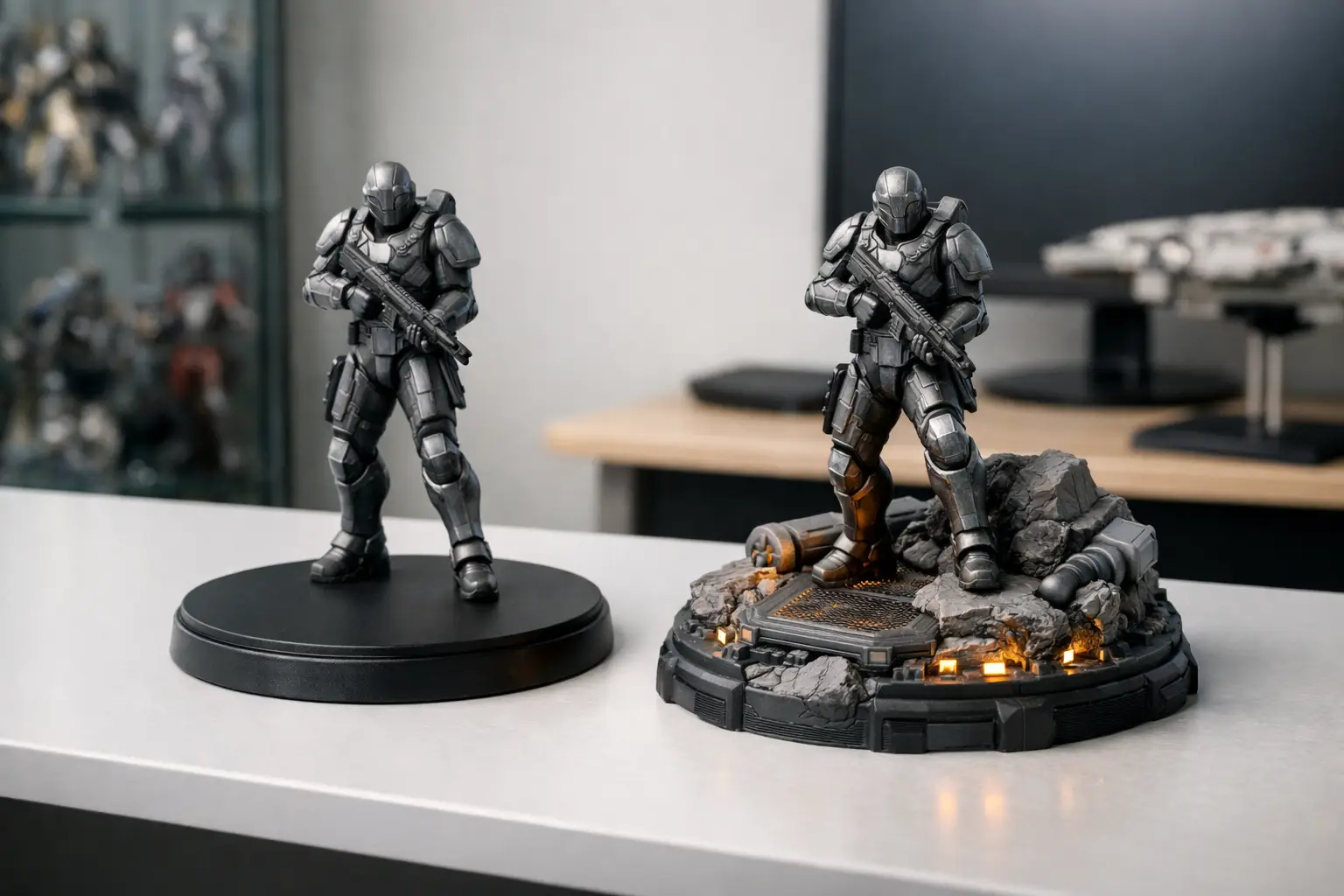
A completed LEGO set can look brilliant on a shelf and still feel unfinished. The build is there, but the scene has no ground beneath it, the colours compete with the furniture around it, and every detail is left to fight for attention. This printed display base review looks at whether a themed, UV-printed base genuinely changes that experience, or simply adds another premium extra to the basket.
For collectors who have invested hours, and often a sizeable budget, into a set, presentation is not an afterthought. A well-designed base gives a model a visual boundary, establishes a setting and makes the entire display feel intentional. The question is whether that improvement is worth the additional cost and whether it suits the way you collect.
What a printed display base actually adds
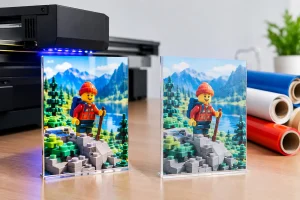
A printed display base is more than a flat panel with artwork on it. When it is designed around a specific set, it provides the foundation for the whole display. The print can suggest terrain, a hangar floor, a city street, a race circuit or a magical stone courtyard, depending on the model above it. It gives the eye a place to start before it travels up through the build.
That matters most with sets that tell a story. A Star Wars ship placed against a plain shelf can still look impressive, but a base with a suitably atmospheric floor treatment creates a stronger sense of scale. The same is true for a Hogwarts build with a weathered courtyard design, a Technic car with motorsport-inspired detailing, or a Marvel model placed in a comic-book city setting. The base supports the theme without asking the model to do all the work.
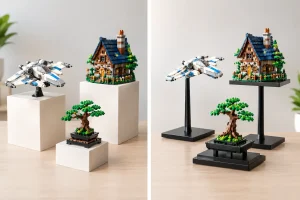
There is also a practical display benefit. A defined base makes the footprint of a set clear, especially on a busy shelf. Instead of loose minifigures, vehicles or small accessories appearing to drift around a unit, the collection reads as a series of curated scenes. For collectors displaying several sets from one theme, that visual order can make a substantial difference.
Printed display base review: print quality and finish
The best reason to choose a printed base is the quality of the presentation. A sharp UV print has richer colour, cleaner detail and a more premium finish than a temporary paper insert or a self-made background placed beneath a model. Fine lines, subtle textures and themed graphics remain visible at normal viewing distance, rather than becoming a muddy block of colour below the build.
A good print should complement rather than overpower the set. The most successful designs use the model as the hero, with artwork that adds atmosphere around it. Heavy graphics can be tempting, particularly for dramatic franchises, but an overly busy design can distract from small build details and make minifigures harder to see. This is why set-specific artwork has an advantage over a generic pattern: it can account for the model’s colours, layout and intended viewing angle.
Finish matters just as much as artwork. A premium base should sit flat, feel substantial and have cleanly finished edges. It needs to look at home beneath an acrylic display case, not like an add-on that was introduced at the last minute. When paired with a case, the base forms the visual floor of the display and helps the entire piece feel like one considered product.
There is a trade-off. Printed bases are made to be seen, so they are not the best choice for collectors who constantly reposition models or rebuild displays every week. Moving a complete set across any surface carries risk, particularly if it has delicate landing gear, loose foliage or small decorative elements. It is sensible to decide on the final layout before positioning the set, then move it with support from underneath rather than dragging it across the print.
The value of themed artwork
Themed artwork earns its place when it deepens the character of the set. A neutral black base can be smart and versatile, but it cannot make a display feel like the frozen surface of Hoth, the deck of a starship or the tarmac of a grand prix circuit. That extra sense of place is often what turns a great build into a true centrepiece.
It also makes certain sets far more photogenic. Collectors who share their displays with friends, post build photos or simply enjoy seeing their shelves at their best will notice the difference straight away. The camera picks up the scene as a whole, not just the bricks. A printed base removes the blank shelf from the frame and replaces it with something that belongs.
Fit matters more than decoration
A printed display base is only as good as its compatibility. The artwork may be spectacular, but if the dimensions are too tight, too large or poorly matched to the model’s footprint, the display loses its polish. Set-specific sizing is one of the strongest reasons to choose a specialist option.
A correctly sized base gives the build room to breathe without creating a large, unused border. That balance is particularly important for models with wide wings, long vehicles or minifigure scenes that need space around the main structure. Too little room can make the set feel cramped. Too much can reduce the visual impact and consume valuable shelf space.
Collectors should also think about where the set will live. A wide display base might look exceptional on a dedicated cabinet shelf but be impractical on a narrow bookcase. Measure the shelf depth and width, allow for any acrylic case dimensions and consider door clearance before ordering. This is unglamorous planning, but it prevents the frustrating moment when a finished display does not quite fit where it was meant to go.
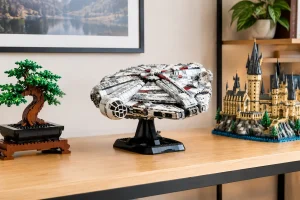
For a collection that includes different themes, consistency is another consideration. Matching case styles and similarly finished bases can bring order to a varied display, even when a medieval castle sits beside a supercar or a galaxy far, far away. Brixbox’s set-led approach works well here because the presentation remains tailored to each build while still feeling like part of a collector’s wider display system.
Is it worth paying extra for a printed base?
It depends on the role of the set in your collection. For a small build kept on a desk, a plain stand or shelf may be all that is needed. For a large, sentimental or display-led set, a printed base can be a very worthwhile upgrade. It gives the model a finished home rather than a temporary resting place.
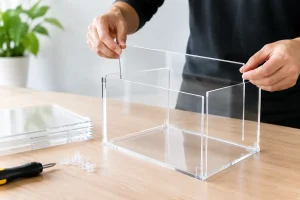
The strongest value comes when a base is paired with dust protection. An acrylic case protects the set from everyday handling and airborne dust, while the printed base improves the view inside it. Together, they solve both sides of the collector’s problem: preserving the build and giving it the presentation it deserves. If dusting intricate models has become a recurring chore, that combination can feel less like a luxury and more like sensible collection care.
There is also an emotional return that is hard to price. Some builds mark a birthday, a first big purchase, a shared project or a favourite fandom. Those are the sets that deserve more than an exposed shelf. A themed base gives them a stage and makes returning to the display part of the enjoyment.
Who should choose one?
A printed display base is a particularly strong choice for collectors with feature sets, minifigure scenes and vehicles that benefit from a recognisable environment. It is also ideal for anyone building a display wall, glass cabinet or dedicated hobby room where visual cohesion matters.
It may be less essential for collectors who frequently rotate stock, store models between displays or prefer a stripped-back gallery look. In those cases, a clear stand or plain base can offer more flexibility. There is no wrong choice, only a question of whether you want the display to be neutral or distinctly themed.
Before choosing a design, look closely at the set’s strongest angle. Some models are made to be viewed head-on, while others reward a three-quarter view that reveals their scale and detail. Choose a base and shelf position that serve that angle. Good display design is not about filling every available space. It is about giving each build enough room to make its presence felt.
A printed base will not replace the satisfaction of the build itself, but it can extend it. When your favourite model is protected, framed by the right setting and given a proper place in the room, it stops looking like something you have finished and starts looking like something you have chosen to showcase.
RECENT POST