LEGO Blog
All the latest Brixbox news, straight from the team.
Display Stands That Make LEGO Builds Shine
A completed LEGO set deserves more than the corner of a bookcase it happened to fit on. The right display stands give a build its own stage, lifting it above visual clutter, improving the viewing angle and making every carefully placed piece feel intentional. For collectors, that shift matters. A prized Star Wars ship, a detailed Technic car or a row of BrickHeadz becomes part of the room rather than something waiting to be dusted.
Why display stands change the way a collection looks
Some builds are designed to be seen from every angle. Others have one unmistakable hero view: the sweeping wing profile of a starfighter, the front grille of a supercar, the looming face of a helmet. A well-chosen stand puts that view first. It can add height, create a sense of movement and give a model the visual space it needs to make an impact.
That is particularly valuable when shelf space is limited. Without variation in height, even an impressive collection can flatten into one long line of bricks. Display stands introduce layers. A smaller model can sit proudly in front of a larger build; a vehicle can be angled above the base level; a minifigure can be given the focus it would lose on an open shelf.
There is a practical benefit too. Raising a model makes it easier to clean around and beneath it, and it keeps delicate parts away from the knocks that happen when a shelf becomes a busy surface. It will not replace proper protection where dust is the main enemy, but it is a meaningful first step towards a more considered display.
Stand, case or shelf: choose for the set you own
Not every LEGO build needs the same treatment. Choosing the best presentation starts with the set itself, where it will live and how often you want to handle it.
When a display stand is the right call
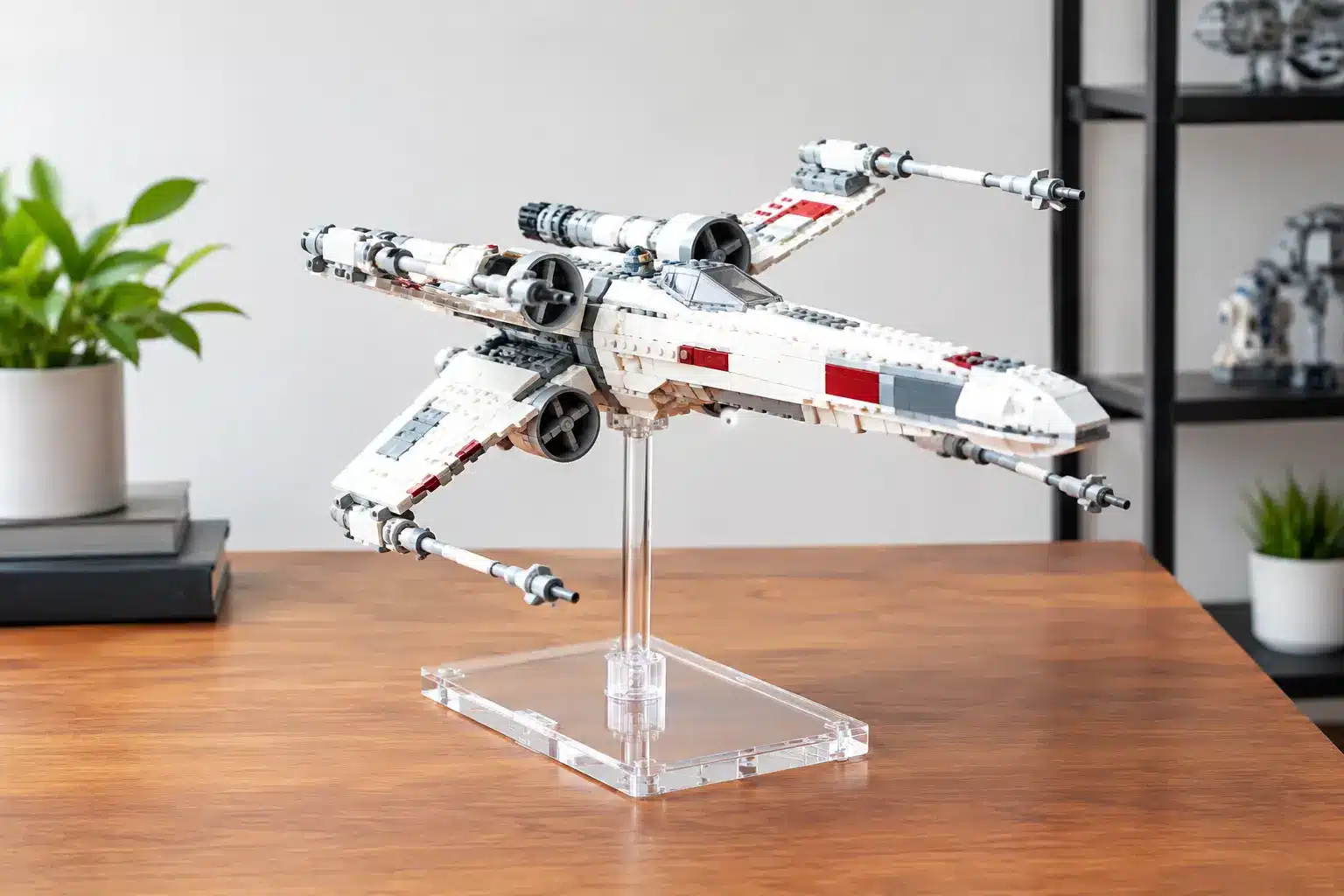
Stands shine with models that benefit from an elevated or angled pose. Starships, aircraft, vehicles and character builds often look more dynamic once they are lifted from a flat surface. They can reveal details that would otherwise disappear, such as underside greebling, wheel assemblies or carefully engineered contours.
They are also a strong choice for collectors who like to refresh a display regularly. Moving a stand is usually simpler than rearranging a full cabinet, so you can rotate favourites without rebuilding an entire shelf. If your collection is part display, part evolving gallery, this flexibility is a real advantage.
When a display case earns its place
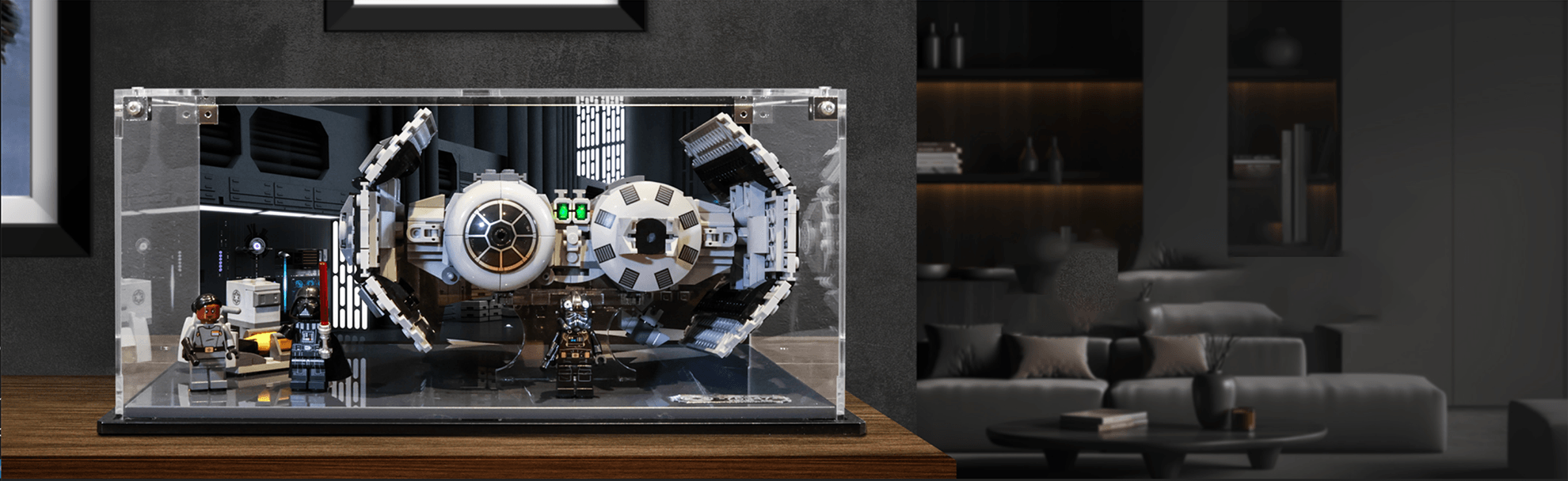
For large, intricate or sentimental sets, protection can be the priority. Open display stands still leave models exposed to dust, sunlight and curious hands. A case gives a prized build a clear boundary while preserving the full view, especially when it includes a printed base or UV-printed background designed around the theme.
This is where generic storage often falls short. A plain box may keep dust away, but it rarely feels like part of the set. A set-specific case can frame a build with artwork that suits its story, from a galaxy far, far away to a magical castle or a motorsport pit lane. The model remains the star, but the presentation feels complete.
When a shelf is enough
A shelf can work perfectly for sturdier, lower-value builds or collections that are played with as much as displayed. The key is intention. Give each build enough room, avoid crowding taller elements and consider a simple riser for smaller sets that would otherwise disappear behind larger ones.
The trade-off is maintenance. Open shelving is easy to access, but dust settles quickly on exposed studs, transparent elements and textured surfaces. If cleaning your collection already feels like a monthly mission, it may be time to reserve open shelves for the sets you use most and protect the ones you want to preserve.
What makes a great LEGO display stand?
The best display stands do not ask a model to compromise. They support it securely, present it at a flattering angle and keep the design clean enough that attention stays on the build.
Fit comes first. A stand should suit the model’s weight, footprint and centre of gravity. Larger ships and vehicles need considered support points, not a one-size-fits-all platform that leaves the build feeling precarious. Set-specific design matters because LEGO models are wonderfully varied: their strongest connection points and balance points are not universal.
Material matters just as much. Premium acrylic offers a crisp, modern look that pairs naturally with brick-built models. It is visually light, so it creates lift without looking bulky, and it works especially well alongside acrylic display cases for a coordinated collection. Clean edges, accurate cuts and stable construction are the details collectors notice every time they walk past the shelf.
Then there is the angle. Too flat, and the stand has little effect. Too steep, and it can make a build look awkward or conceal the features you most want to show. The ideal position depends on the set. A starship may look best banking through space, while a race car often benefits from a subtle lift that highlights its profile without hiding the cockpit.
Build a display with depth, not clutter
A spectacular collection is not always the biggest one. It is the one where every piece has room to be appreciated. Start by choosing a focal point: perhaps a flagship set, a favourite vehicle or a build with real sentimental value. Place it where the eye lands first, then build outward with complementary sets, minifigures or smaller themed models.
Varying height is one of the simplest ways to make this arrangement feel deliberate. Use stands for movement and elevation, cases for protected centrepieces and low-profile bases for smaller builds. This creates depth without filling every available inch of shelf.
Theme also makes a difference. A Star Wars collection becomes more striking when ships, helmets and character displays share a visual language. The same is true for Harry Potter, Marvel, Disney or Technic. You do not need every item to match exactly, but repeated materials, consistent spacing and a few themed backgrounds can turn individual purchases into a proper collection.
Lighting deserves a little care as well. Avoid prolonged direct sunlight, which can fade elements and heat enclosed display areas. Soft room lighting or indirect LED illumination is usually kinder to models and more flattering to transparent pieces. If you can see fingerprints, dust or reflections more than the build itself, adjust the light before buying more display furniture.
Protect the details that took hours to build
The longer a build takes, the more frustrating it is when it gathers dust or catches on a sleeve. Small exposed pieces, antennae, minifigure accessories and transparent elements are often the first casualties of an unplanned display. A stand reduces some of that risk by separating the model from everyday surfaces, while a case offers more complete protection.
Cleaning should still be gentle. Use a soft brush or air blower around the model rather than rubbing at delicate sections, and handle stands by their sturdier edges when moving them. For acrylic, a clean microfibre cloth is usually the best starting point. Harsh cleaners and rough paper towels can leave marks that spoil the polished finish collectors want.
It is also worth thinking ahead. If you know a set will eventually move into a protected case, choose a display position that makes that transition easy. Leave enough shelf height, allow space around the build and avoid stacking models so tightly that one move causes a chain reaction.
Give every finished build a reason to stay built
The final page of the instruction manual should not mean the experience is over. A considered display invites you to look again: at a clever mechanism, an unusual part, a scene you loved building on a quiet evening. Brixbox display solutions are made for that moment, when a finished set stops being a project and becomes something worth showing off.
Choose display stands for movement, elevation and a stronger viewing angle. Choose a case when long-term protection and themed presentation matter most. Then give the build enough room to do what it was always meant to do: bring a little more character to the shelf every time you walk past.
RECENT POST