LEGO Blog
All the latest Brixbox news, straight from the team.
Can acrylic cases yellow? A Collector’s Guide
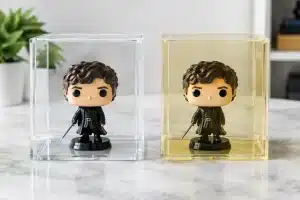
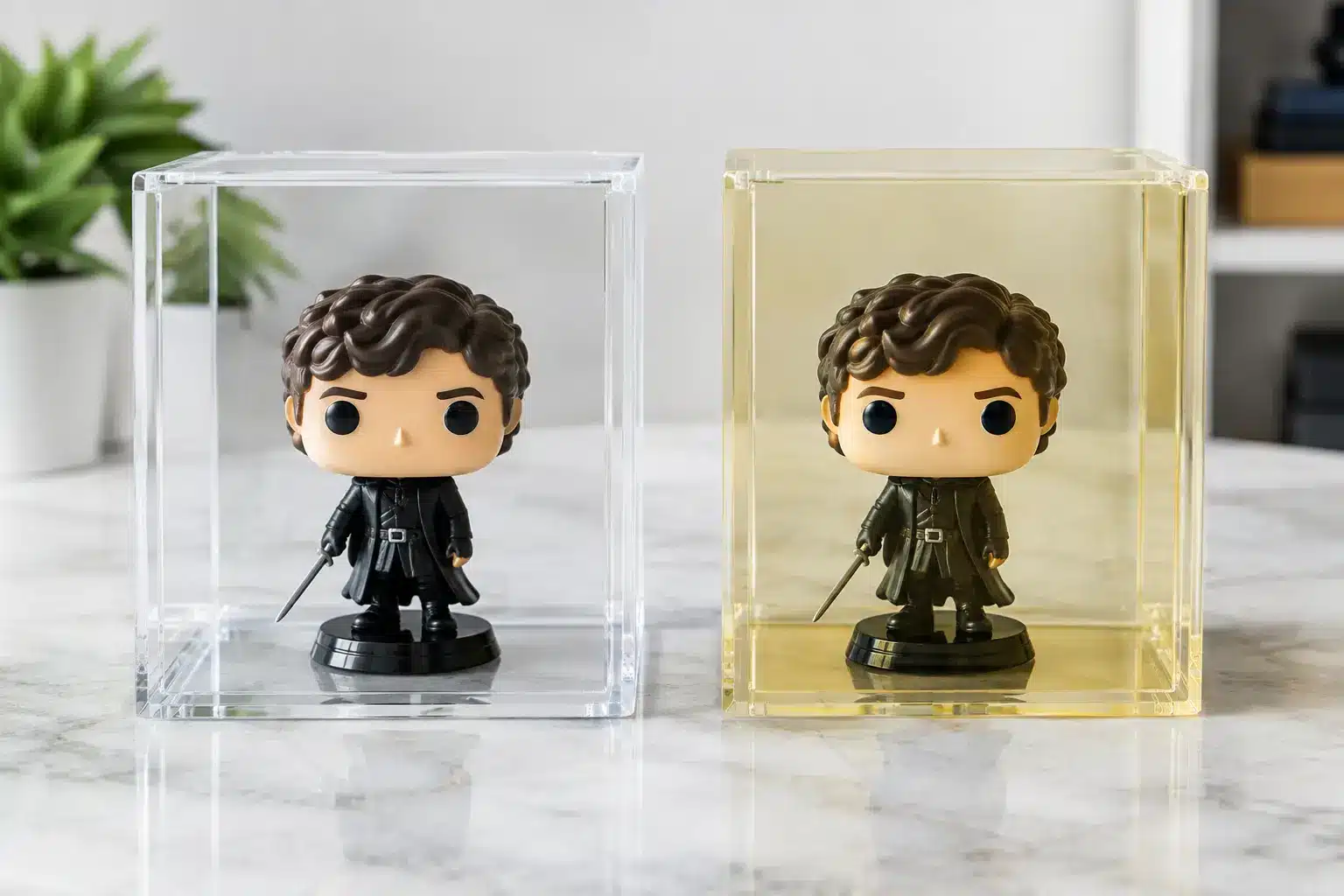
That freshly built LEGO set deserves more than a shelf where dust settles on every stud and sunlight slowly changes its appearance. But can acrylic cases yellow? The honest answer is yes, some can, but a well-made acrylic display case is far less likely to discolour than cheaper clear plastics – especially when it is positioned and cared for properly.
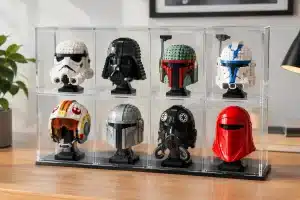
For collectors displaying a prized UCS Star Wars build, a detailed Technic supercar or a shelf full of helmets, clarity matters. A yellowed case can mute the colours of a set, reduce the impact of a printed backdrop and make a carefully curated display feel tired. Understanding what causes discolouration helps you choose a case with confidence and keep your collection looking showroom-ready.
Can acrylic cases yellow over time?
Acrylic is commonly used for premium display cases because it is clear, lightweight, shatter-resistant and capable of delivering a crisp, glass-like finish. High-quality acrylic, often called PMMA, has naturally good resistance to sunlight and ageing. It does not automatically turn yellow simply because time passes.
The key word is quality. Not every transparent case panel is the same material or grade. Lower-cost plastics can contain additives that react to UV light, heat or household pollutants, causing the material to yellow, haze or become brittle over time. Polycarbonate and some generic clear plastics are more prone to visible yellowing than quality cast acrylic.
Even quality acrylic has limits. Put any clear display material in strong, direct sun for years, near a hot radiator or in a room exposed to smoke, and its appearance may eventually suffer. The case is not the only thing at risk, either. Prolonged UV exposure can fade LEGO elements, stickers and printed display artwork.
What makes a clear case look yellow?
Sometimes the case itself has not yellowed at all. A warm-looking film on the outside can be a build-up of dust, airborne grease from cooking, candle residue or nicotine. This is particularly common on open shelving in living rooms and kitchens, where particles settle long before they are obvious on a dark surface.
Acrylic can also appear yellow because of its surroundings. Cream walls, warm LED lighting and timber shelving can cast a subtle tint across clear panels. Place the same case against a bright white background in daylight and it may look perfectly neutral again.
There is also the protective-film factor. Many acrylic panels arrive with a temporary film to prevent scratches in transit. If a panel looks cloudy, tinted or unusually dull straight from the box, check that every layer of protective film has been removed before assuming there is a material issue. Take it off carefully, particularly around cut-outs, slots and printed details.
Heat can speed up ageing too. Avoid placing a display case directly against a radiator, beside a fireplace or in a conservatory that becomes exceptionally hot in summer. Heat will not instantly turn acrylic yellow, but repeated high temperatures are not ideal for the panels, the LEGO model inside or any printed base and backdrop.
UV exposure is the biggest long-term consideration
Sunlight is the main concern for long-term display. UV light can cause colours to fade and can degrade less stable plastics. A premium acrylic case offers a physical barrier against dust and handling, but it should not be treated as a licence to display a favourite set in a harsh sunbeam all afternoon.
Some acrylic products offer enhanced UV resistance or UV-filtering properties. These can be worthwhile in very bright rooms, but the wording matters. UV-printed backgrounds, for example, are printed using UV-cured inks; that does not necessarily mean the acrylic panel itself is a dedicated UV-filtering shield. If light protection is a priority, look for a clear statement about the material and its UV performance.
The most collector-friendly approach is usually simple: display away from direct sunlight. A spot on an internal wall, in a cabinet area or out of the path of the strongest afternoon light will protect both the case and the build. You still get the full visual impact of your Millennium Falcon, Hogwarts Castle or favourite Marvel scene without asking the sun to test every material day after day.
How to keep acrylic display cases clear
Acrylic rewards gentle care. It is more scratch-resistant than many basic clear plastics, but it is softer than glass. Rushing at a fingerprint with kitchen roll or a rough cloth can leave fine marks that catch the light, making a panel look hazy even when it is not discoloured.
Use a clean microfibre cloth for regular dusting. For fingerprints or light smears, dampen the cloth slightly with clean lukewarm water, then wipe with light pressure. Dry with a second soft microfibre cloth. This is usually all a display case needs.
Avoid household window sprays, abrasive cleaners, scouring pads and solvents such as acetone. Ammonia-based products can be unsuitable for acrylic and may lead to surface stress or clouding. Paper towels may seem harmless, but their fibres can be surprisingly abrasive on clear panels. If you want a dedicated cleaner, choose one made specifically for acrylic or plastic glazing.
It also pays to clean the case before grime becomes stubborn. A quick, gentle wipe during a routine dusting session is easier than trying to remove months of residue around the edges of a large display case. Clean hands before lifting panels, too. That helps prevent fingerprints and keeps oils away from the precise joins that make a set-specific case look so sharp.
Choosing an acrylic case for long-term display
The cheapest clear box is rarely the best value when it is guarding a set you spent hours building. A case that fits the dimensions of a specific LEGO model gives you a more intentional display and reduces unnecessary empty space around the build. It also makes the finished piece feel like an exhibit rather than an item stored under a cover.
Look for clear, purpose-made acrylic panels, a stable base and a design that gives the model enough headroom without hiding its best angles. For complex builds with moving features, delicate antennae or tall minifigure scenes, those details matter. A good fit helps protect the parts most likely to catch on sleeves, pets, curious hands or dusters.
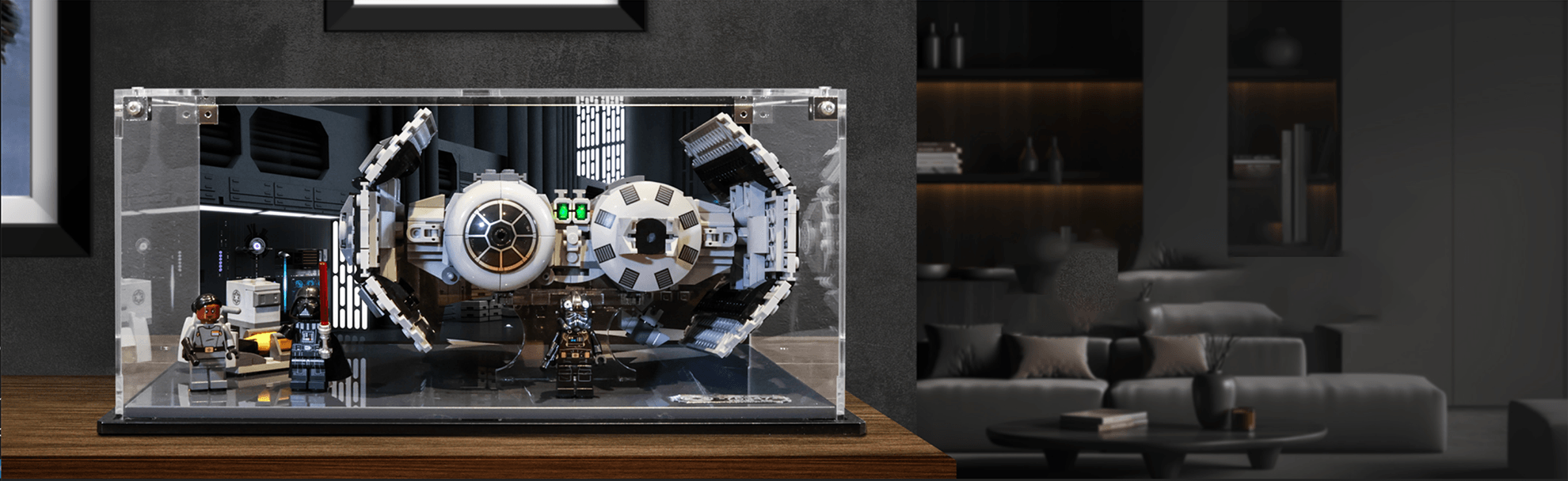
Presentation should not be an afterthought. A themed printed base or backdrop can create depth, frame the build and make the model feel closer to the world it belongs to. For collectors who want their display to make an entrance, Brixbox cases are designed around specific sets, combining dust protection with a tailored backdrop that lets the build take centre stage.
There is a trade-off to consider. A very enclosed case offers excellent dust protection, but it may need occasional opening if you enjoy rearranging minifigures or changing a scene. An open stand gives easy access, yet it cannot offer the same defence against dust, airborne residue and accidental knocks. Choose based on where the set lives and how hands-on you want the display to remain.
When yellowing means replacement is sensible
Surface residue can be cleaned. A forgotten protective film can be removed. Lighting can be changed. But if the acrylic itself has developed a persistent yellow tint, deep clouding, crazing or cracks, replacement is often the better route. Trying harsher cleaners will not restore degraded plastic and may make the damage more obvious.
Check the model inside at the same time. If a case has spent years in direct sunlight, inspect white, light grey and transparent LEGO elements for fading or uneven colour changes. Moving the display to a gentler location now can prevent further change, even if it cannot reverse what has already happened.
A display case should let the build do the talking. Give your collection a cool, shaded position, clean the panels with a light touch and choose quality acrylic from the start. Your favourite build will stay the star of the shelf, not the plastic around it.
RECENT POST