LEGO Blog
All the latest Brixbox news, straight from the team.
Are LEGO Display Cases Worth It for Collectors?
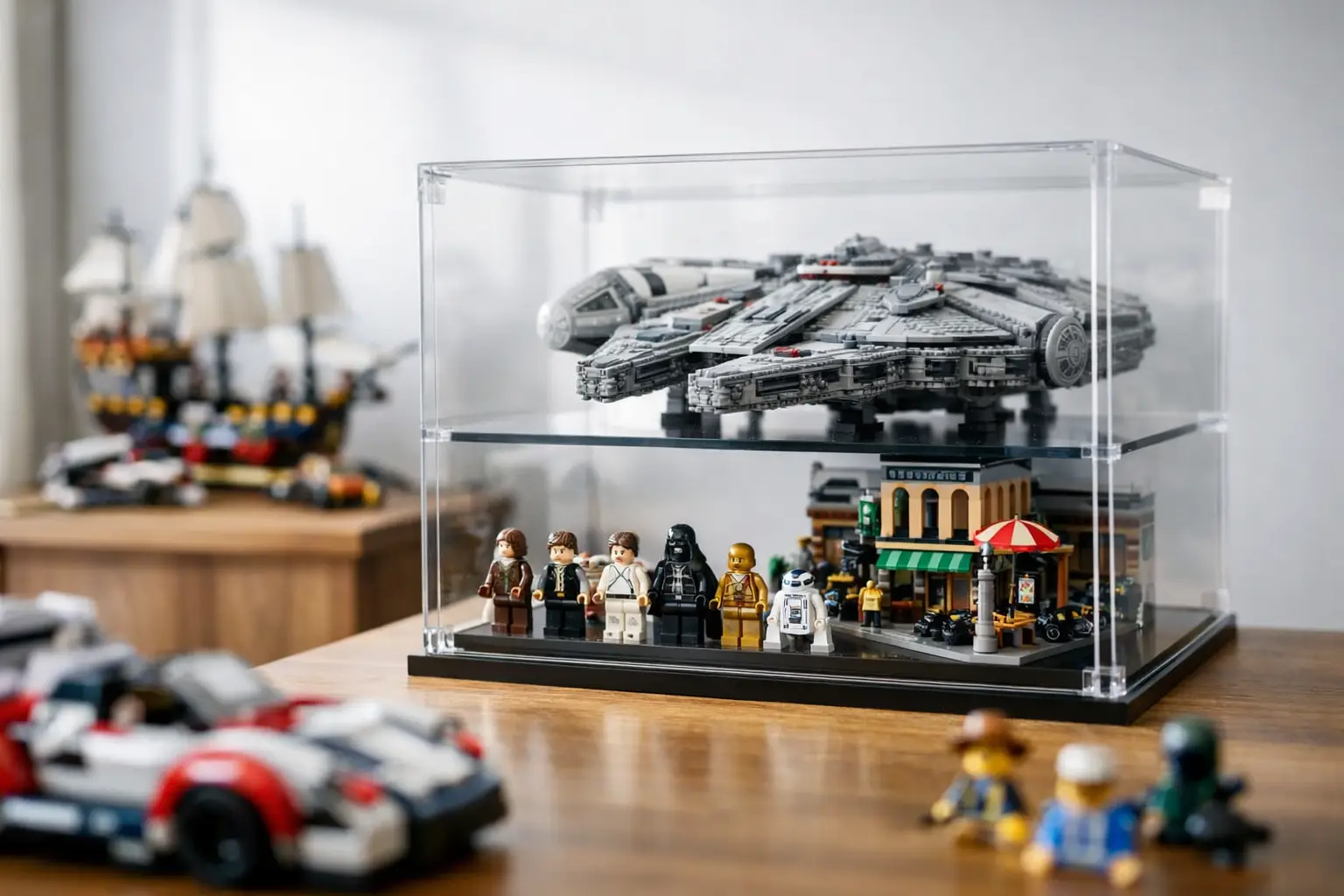
A finished LEGO set should not disappear beneath a layer of dust a fortnight after its final brick clicks into place. Yet that is exactly what happens to ships, helmets, cars and castle scenes displayed openly on a shelf. So, are LEGO display cases worth it? For collectors who want their favourite builds to stay clean, look intentional and hold their visual impact, the answer is usually yes – provided the case suits both the set and the way you collect.
A display case is not merely a clear box. The right one turns a completed build into a proper centrepiece, protects the details that made the build so satisfying, and gives a collection the presentation it deserves. The wrong one, however, can feel oversized, generic or like another item to find space for. The value is in the fit, finish and purpose.
Are LEGO display cases worth it for your collection?
They are most worthwhile when a set has taken real investment – whether that is money, build time or sentimental value. Large UCS Star Wars models, intricate Harry Potter locations, premium Technic cars and detailed Marvel pieces all contain areas that are difficult to clean once dust settles in. Grilles, studs, exposed interiors, transparent elements and minifigure displays are particularly unforgiving.
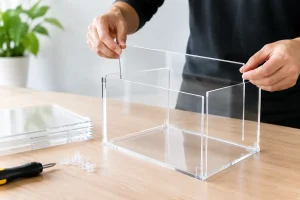
A purpose-built acrylic display case creates a physical barrier between your model and everyday life. Dust is reduced dramatically, accidental knocks become less likely, and the model is less exposed to pets, curious hands and the general traffic of a busy home. That matters even more for models displayed in a living room, hallway, office or gaming space rather than behind closed cabinet doors.
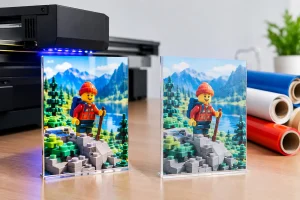
There is also the matter of pride. A carefully built set deserves more than being squeezed between books or balanced on a shelf edge. Clear panels frame the model without hiding it, while a printed base or UV-printed background can place it in a scene that feels true to its theme. A starfighter looks sharper against a galactic backdrop. A Hogwarts build gains atmosphere when it is displayed as a destination, not just a collection of bricks.
That does not mean every set needs a case. A small, regularly handled build or a set that is likely to be rebuilt, modified or moved around may be better on an open shelf. Cases are best viewed as a selective upgrade for the builds you want to preserve and showcase for the long term.
The practical value: less dust, less handling, less hassle
Dust is the main reason many collectors make the move. It is not just a cosmetic problem. Fine dust works its way into clips, around stickers, across tiled surfaces and into the gaps between elements. Cleaning a large model can take longer than expected, especially when it has fragile antennas, foliage, angled panels or a crowded minifigure scene.
An open display needs frequent attention. A cased display needs far less. You may still want to wipe the outside panels occasionally, but that is a far easier task than taking a soft brush to every surface of a complicated build. It also avoids the familiar risk of dislodging a tiny element while trying to remove dust from it.
Protection from handling is equally useful. Even a stable model can lose a wing, mirror, lamp or minifigure accessory when someone reaches past it. A case gives the collection a clear boundary. Visitors can enjoy the display without accidentally interacting with it, and younger fans can admire a premium model without it becoming an impromptu play set.
There is a sensible caveat. Acrylic is not indestructible, and it needs care too. Use a clean microfibre cloth and suitable acrylic-safe cleaning approach rather than abrasive products. Position cases away from direct sunlight where possible, particularly for sets with stickers, printed elements or colours you want to keep looking their best over time.
Presentation is where a set-specific case earns its place
Generic display boxes protect a model, but they do not always make it look better. A case designed around a particular LEGO set number considers the model’s footprint, height and best viewing angles. It gives the build enough breathing room without leaving it floating in acres of empty acrylic.
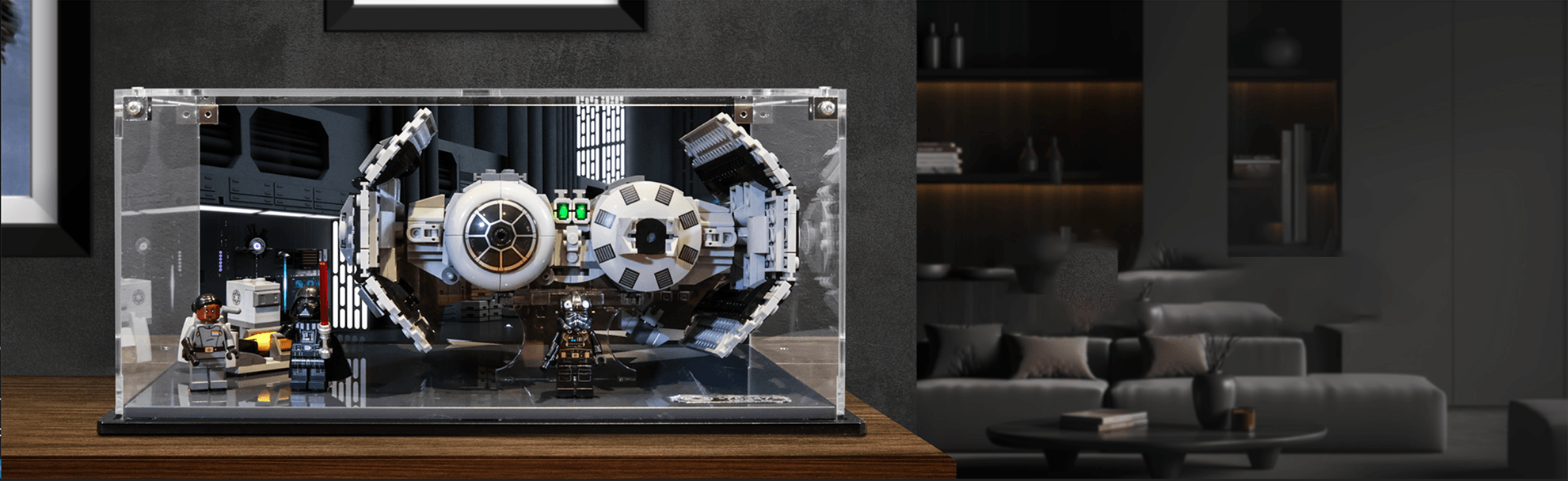
This is especially noticeable with models that tell a story. A themed printed background can add depth behind a Millennium Falcon, a superhero helmet or a famous vehicle. A printed base can define the display area and make loose details, minifigures or a display plaque feel deliberately placed. The build remains the hero, but the surrounding presentation helps it land with more impact.
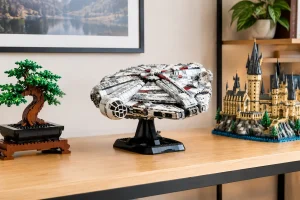
For collectors building a dedicated room, this creates visual consistency. Instead of a mixture of loose models, mismatched cabinets and improvised stands, each significant build has a clean frame. The result feels more like a curated gallery and less like a shelf that has run out of space.
That visual lift can matter just as much as dust protection. LEGO is built to be seen. When the final model represents hours of concentration, a favourite film, a childhood memory or a hard-won retirement purchase, a premium display is part of the enjoyment rather than an afterthought.
When a LEGO display case may not be worth it
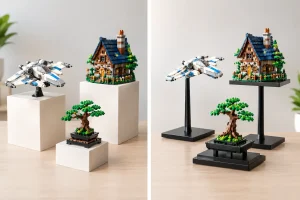
The honest answer depends on the model and your priorities. If you rotate sets constantly, rebuild them after a few months or use them for photography and stop-motion projects, a permanent case can slow you down. Open shelving may be more practical, and a stand may be the better choice for models that benefit from a dramatic angle rather than full enclosure.
Space is another consideration. Measure your shelf, cabinet or desk carefully before committing. Account for the case dimensions, not only the model dimensions, and leave enough room to lift the lid or access the display if required. A display should make a room feel more organised, not turn a desk into a tightly packed obstacle course.
Budget matters too. A case is an accessory, and it can represent a meaningful additional cost after buying a premium set. It makes most sense for the models you would be genuinely disappointed to damage, dust heavily or hide away. You do not need to case every build at once. Start with the set that already commands attention whenever someone enters the room.
How to decide which sets deserve a case first
Think about the builds that score highly in three areas: value, complexity and visibility. A costly set with delicate construction and a prominent place in your home is an obvious candidate. So is a model with a large flat surface that shows dust quickly, or one packed with details you do not want to clean piece by piece.
Sets with strong display identity are also excellent choices. Star Wars helmets, Formula 1 cars, iconic film vehicles, modular landmarks and character-focused models all benefit from a presentation that supports their theme. A fitted case with artwork can make the display feel complete in the same way a well-chosen frame completes a print.
It can help to consider your collection as a whole. Perhaps your flagship model needs a fully enclosed case with a printed base, while smaller vehicles need angled display stands and minifigures need a compact wall-mounted solution. There is no single correct format. The best display plan uses the right level of protection and theatre for each part of the collection.
What to look for in a premium display case
Fit should come first. Look for a case designed for the exact set, with room for its intended orientation, plaque and any included minifigures. A poor fit can make a premium model look oddly cramped or underwhelming, while a precise fit makes the entire display feel considered.
Next, inspect the presentation options. Clear acrylic should give an unobstructed view, while a high-quality base and background should complement the theme rather than compete with the build. Strong artwork is particularly effective when it adds a sense of place: a hangar, a city skyline, a magical corridor or the vastness of space.
Finally, think about where the case will live. A shelf-facing display may need a front-on scene; a freestanding table display needs interest from several angles. If you display in a brighter room, careful placement can help minimise reflections. These small decisions are what turn a protected model into a genuine showcase.
A specialist solution from Brixbox is designed with this collector mindset: set-specific dimensions, premium acrylic construction and themed print options that give the completed model a setting worthy of its story.
The best test is simple. Look at the set you are proudest of and imagine it six months from now: clean, protected and properly framed rather than waiting for another careful dusting. If that feels like an upgrade to the experience of owning it, a display case has already earned its place.
RECENT POST