LEGO Blog
All the latest Brixbox news, straight from the team.
Do Acrylic Display Cases Reduce Dust on LEGO Sets?
That freshly finished LEGO set looks brilliant for about five minutes – then the first faint layer of dust begins settling on wings, tiles, transparent pieces and every hard-to-reach stud. So, do acrylic display cases reduce dust? Absolutely. A well-fitted acrylic case is one of the most effective ways to keep a displayed build cleaner, sharper and far less demanding to maintain. It is not a vacuum-sealed vault, but for collectors who want their favourite sets to stay presentation-ready, it makes a dramatic difference.
For detailed models such as Star Wars ships, Hogwarts displays, Technic cars or helmet builds, dust is more than a minor housekeeping issue. It dulls colours, softens the visual impact of carefully placed parts and turns a proud display into a delicate cleaning job. A purpose-built case gives your completed build the showcase it deserves while putting a physical barrier between it and the dust moving through your home.
How Acrylic Display Cases Reduce Dust
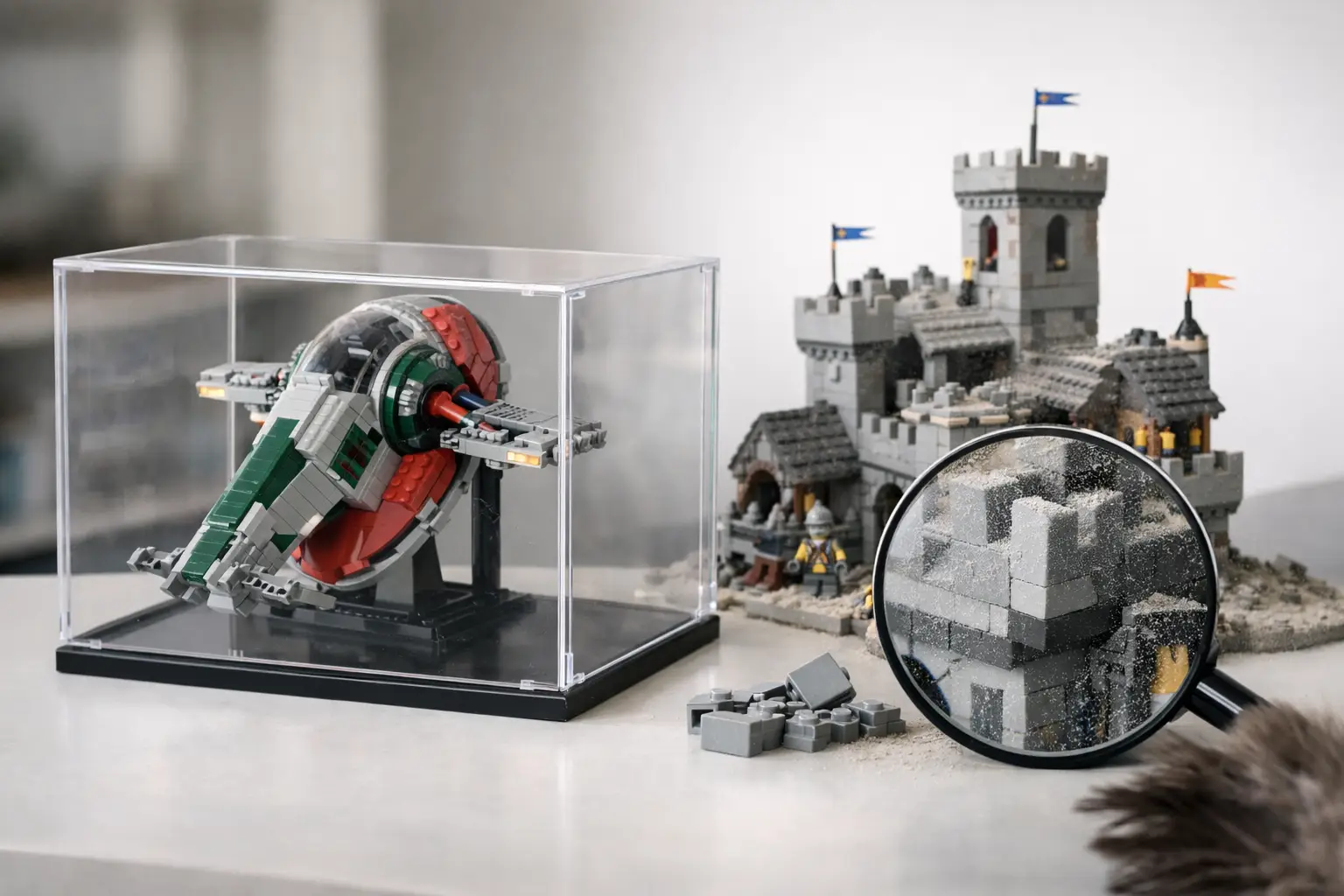
Dust reaches open shelves constantly. It drifts through the air, settles after doors or windows are opened, arrives on clothing and is stirred up whenever someone walks past. On an exposed LEGO model, it lands in cockpit interiors, around antennae, between plates and beneath small decorative elements. The more intricate the build, the more places dust can hide.
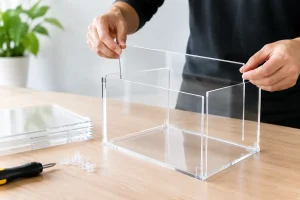
An acrylic display case encloses the model on its sides and top, reducing the amount of airborne dust that can settle directly onto it. Instead of landing on the build itself, much of that dust settles on the outside of the case. That is a far easier surface to clean with a soft microfibre cloth.
The effect is especially noticeable with sets that feature lots of small details. A large UCS-style spacecraft, a busy modular scene or a vehicle with exposed mechanical elements can take a surprising amount of time to dust properly. A case does not remove the need for cleaning forever, but it turns frequent, fiddly maintenance into occasional, straightforward care.
A barrier, not a hermetic seal
It is worth setting the right expectation. Most acrylic display cases are designed as protective display solutions, not laboratory-grade sealed enclosures. Small gaps may exist around joins, lifting sections or cable routes, depending on the design. Very fine dust can still find its way inside over time.
That does not cancel out the benefit. The key difference is the rate at which dust accumulates. An open build may need attention every few weeks in a busy room, while a cased model often stays visibly cleaner for much longer. For collectors displaying several premium sets, that time saved soon adds up.
Why Set-Specific Cases Make a Difference
Any enclosure is better than leaving a model completely exposed, but fit matters. A generic box that is too large can look empty and allow more air movement around the set. One that is too tight can make placement awkward and leave little room for delicate features, minifigures or display angles.
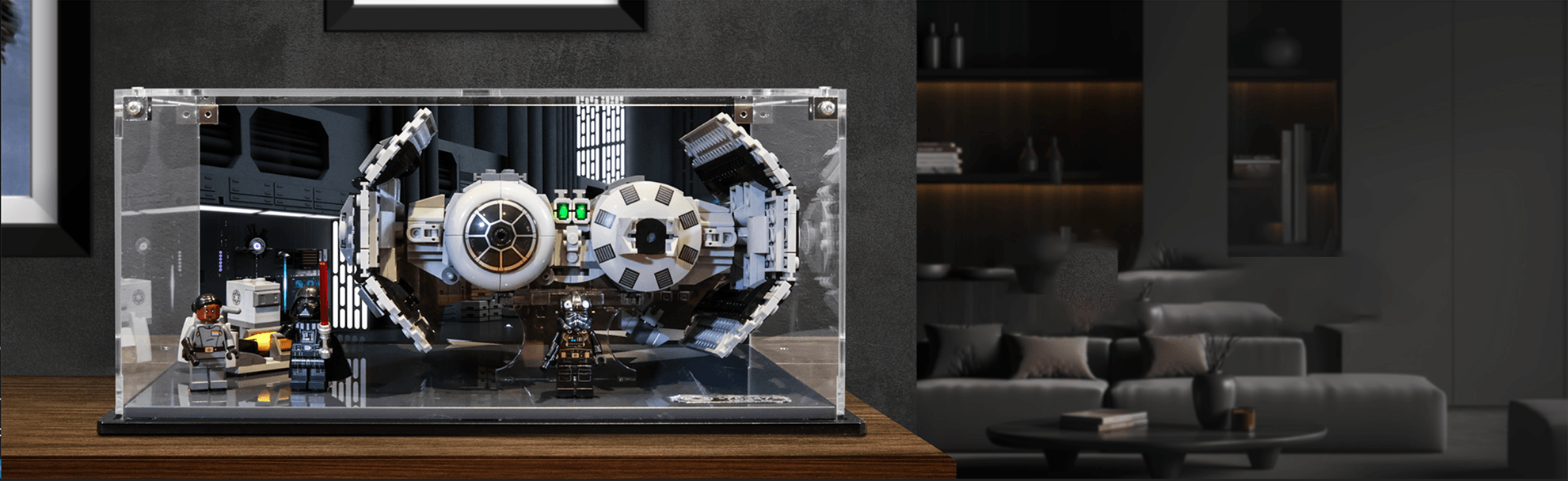
A set-specific acrylic case is designed around the footprint and height of a particular build. It frames the model neatly, gives it breathing room and creates a more intentional display. The result is not simply storage with clear walls. It is a proper presentation piece that lets the set command attention without becoming a dust magnet.
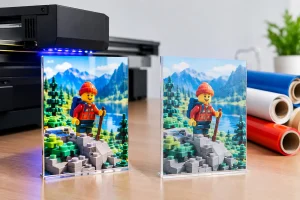
For collectors, this is where protection and appearance meet. A themed printed base can ground a model in its world, while a UV-printed background adds depth behind a ship, castle, car or character scene. The case keeps the dust at bay; the presentation turns a finished build into something worth stopping to admire.
Which Rooms Create the Most Dust?
The answer to whether acrylic display cases reduce dust also depends on where you display your collection. Every home is different, but a few locations are tougher on open LEGO builds than others.
Living rooms tend to collect fibres from soft furnishings, blankets and everyday foot traffic. Bedrooms can gather lint from fabrics and clothing. A home office may seem clean but can still produce paper fibres and dust from frequent movement. Rooms near an entrance, open windows or a kitchen can expose a display to more particles, while homes with pets face an extra layer of fur and dander.
Acrylic cases are particularly valuable in these spaces. They help preserve the clean, crisp look of a display even when the room itself is being lived in. If a set sits near a radiator, however, move it if possible. Heat can encourage dust circulation, and prolonged direct heat is not ideal for any collectible display.
Direct sunlight is another consideration. Dust protection and light protection are separate issues. Acrylic keeps airborne debris away, but a model placed in strong, persistent sunlight may still be at risk of colour fading over time. Position prized sets away from harsh sun, or choose a location where daylight is softer and more controlled.
A Case Also Protects Against More Than Dust
Dust may be the obvious benefit, but it is rarely the only reason collectors choose a case. Open builds invite accidental contact. A sleeve catches a wing, a curious hand rearranges a minifigure, or someone reaches across a shelf and nudges a fragile section out of place. One small knock can mean a scavenger hunt for a tiny piece behind a cabinet.
An acrylic case provides a clear boundary without hiding the build. You can still enjoy the details from every angle, but there is a physical layer between the model and everyday accidents. That matters for intricate displays with loose sections, tall structures, delicate greebling or rare minifigures that you would rather not keep repositioning.
It can also make a collection feel more organised. Rather than several unrelated builds gathering dust across open shelving, cased models become individual exhibits. This is particularly effective when you collect within a theme: a row of helmets, a fleet of Star Wars ships, a collection of Marvel scenes or a carefully chosen line-up of motorsport cars.
How to Keep the Inside of a Display Case Clean
The best time to create a low-dust display is before the case goes on. Build and position the set on a clean surface, then remove loose dust from the model using a soft brush or a hand-operated air blower intended for delicate equipment. Avoid forceful blasts of air, which can send small pieces flying or shift lightweight elements.
Once the model is inside, wipe the outside panels regularly with a clean microfibre cloth. If fingerprints need more than a dry wipe, use a cleaner suitable for acrylic and apply it to the cloth rather than spraying directly onto the panel. Household glass cleaners can be too harsh for some plastics and may leave marks or affect the finish.
For the occasional deeper clean, lift the case carefully and clean the base area before replacing it. Take your time, especially with larger displays. Acrylic is wonderfully clear and lightweight, but it deserves careful handling to keep it looking its best.
Avoid paper towels, abrasive sponges and rough cloths. Acrylic can scratch if cleaned with the wrong material, and scratches are far more visible under room lighting than collectors expect. A soft cloth and a gentle approach are all that is needed.
Is an Acrylic Case Worth It for Every Set?
Not every small build needs a dedicated case. A simple desk model or a set you regularly rebuild, play with or move around may be perfectly happy on an open shelf. Cases make the greatest sense for sets that are large, detailed, sentimental, expensive, difficult to clean or central to your display.
Think about the models you would be most disappointed to see dulled by dust or damaged by a casual knock. Those are the sets that deserve priority. A flagship build that took days to complete, a retired favourite, or a centrepiece you have styled into a themed shelf gains both protection and a stronger visual presence from a tailored display solution.
At Brixbox, the focus is on cases that respect that collector mindset: made to fit the build, designed to elevate its story and ready to help it stay looking as impressive as the day the final brick clicked into place.
Your collection should not spend more time being cleaned than being enjoyed. Give the builds you are proudest of a clear, considered home, then let the details do what they were built to do: steal the show.
RECENT POST