LEGO Blog
All the latest Brixbox news, straight from the team.
Do Cases Block UV? Protecting Your LEGO Display
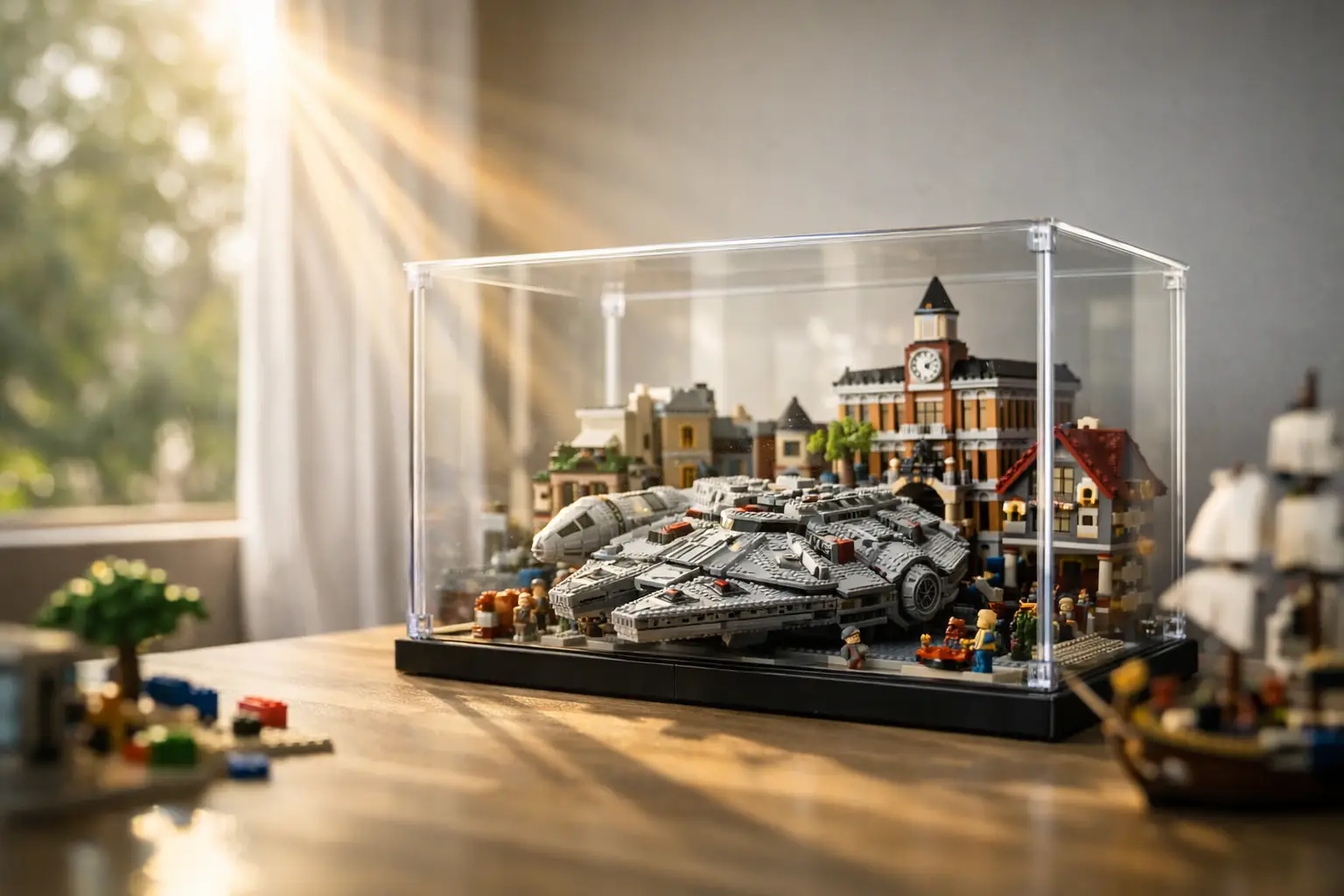
Your UCS Starfighter, Hogwarts Castle or Technic supercar can look brilliant on a shelf – until months of bright daylight begin to dull its colours. White elements may take on a warmer tone, bold red pieces can lose some of their impact, and printed details can gradually look less crisp. So, do cases block UV? Some do, but the answer depends entirely on the material and specification of the case.
A display case is always a major upgrade for keeping dust, accidental knocks and curious hands away from a finished build. UV protection is a different job. If preserving the colour and condition of a prized LEGO display is high on your list, it pays to know exactly what a case can – and cannot – do.
Do Cases Block UV Light?
A case can block or reduce UV light when its panels are made from a material with UV-filtering properties. Acrylic is the material most collectors will encounter in premium display cases, and many acrylic sheets naturally absorb a portion of UV radiation. However, the level of protection varies between acrylic types, thicknesses and manufacturers.
That distinction matters. Clear acrylic is not automatically the same thing as UV-filtering acrylic. A case may be crystal clear, beautifully cut and excellent at protecting a build from dust, while offering only limited, unverified protection from the wavelengths that contribute to fading and material ageing.
For a collector, the sensible rule is simple: if a case specifically states a UV-protection or UV-filtering performance level, you have useful information to work with. If it does not, treat it as a dust and handling case first, rather than relying on it as your only defence against a sunlit room.
Why UV Matters for LEGO Collections
Sunlight carries ultraviolet radiation, including UVA and UVB. UVB is the type often associated with sunburn, but UVA also reaches indoor spaces and is particularly relevant to long-term fading. It can pass through ordinary window glass more readily than UVB, which is why a display can be affected even when it sits inside, behind a closed window.
LEGO elements are made to be played with and enjoyed, but prolonged exposure to strong light is not kind to any coloured plastic, printed decoration or paper-based display artwork. The effect is rarely dramatic overnight. It is more often a slow change you notice when comparing one side of a model with another, or when a once-vivid set begins to look a little flatter than it did on build day.
White, light grey and transparent pieces deserve particular thought, especially on large display models where replacement parts may be difficult or expensive to source. Yet darker colours are not immune. Colour fade can affect reds, blues, stickers and minifigure prints too. A carefully chosen display position and the right case help keep the presentation worthy of the build.
A case reduces more than sunlight risk
Even where UV filtering is not specified, enclosing a set has real preservation benefits. It stops dust settling between studs, around cockpit canopies and inside detailed interiors. It reduces the temptation to repeatedly handle fragile sections. It also creates a clear boundary between a treasured display and everyday life – whether that means pets, children, a busy shelf or the occasional overenthusiastic lightsaber duel nearby.
That is why a purpose-built case remains such a strong choice. UV protection is one part of collection care, but it sits alongside dust control, physical protection and the simple pleasure of seeing your model presented properly.
Acrylic Cases and UV Protection
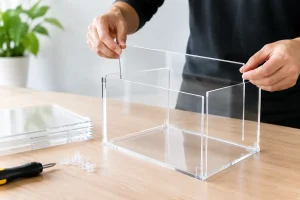
Acrylic is popular for display cases because it is lightweight, clear and well suited to precise, set-specific designs. It offers a clean, almost gallery-style view of a model without the heavy feel or breakability of glass. Certain grades are manufactured with enhanced UV resistance or UV absorbers, making them more suitable for displays placed in brighter rooms.
The important phrase is “certain grades”. Do not assume all acrylic performs identically. Some manufacturers state a percentage of UV blocked, while others refer more generally to UV-resistant material. These claims are related but not always identical. UV resistance can describe how well the acrylic itself withstands yellowing or degradation, whereas UV filtering describes how much UV reaches the item inside the case.
If you are comparing cases, look for clear wording on the product specification. A quality retailer should be able to explain whether UV protection is a confirmed feature, how it is measured where applicable, and whether it applies to all panels or only selected components.
What about glass display cabinets?
Ordinary glass offers some protection, particularly against UVB, but it should not be treated as a complete UV barrier. Laminated glass, coated glass and specialist museum-grade glazing can provide stronger filtering, but these are very different products at very different prices.
Glass cabinets can be a handsome option for a whole collection, especially if you have multiple models to display. Their trade-off is that they are less tailored to the shape of an individual set, can be harder to keep truly dust-free, and may leave models exposed to more open space around them. A set-specific acrylic case creates a more deliberate presentation, particularly when paired with a printed base or themed background.
The Display Position Still Matters Most
Even an excellent UV-filtering case should not be an excuse to place a valuable model in direct sun. UV is only part of the problem. Sunlight also creates heat, and a sealed display case in a hot patch of afternoon sun can act like a small greenhouse. Heat can stress plastics, affect adhesive-backed stickers and make a display uncomfortable to handle.
The best position is away from direct sunlight, ideally in a room with controlled natural light. A shelf opposite a window is generally safer than one immediately beside it, while a spot beneath a skylight or in a conservatory is usually a poor match for a long-term LEGO display.
Think about the light across the whole day, not just when the room looks calm in the morning. A shelf that appears perfect at 10am may be in a bright beam for two hours every afternoon. Seasonal changes matter too – a low winter sun can reach places that summer light never does.
For a display room with unavoidable daylight, use blinds or curtains during the strongest hours. UV-filtering window film can also reduce exposure before it reaches the case. This layered approach is more effective than asking any one product to solve every risk on its own.
How to Choose a Case for Long-Term Display
Start with fit. A case designed around a specific LEGO set gives the model the breathing room it deserves without leaving acres of unused space. It supports a tidy, intentional display and helps protect vulnerable overhangs, antennae, wings and minifigure arrangements from accidental contact.
Next, check what the product actually claims. If UV protection is a deciding factor, seek confirmed UV-filtering details rather than relying on phrases such as “clear acrylic” or “premium material”. Clear communication is a sign that the case has been selected with collection care in mind.
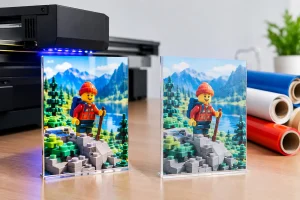
Then consider the full visual environment. A printed base can anchor a vehicle or scene; a UV-printed background can turn a shelf into a proper moment from the saga, story or race that inspired the build. These additions do more than fill empty space. They give the model context while keeping the display polished from every angle.
Finally, be realistic about the value of the set and the room it will live in. A retired flagship build, a sentimental gift or a carefully curated minifigure line-up may justify extra precautions. A model displayed in a dim hallway has very different needs from one positioned in a sunny living room.
A Better Way to Protect the Build You Love
The strongest protection is a combination: keep the model out of direct sun, manage the room’s daylight, choose a well-made case, and confirm UV filtering where it is essential. This preserves the sharp colours and clean finish that made you proud to put the final piece in place.
A premium display should not hide your collection from view. It should let every detail shine while giving the build the care its place in your collection deserves.
RECENT POST