LEGO Blog
All the latest Brixbox news, straight from the team.
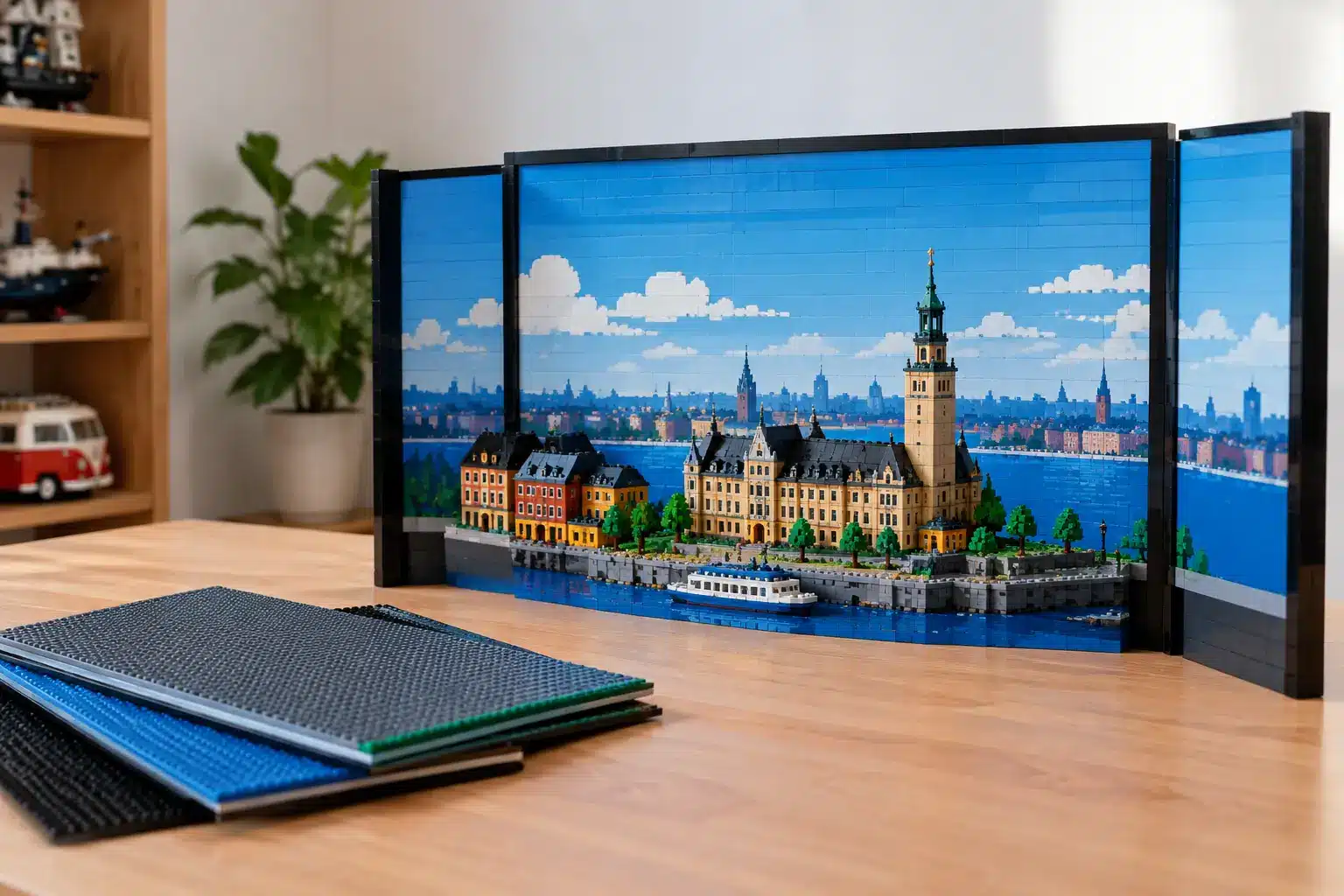
LEGO Backdrop Panel Review for Serious Collectors
A finished LEGO set can look brilliant on its own, then disappear completely against a pale wall, a crowded shelf or the visual noise of cables and books behind it. This LEGO backdrop panel review looks at the upgrade collectors often overlook: a printed background that gives a build its proper setting, strengthens the display and makes every detail feel more intentional.
For collectors who have invested hours building a UCS starship, a landmark model or a favourite scene from a much-loved theme, presentation is not an afterthought. It is part of the experience. A backdrop panel can turn a good shelf display into a focused showcase, but it is not automatically the right answer for every set or every room.
What is a LEGO backdrop panel?
A LEGO backdrop panel is a rigid printed panel positioned behind a completed model. Depending on the display solution, it may sit within an acrylic case, attach to a display base or stand independently behind the set. Its purpose is simple: replace an empty background with artwork that complements the model.
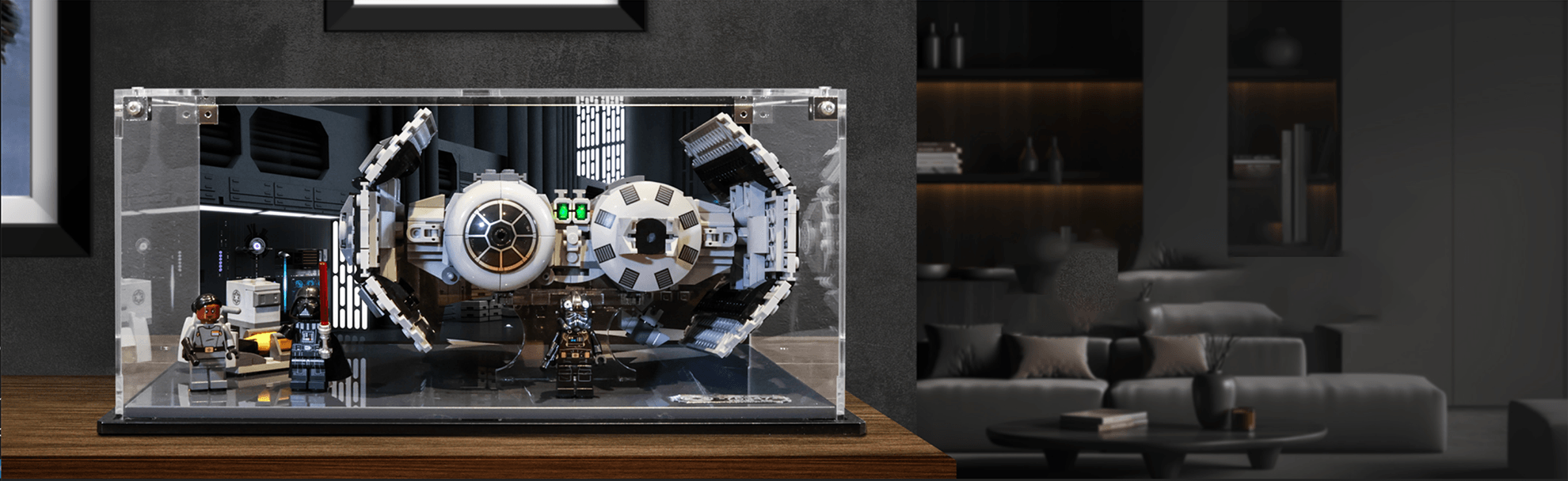
The best panels do more than add colour. They create depth, establish scale and give the eye a place to land. A dark space scene can make the silhouette of a Star Wars ship feel sharper. A castle corridor, woodland scene or magical skyline can give a Harry Potter build the atmosphere it loses when placed against a plain living-room wall. For vehicle collectors, a motorsport-inspired backdrop can make a Technic car look less like a model on a shelf and more like a centrepiece.
That difference is especially noticeable with sets designed around storytelling. A display background gives a build context without forcing you to add dozens of extra accessories around it.
LEGO backdrop panel review: what improves straight away
The immediate gain is visual separation. LEGO models are full of small parts, layered textures and carefully chosen colours. Against a busy room, those details compete for attention. A backdrop creates a clean visual boundary, helping the build read as one complete object.
It also improves photography. Whether you share your collection with fellow fans, document a new build or simply like taking a quick photo after rearranging a shelf, a themed panel removes distracting household clutter from the frame. You do not need a full studio setup to achieve a more polished result.
For display cases, printed backgrounds have another advantage: they make the acrylic feel purposeful. A clear case offers excellent visibility and dust protection, but the open space behind a set can sometimes feel unfinished. Adding artwork gives that space a role. The case becomes a miniature environment built around the set rather than a clear box placed over it.
The effect can be surprisingly dramatic with helmets, BrickHeadz and smaller display models. These collections often sit in rows, and a matching or complementary series of backdrops brings consistency without making every shelf look identical.
The quality details that matter
Not all backdrop panels deliver the same result. Artwork is the obvious deciding factor, but print quality, material choice and fit determine whether a display looks premium or improvised.
A well-made panel should have crisp printing, strong contrast and colours that suit the set without overpowering it. The model remains the hero. If the image is too bright, too detailed or too close in colour to the build, it can flatten the display instead of adding depth. A predominantly dark model, for example, usually benefits from a background with controlled highlights rather than a wall of solid black.
The panel itself should be suitably rigid and cut precisely for its intended display. Flimsy paper prints may be tempting as a low-cost option, but they can curl, crease and collect reflections. A purpose-made panel sits cleanly, keeps its shape and looks right from close range, which matters when a display is positioned at eye level.
Set-specific sizing is equally valuable. A generic backdrop can leave awkward gaps, crop a scene poorly or sit too low behind a tall build. Panels designed around a particular display case or set footprint feel integrated from the start. This is where specialist display brands such as Brixbox earn their place: the background, base and protective case can work together as one considered presentation.
Where backdrop panels work best
Backdrop panels shine when the set has a strong visual identity. Star Wars models naturally suit hangar bays, starscapes and planet-side environments. Marvel builds can gain scale from cityscapes or comic-inspired artwork. Disney castles, Harry Potter sets and Lord of the Rings displays are obvious candidates because their worlds are a major part of their appeal.
They are also excellent for display areas that need visual order. If your collection sits in a home office, lounge or bedroom rather than a dedicated hobby room, a coordinated backdrop can make the shelf look curated rather than crowded. It creates a deliberate focal point and helps a premium set justify the space it occupies.
There is a practical case for panels behind models with delicate exterior detail, too. You may be less tempted to keep moving the set around in search of a better angle when its final display position already looks complete. Less handling means fewer knocked antennae, loose tiles and anxious searches for a tiny part in the carpet.
When a backdrop panel is not the best choice
A printed background is not essential for every collector. If you prefer a gallery-style display with neutral walls and plenty of empty space, a graphic scene may feel too busy. Minimalist collections often look stronger with clear acrylic, a clean base and careful shelf lighting instead.
It also depends on viewing distance. A large, detailed backdrop behind a small set can be overkill if the display is viewed from across the room. In that situation, a subtle gradient, simple architectural texture or a solid tonal background may be more effective than a full cinematic scene.
Collectors who change displays constantly may find dedicated panels less flexible. A panel tailored to one ship, vehicle or building will always look best with that model. If you regularly rotate sets through a single case, choose a more neutral background or accept that the theme-specific effect comes with less versatility.
Finally, a backdrop panel cannot solve every display problem on its own. It will not keep dust off a model, prevent accidental knocks or make an overcrowded shelf feel spacious. For valuable, long-term builds, it works best as part of a display system that includes a properly fitted case and a stable base.
Choosing the right artwork for your set
Start with the mood of the build rather than simply choosing the loudest image. A panel should support the set’s story. Spacecraft benefit from open depth and controlled points of light. Detailed buildings often suit scenery that extends their world without duplicating too much architecture behind them. Vehicles tend to look best against track, garage or road-inspired graphics that imply movement while keeping the model clearly visible.
Think about the model’s colours as well. A bright white ship can disappear against snowy or pale artwork, while a black helmet may lose its outline against a very dark print. Contrast is your friend, but harsh contrast is not always better. The most effective displays use enough separation to define the model while preserving the feeling of one coherent scene.
Lighting deserves attention too. A backdrop with a satin or matte finish will usually be easier to enjoy under room lighting than a highly reflective surface. Position lights so they illuminate the model from above or the front, rather than bouncing directly off the panel or acrylic. Even a superb print can look flat if it is covered by glare.
Is it worth adding one to your display?
For collectors who care about presentation, a backdrop panel is one of the most satisfying upgrades available. It is not another set to build, nor is it an accessory that demands more shelf space. It makes the model you already own look more complete, more immersive and more at home in your collection.
The value is strongest when the panel is well printed, accurately sized and paired with a set you plan to keep on display. Choose artwork that respects the build rather than competing with it, give the model room to breathe and let the background do its quiet work. Your collection should not merely be stored. It should be showcased.
RECENT POST