LEGO Blog
All the latest Brixbox news, straight from the team.
LEGO Display Case vs Shelf: Which Is Best?
A UCS Starfighter, Hogwarts Castle or a prized Technic supercar can look magnificent on the day it is built. A few weeks later, though, an open shelf can turn that centrepiece into a careful dusting job with dozens of small details at risk. The LEGO display case vs shelf decision is not simply about where a set fits. It is about how you want your collection to look, how much care it needs, and whether each build feels like a finished showpiece.
For some collectors, a shelf is exactly right: flexible, affordable and ideal for a collection that changes often. For others, a purpose-built acrylic case is the difference between owning an impressive set and properly exhibiting it. The best option depends on the set, the room and the role that build plays in your collection.
LEGO Display Case vs Shelf: The Real Difference
An open shelf gives you access and flexibility. You can rearrange a growing display in minutes, place several sets together, and let large builds take up as much room as they need. It works particularly well for collections with plenty of play-friendly models, duplicate minifigures, or builds that you enjoy modifying and photographing regularly.
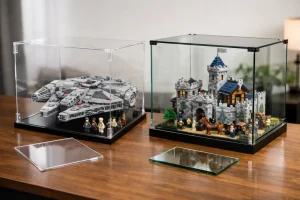
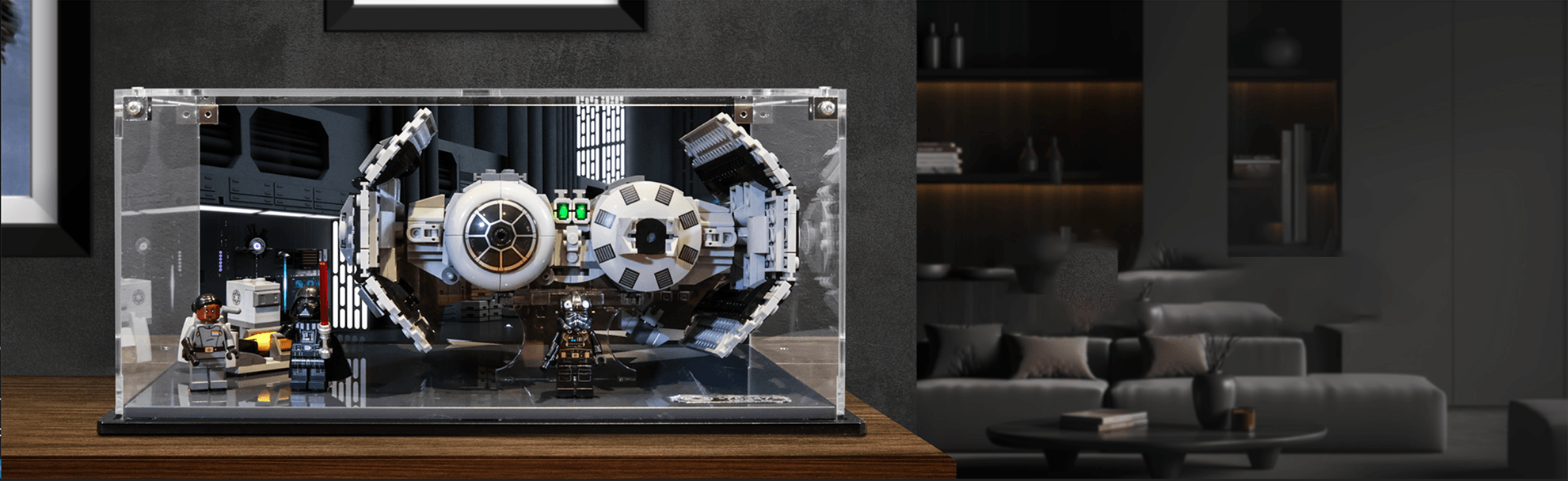
A display case creates a boundary around the model. It protects the build from airborne dust, reduces accidental handling, and gives it a defined space of its own. With a set-specific case, the dimensions, base and backdrop can be chosen to frame the model rather than leave it floating in a large, generic box. That extra structure makes a real difference for premium sets with intricate interiors, delicate wings, exposed studs or light-coloured elements that show dust quickly.
The question is not whether shelves are good and cases are better. It is whether a particular set deserves an open, evolving display or a more permanent presentation.
Dust Is the Deciding Factor for Many Collectors
Dust is the quiet enemy of an open LEGO display. It settles in cockpits, between plates, across minifigure hairpieces and inside the tiny mechanical details that made the build satisfying in the first place. Dark sets such as Batman vehicles and black Star Wars ships can show it almost immediately. White models, meanwhile, may look clean at a glance but can collect dust in seams and around moving parts.
Cleaning an open set is possible, but it takes patience. A soft brush and gentle air blower can help, yet every cleaning session creates an opportunity to dislodge a tile, antenna or carefully positioned minifigure. The more detailed the model, the less appealing that routine becomes.
An acrylic display case significantly reduces the amount of dust that reaches the build. It will not remove every bit of maintenance forever, especially when the case is opened, but it changes cleaning from a regular chore into occasional upkeep. For collectors displaying large, expensive or retired sets, that protection alone can justify the investment.
Shelves are still a sensible choice for sets that are played with, rebuilt, or regularly moved around. There is little value in placing a model behind acrylic if you expect to take it out every weekend. The case is strongest when the build is complete, positioned and intended to stay that way.
Presentation: A Shelf Holds a Set, a Case Frames It
A shelf can be visually striking, especially when a whole theme is displayed together. A line of helmets, a fleet of starfighters, or a row of modular buildings has impact because of its scale. The challenge is keeping that display from feeling crowded. Different box sizes, colours and model heights can compete for attention, while spare accessories and loose minifigures can quickly make a shelf look less intentional.
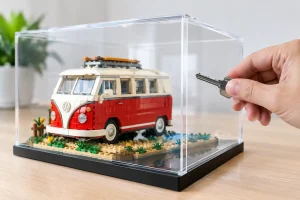
A display case gives one set its own stage. Clear acrylic keeps the model visible from multiple angles while a printed base can anchor it visually. A themed UV-printed background adds depth, colour and context without asking you to build a full custom scene behind it. Suddenly, a helmet is not just sitting on a bookcase; it is presented as the icon it was designed to be.
This is especially effective with licensed sets. The drama of a Star Wars ship, the gothic atmosphere of Harry Potter, or the bright personality of Disney builds can be carried through the display itself. A case should complement the model, not distract from it, which is why set-specific proportions and artwork matter more than a one-size-fits-all solution.
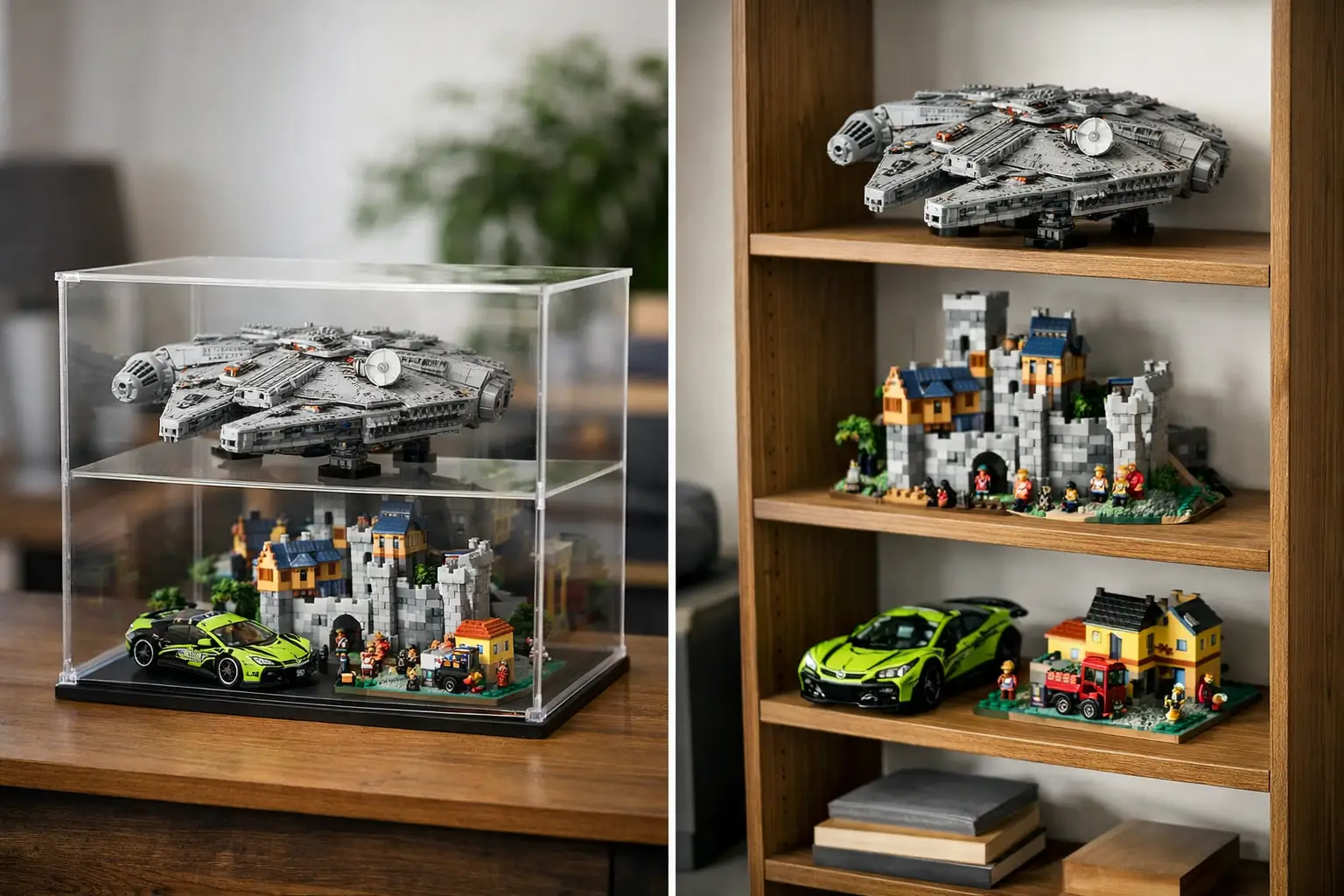
For collectors building a display wall, consider mixing both approaches. Use shelves for the wider collection and reserve cases for the true focal points: the UCS build, the treasured gift, the retired set, or the model that took an entire weekend to complete.
When a shelf delivers the better display
A shelf is often the stronger choice when you want a connected scene rather than individual spotlights. Modular buildings need room to form a street. Large vehicle collections can look brilliant with the models arranged by scale or era. Small BrickHeadz and minifigures also gain character through numbers, particularly when they are grouped by theme.
Open shelving also makes sense where viewing distance is greater. If a collection is displayed high on a wall or across a dedicated hobby room, a case around every model may be unnecessary. Focus your budget on protecting the models viewers will see close-up.
When a case earns its place
Choose a case for a set with delicate details, high value, a complex interior, or strong sentimental value. It is also a smart choice in busy homes, shared spaces, or rooms where pets, children and passing elbows create a genuine risk. Acrylic adds a layer of reassurance without hiding the build away in a cupboard.
A case is particularly valuable for models displayed at eye level. That is where fingerprints, dust and everyday knocks are most likely, but it is also where premium presentation has the greatest effect.
Space, Access and Everyday Living
Shelves are adaptable. You can change the layout as the collection grows, move sets to make room for new releases, and use vertical space with risers or wall-mounted units. If you are still finding your display style, shelving gives you freedom to experiment before committing to a more curated arrangement.
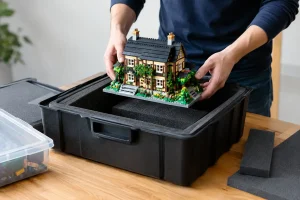
Cases take more planning. You need to measure the shelf, cabinet or tabletop where the finished display will live, including enough room above the case for comfortable access. A display case can also make a model feel more substantial because the acrylic enclosure creates a defined footprint. That is part of the premium effect, but it is worth accounting for before you buy.
Access matters too. If you love pointing out an Easter egg inside a build or repositioning figures to match the season, an open shelf keeps everything immediately available. If you prefer the display to remain exactly as you arranged it after the final brick clicked into place, a case suits that collector mindset far better.
There is no need to case every build. A practical approach is to protect the sets that are hardest to clean or replace, then use shelving for the rest. This keeps the room feeling open while ensuring the standout models receive the care they deserve.
Cost Should Be Measured Against the Set, Not Just the Case
A shelf is usually the lower-cost way to display a large number of models. It offers excellent value when your priority is capacity, particularly for smaller sets or a collection you rotate often. You are paying for the furniture, then using it across many builds.
A display case is a more focused investment. Its value lies in protection, presentation and confidence that the model is less exposed to damage. That can be easier to appreciate when the build represents a significant purchase, a long-retired favourite, or hours of careful construction.
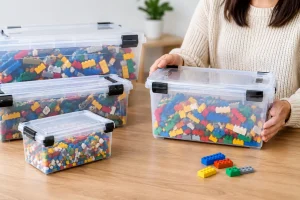
Set-specific cases also avoid the compromises of generic storage. When the display is designed around a particular model, it can provide suitable clearance, a polished base and artwork that feels connected to the theme. At Brixbox, that collector-first approach is what turns a completed set into a display piece worth pausing for.
Think about replacement difficulty as well as price. A current small set may be easy to rebuild after an accident. A retired flagship set with rare elements and an elaborate arrangement is another matter. The more frustrating the loss would be, the stronger the argument for a case.
Choose by the Story You Want Your Collection to Tell
A shelf says your collection is alive, growing and ready for the next rearrangement. It is ideal for a broad display, connected scenes and hands-on enjoyment. A display case says this build has reached its final form. It protects the model and gives it the presence of a centrepiece.
Start with the set you would be most disappointed to find covered in dust or damaged by a careless knock. Give that one a proper home first. Once you see how much a well-framed build changes the room, choosing what to showcase next becomes part of the fun.
RECENT POST