LEGO Blog
All the latest Brixbox news, straight from the team.
LEGO Minifigure Display Stand Ideas for Collectors
A rare clone trooper, a first-series Collectible Minifigure, or the hero from a favourite childhood set deserves more than a crowded shelf edge. The right LEGO minifigure display stand turns small characters into a deliberate collection: lined up, protected, easy to admire and ready to make an impression long after the build is complete.
For collectors, minifigures are rarely just extras. They carry the personality of a theme, capture a specific scene and often become the hardest pieces to replace. Giving them a proper home makes everyday display tidier, but it also brings the stories behind your collection into view.
Why a LEGO Minifigure Display Stand Changes the Display
Minifigures are designed to stand on studs, yet loose baseplates and open shelving present a few familiar problems. Characters become separated from their accessories, rows lose their order, and dust settles into helmet visors, capes and printed details. A purpose-built stand creates a fixed position for every figure, whether you are showing a complete LEGO Star Wars squadron, a Marvel line-up or the full run of a Collectible Minifigures series.
There is a visual difference, too. A collection looks far more considered when the spacing is consistent and the figures are presented at a viewing height that suits the room. Instead of dozens of small items competing for attention, the stand creates a single focal point. That matters particularly with premium figures, custom characters and retired favourites that deserve to be seen properly.
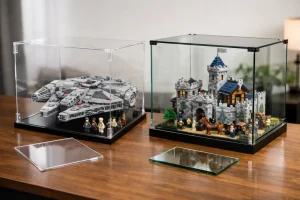
The best choice depends on what you collect and where it will live. A compact desktop stand may suit a growing series of minifigures, while a wall-mounted display makes better use of vertical space in a hobby room. For figures displayed near a busy living area, an enclosed acrylic solution is often worth considering for the added protection from dust and accidental handling.
Choose a Stand for the Collection You Actually Have
It is tempting to buy for the number of minifigures on display today. Collectors know how quickly that number changes. Leave some room for the next series, the next convention find or the character that appears in a set you had not planned to buy. A stand with a little breathing room looks better than one filled to the last stud, and it avoids a mismatched second display appearing too soon.
Count figures, then consider their shape
Start with a realistic figure count, then look beyond the standard minifigure footprint. Capes, large wings, brick-built backpacks, long weapons and broad shoulder armour all need extra clearance. A display that fits 20 standard figures may not comfortably showcase 20 characters from a fantasy or superhero collection.
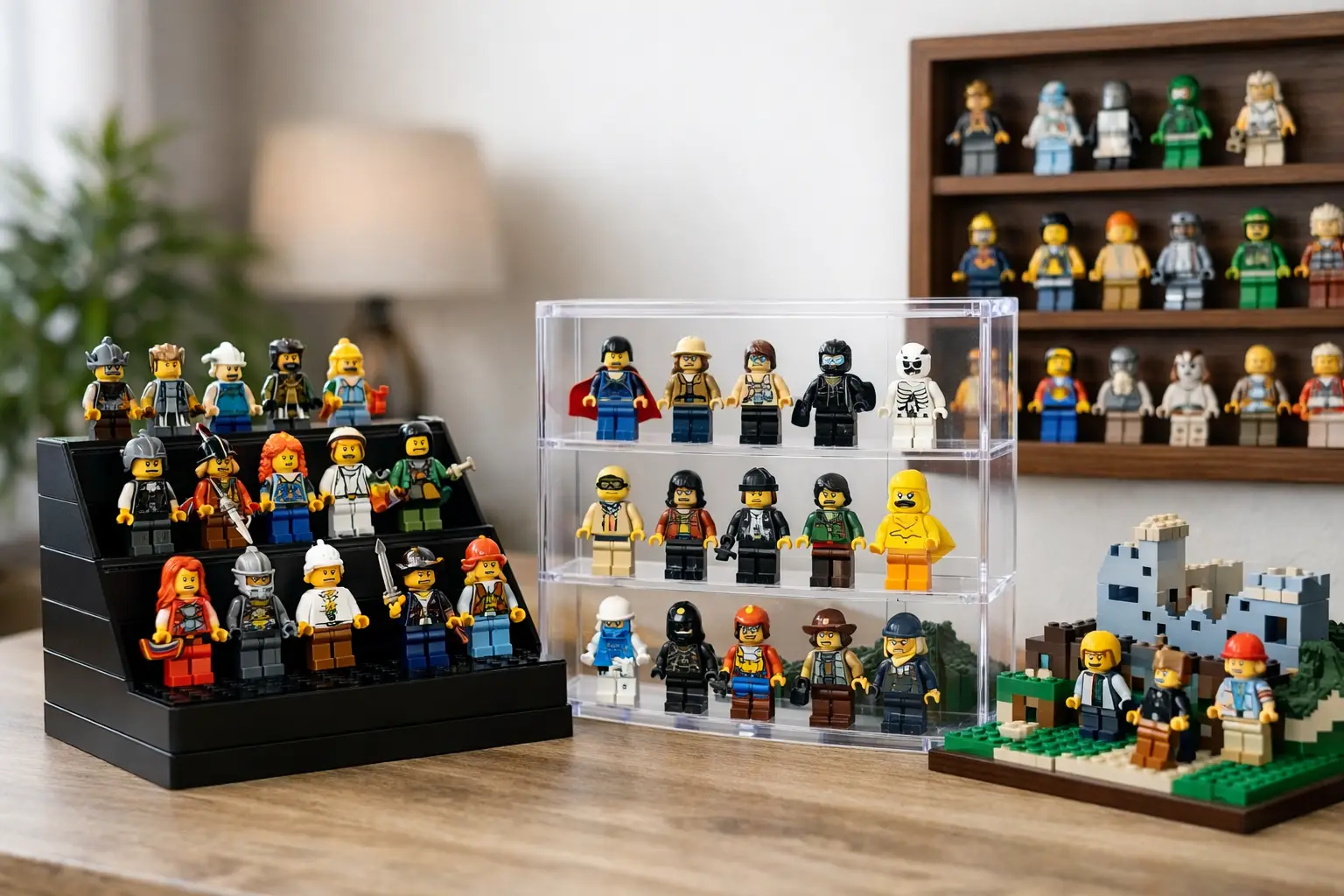
Tall characters also affect shelf spacing. Gandalf’s hat, Wolfpack Beast’s hairpiece, a plume or a raised lightsaber can quickly meet the level above. If figures are placed in rows, make sure the rear row can still be seen rather than disappearing behind the front line. Tiered stands solve this neatly, especially for collections intended to be viewed from the front.
Match the format to the theme
A single row creates a clean, gallery-style look for a small, curated group. It works brilliantly for favourite characters from one set, a line-up of LEGO Speed Champions drivers or a handful of prized classic figures. Multi-row stands give greater capacity and suit complete series, armies and theme-wide collections.
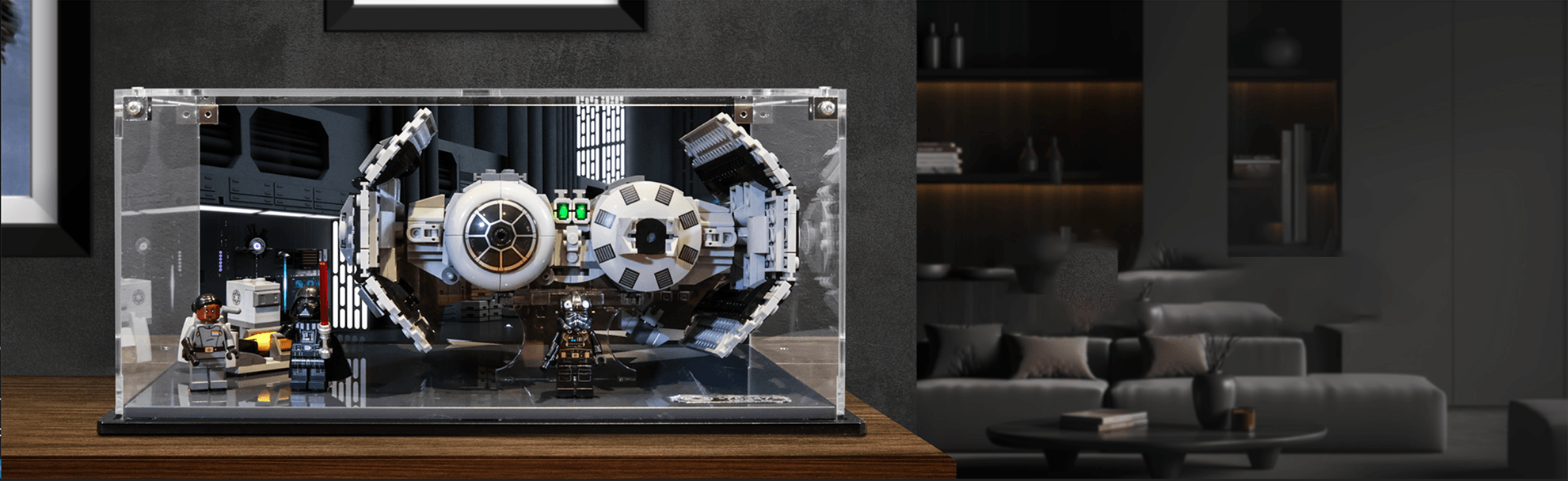
For a scene-led display, allow the minifigures to support a larger model rather than taking it over. A row of Rebel pilots beside an X-wing, for example, can add scale and story without cluttering the base. For character-led collections, the display stand itself becomes the main feature, where symmetry, colour and careful grouping do the work.
Make the Layout Feel Intentional
The most satisfying displays usually have a simple organising rule. It could be release order, character faction, film chronology, colour, rarity or theme. The rule does not need to be obvious to every visitor, but it should make sense to you. That is what makes the collection feel personal rather than randomly assembled.
Group figures that belong together. Keep a squad of troopers in formation, place a superhero alongside allies and villains, or arrange a Collectible Minifigures series in numbered order. Repeated colours can be especially effective: a line of Imperial figures has a sharp visual uniformity, while a rainbow of costumed characters can become a playful statement piece.
Avoid filling every available space with props. A few themed accessories or a small printed detail can enhance the presentation, but minifigures need visual space around them. Their printed torsos and faces are the reason they are being displayed. Let those details remain the stars.
Use height with care
Tiered stands are excellent for visibility, but height should create order rather than a wall of plastic. Put taller characters, figures with raised accessories or less important duplicates towards the back. Keep the most recognisable faces where they can be seen immediately.
If you are displaying a complete set, choose one figure as the visual anchor. It may be the rarest character, the lead hero or simply the figure with the strongest colours. Positioning that character centrally can give a large collection a clear sense of balance.
Protection Matters as Much as Presentation
Open stands are convenient. You can swap figures, update a line-up and pick out a character for a new build in seconds. They are ideal for collections that change regularly or for a shelf well away from cooking, pets and heavy footfall.
The trade-off is dust. It settles quickly on black helmets, white armour and textured hairpieces, and it is surprisingly visible under display lighting. Regular gentle cleaning helps, but a case offers a more permanent answer for figures you want to preserve in display-ready condition.
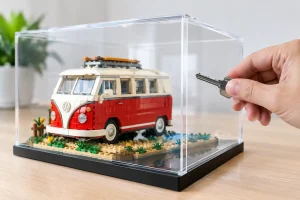
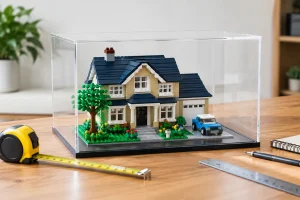
Acrylic cases bring another advantage: they add a finished boundary around the collection. They make a group of minifigures feel like an exhibit rather than shelf storage. For collectors displaying rare, sentimental or retired characters, that extra layer of protection can make all the difference.
At Brixbox, display is treated as part of the collecting experience, not an afterthought. A well-chosen base, a crisp printed background or a set-specific scene can give even a compact minifigure line-up a far stronger presence in the room.
Details That Separate a Good Stand from a Great One
Look closely at how the figures attach. Secure stud placement keeps lines neat and prevents characters from falling forward when the stand is moved. It should also be easy to remove a figure without stressing its legs or pulling apart nearby accessories.
Material finish is equally important. Clear acrylic should allow the collection to take centre stage, while printed bases and backgrounds should add atmosphere without obscuring the figures. A themed backdrop can bring a Star Wars, Harry Potter or Marvel group to life, but it should complement the minifigures rather than compete with their colours.
Think about lighting before choosing the final position. Direct sunlight can be harsh on printed elements over time, while a shelf with soft, indirect light shows off detail without creating distracting glare. If you use LEDs, test their angle first. Light from above tends to show faces and torso prints best, whereas lighting from directly in front can flatten the display.
Build a Display You Will Keep Looking At
A minifigure collection should not be hidden in a drawer simply because it has outgrown the edge of a bookcase. Give it a defined format, enough room to expand and protection that fits its value. Whether you favour a precise row of Clone Troopers, a complete CMF series or a mixed line-up of personal favourites, a LEGO minifigure display stand gives every character its place.
Start with the figures that mean the most to you, arrange them with purpose, and leave a little space for the next one that has to join the line-up.
RECENT POST