LEGO Blog
All the latest Brixbox news, straight from the team.
Why a LEGO Set Specific Display Case Wins
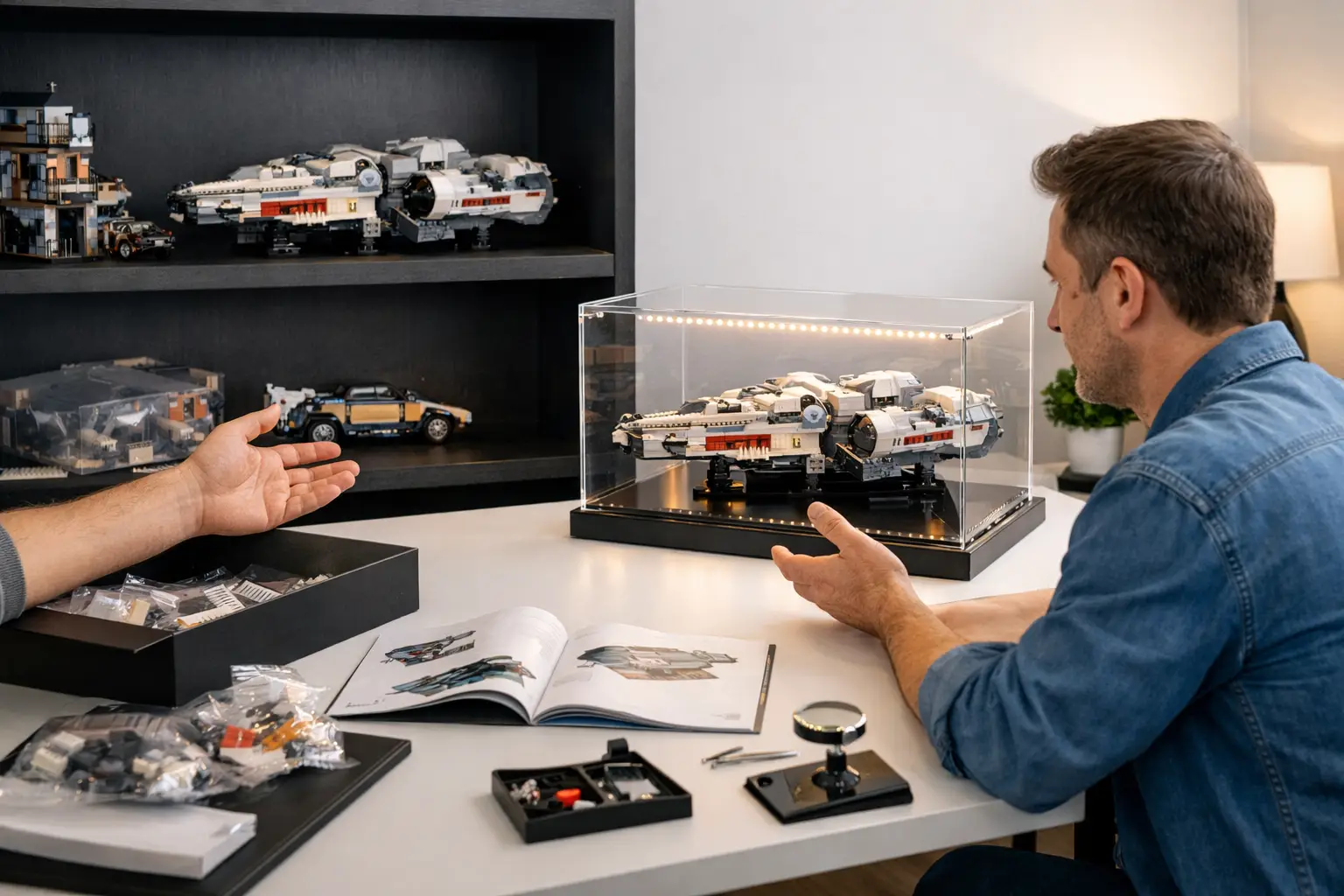
A UCS ship balanced on an open shelf looks impressive for about five minutes. Then the dust settles into every stud, the base starts to feel cramped, and the whole display loses that finished, premium look the build deserves. That is exactly where a LEGO set specific display case changes the game. It does more than cover a model. It turns a completed set into a proper showcase piece.
Collectors already know the build is only half the story. Once the last brick clicks into place, the next question is where it lives and how it is presented. For smaller sets, a shelf might be enough for a while. For larger, more detailed models, or anything with real display value, a generic solution usually starts to feel like a compromise.
What makes a LEGO set specific display case different
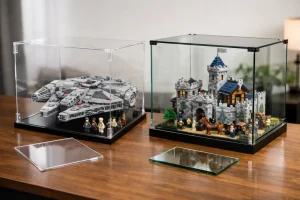
A generic acrylic box gives you basic coverage. A LEGO set specific display case is designed around the actual footprint, height, proportions, and visual character of a particular set. That sounds simple, but it makes a massive difference once the model is in place.
The fit looks cleaner because the case does not leave awkward dead space around the build. The set sits with purpose instead of rattling around inside what feels like oversized packaging. For collectors, that visual precision matters. It keeps the display looking intentional rather than improvised.
It also affects how the model is viewed. When a case is built for a specific set number or theme, the spacing, base style, and optional background artwork can all work with the design of the model instead of against it. A Star Wars display should not feel the same as a Technic supercar display, and a good set-specific case recognises that straight away.
Why generic cases often fall short
At first glance, a standard display box can seem like the practical option. It covers the model, protects it from casual knocks, and gives you a clear viewing window. If your only goal is basic protection, that may be enough.
But for serious collectors, the issues appear quickly. The dimensions are often too loose, which makes the set look smaller and less impactful. The proportions can also be wrong, especially with tall builds, winged spacecraft, helmets, or models with uneven shapes. You end up paying for empty acrylic rather than a display built around the model itself.
Then there is presentation. A premium LEGO set deserves more than being dropped into a plain clear cube. When the case has no connection to the theme, no visual framing, and no sense of scale, it protects the set but does very little to elevate it.
That is the key trade-off. Generic cases can be flexible across different builds, but they rarely feel special. If you like changing displays often, that flexibility has value. If you want one set to look its absolute best for the long term, set-specific wins almost every time.
Dust protection matters more than most collectors expect
Dust is not just annoying. It actively chips away at the look of a display. Fine detailing gets dulled, dark bricks start to show every speck, and cleaning becomes a careful, time-consuming job that always carries some risk.
Anyone who has tried brushing around antennas, exposed greebling, minifigure accessories, or Technic bodywork knows the problem. Even with care, frequent cleaning means more touching, more shifting, and more chance of parts coming loose. A proper case reduces that cycle dramatically.
A LEGO set specific display case helps because the model is protected in the position it was meant to be shown. You are not simply storing it away from dust. You are preserving the exact display you worked to create. For expensive sets, retired sets, or builds with sentimental value, that extra layer of care feels less like a luxury and more like common sense.
The display should match the set’s identity
This is where collectors usually stop thinking like organisers and start thinking like curators. The best displays do not just contain a set. They give it context.
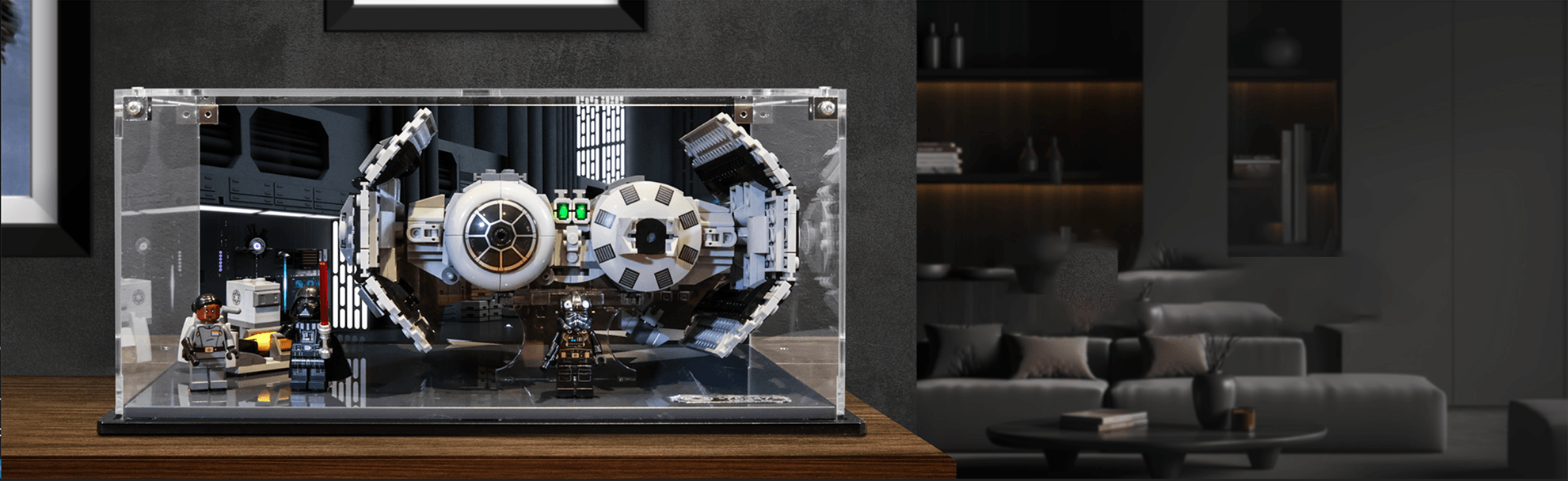
A printed base can sharpen the overall presentation and make the model feel grounded. A UV-printed background can bring atmosphere, scale, and theme without overwhelming the build itself. Done well, those details make a display feel more complete. The set remains the star, but the case helps frame it properly.
That matters even more with licensed themes. A Star Wars vehicle, a Harry Potter location, or a Marvel display piece already carries a strong visual identity. A plain case protects it, but a tailored one helps bring that identity forward. The result is more immersive and far more satisfying to look at every day.
Of course, not every collector wants artwork. Some prefer a clean museum-style look with minimal distraction. That is a valid choice too. The point is not that every display needs extra graphics. It is that a set-specific case gives you options that make sense for the model rather than forcing every build into the same generic format.
Choosing the right LEGO set specific display case
The first thing to check is straightforward compatibility. The case should be designed for the exact set, not just the theme or a rough size category. That is especially important when two models appear similar but have different dimensions, display angles, or stand requirements.
After that, think about where the set will live. A large wall of shelving can handle deeper cases and more dramatic backgrounds. A desk, sideboard, or smaller room may need something more compact and visually tidy. The right case should improve the space, not dominate it awkwardly.
Material quality matters too. Acrylic should look clear and premium, not flimsy or cloudy. The assembly should feel secure. The base should support the model with confidence, especially for heavier or more valuable sets. Serious collectors notice these things immediately because they affect the final look just as much as the set itself.
Then there is your display style. Some collectors want a minimal clear case that keeps all attention on the build. Others want printed bases, themed backgrounds, or a more cinematic presentation. Neither approach is wrong. It depends on whether you want the set to feel like a preserved object or a fully staged centrepiece.
When a set-specific case is most worth it
Not every set needs the same level of display investment. A small impulse-buy build or seasonal novelty piece may be perfectly happy on a shelf. But some sets earn more.
Larger flagship models are the obvious candidates. So are UCS releases, premium Technic cars, helmets, detailed architecture builds, and display-first licensed sets that carry serious shelf presence. These are the models people notice first when they enter the room. They are also the ones most likely to suffer when left exposed to dust or squeezed into a generic setup.
Set-specific cases also make a lot of sense when a collection is becoming harder to organise. Once you move beyond a few favourite builds and start curating by theme, presentation consistency becomes more important. Cases built around individual sets can make the whole display look sharper, more intentional, and more collector-grade.
That is part of the appeal behind specialist retailers such as Brixbox. The focus is not merely on putting acrylic around LEGO. It is about creating purpose-built presentation for collectors who care about fit, finish, and the way each set is experienced after the build is complete.
The real value is in how the collection feels
Collectors usually justify a display case through protection, and that is fair. Dust prevention and safer handling are real benefits. But the deeper reason people choose a LEGO set specific display case is pride.
A great set takes time, money, patience, and often a fair bit of emotional investment. Some builds mark a birthday, a milestone purchase, or the return to a hobby you loved years ago. Leaving that set on a bare shelf can feel oddly temporary, as though the job is not quite finished.
A case gives the model a final stage. It says this build matters. It belongs here. It deserves to be seen at its best.
And that is why the right display solution does more than tidy up a room. It sharpens the look of the set, protects the details you spent hours assembling, and makes the whole collection feel more complete. If a build is worth keeping, it is worth showcasing properly.
RECENT POST