LEGO Blog
All the latest Brixbox news, straight from the team.
Can LEGO Sets Fit Cases? A Collector’s Fit Guide
A finished build deserves more than an empty shelf and a hopeful dusting routine. So, can LEGO sets fit cases? Absolutely – provided the case is designed around the model’s true footprint, rather than the dimensions printed on a box or guessed from a photo. The right fit protects every detail while giving your collection the polished, gallery-worthy presence it deserves.
Can LEGO sets fit cases without being disassembled?
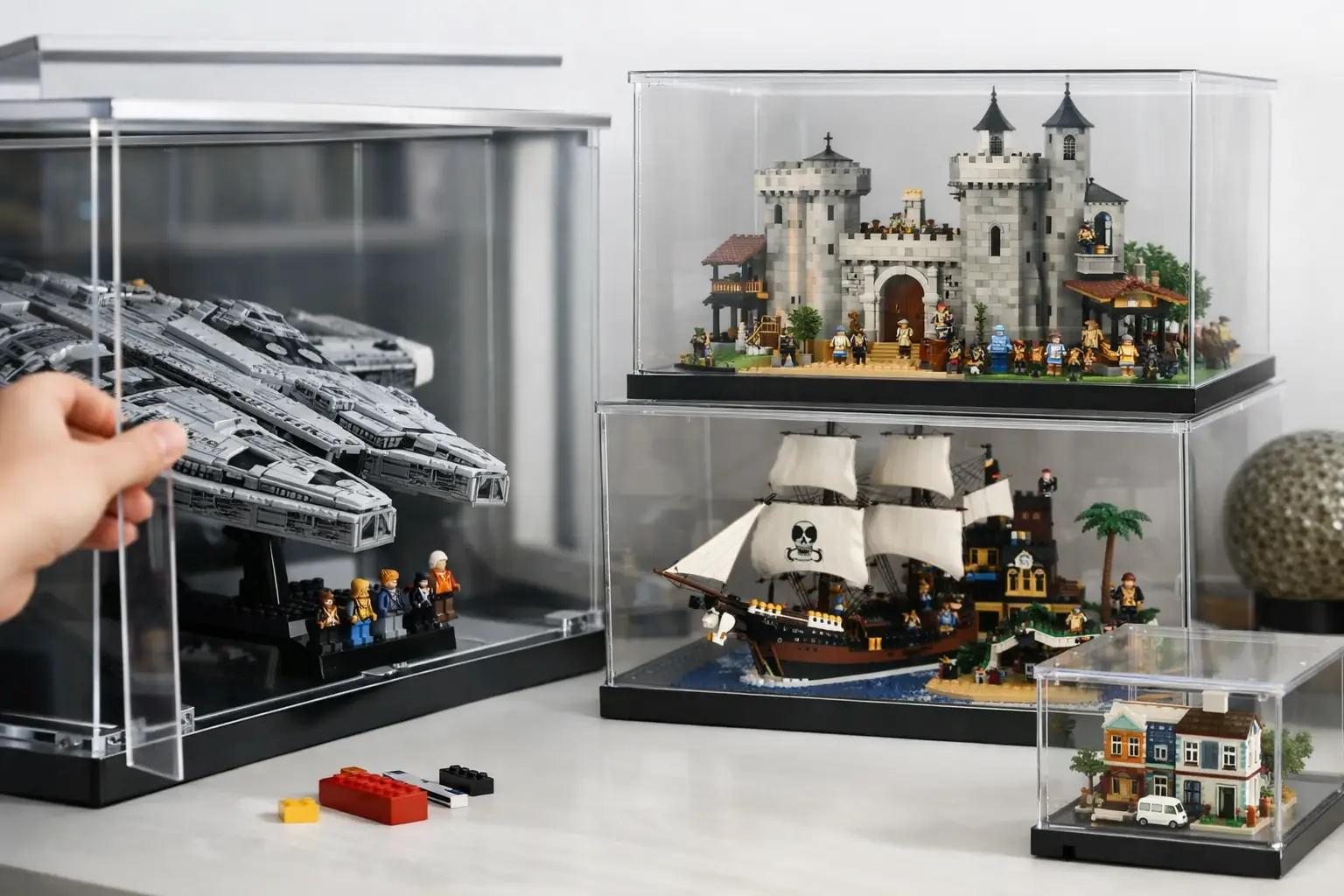
Most completed LEGO sets can fit inside a display case fully assembled. From compact BrickHeadz and helmet builds to wide Star Wars starfighters, towering Hogwarts displays and intricate Technic cars, a well-sized acrylic case allows a model to remain exactly as you built it.
The crucial detail is that the case must accommodate the finished model, including all the parts that extend beyond its apparent shape. A wingtip, antenna, raised spoiler, open cockpit lid, minifigure display, angled stand or scenic base can make the real dimensions very different from a set’s standard listed measurements.
That is why set-specific cases are so appealing to serious collectors. They are made for the set number and display orientation, with the clearance needed to show off the build rather than squeeze it into a clear box. Generic cases can work for simpler models, but they often leave too little room around a build or far too much empty space, which can make a prized centrepiece feel oddly lost.
The measurements that determine a proper case fit
When collectors ask whether a LEGO set will fit a case, width, depth and height are only the starting point. What matters is the build at its widest, deepest and tallest point in its intended display position.
A car may fit neatly when displayed level, yet need more vertical clearance if it is mounted on an angled stand. A starship may have a modest body but an enormous wingspan. A castle can be narrow enough for a bookcase but become difficult to case once towers, flags and elevated baseplates enter the equation.
Measure the finished build from the outermost points, not the main body. If you are choosing a case before building, check the official completed dimensions, then allow for any optional display features you plan to use. The most reliable approach is to account for these four areas:
- overall width, including wings, weapons, handles and side-mounted details
- total depth, including a stand, rear exhausts, tails or open sections
- maximum height, including antennae, flags, raised elements and minifigures
- the display base or printed plinth, if you want the model presented as a complete scene
A few centimetres of breathing room around the model is usually desirable. It prevents contact with the acrylic, makes positioning safer and lets the build read clearly from every angle. Too much space, however, can weaken the visual impact. A case should frame the model with purpose, not make it look like it is waiting in a warehouse.
Clearance is protection, not wasted space
A precise fit does not mean the LEGO model should touch the case walls. Acrylic can flex slightly during handling, and delicate elements are vulnerable when a model is being lowered into position or when the case is lifted for cleaning. Clearance gives you a practical buffer.
This matters particularly for sets with fragile details. Think of the pointed fins on a starfighter, the exposed mirrors on a supercar, the branches on a fantasy build or the tiny architectural flourishes on a modular display. A case that is technically large enough can still be the wrong choice if fitting the model requires awkward manoeuvring.
Height deserves special attention. Collectors often measure the main roofline of a build, then forget the one radar dish, mast or raised minifigure that reaches higher than everything else. In a display case, that overlooked detail becomes the point most likely to catch.
Why set-specific cases make the difference
A set-specific display case removes much of the uncertainty. Instead of translating measurements and hoping for the best, you can choose a solution designed around the exact set number, its natural stance and the features collectors want visible.
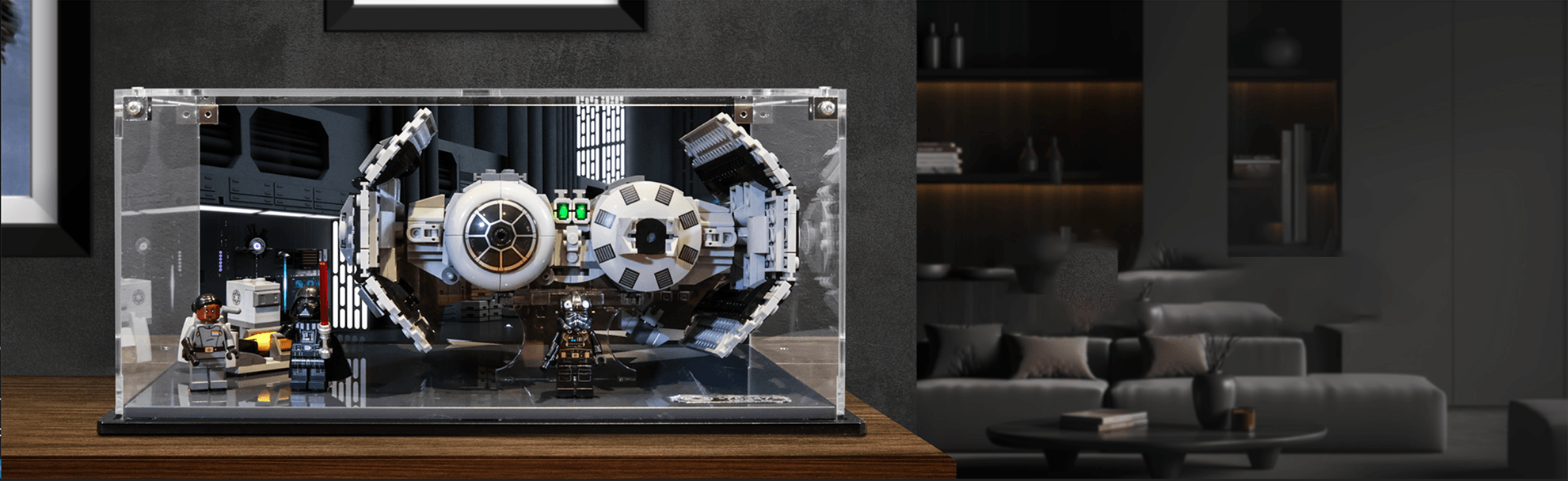
For premium licensed builds, presentation is part of the experience. A case for a Star Wars model might allow the craft to command the space with a themed printed background. A Harry Potter build can gain atmosphere from a detailed base and backdrop that turns shelving into a proper scene. For a Technic vehicle, a clean platform and balanced proportions can give the engineering the attention it deserves.
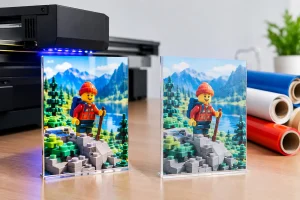
This is about more than decoration. Printed bases can provide a stable visual foundation, while UV-printed backgrounds add depth without taking up extra room behind the model. Together, they make the display feel intentional – particularly useful when a set has a small physical footprint but a huge presence in your collection.
Brixbox cases are designed around specific LEGO sets, helping collectors avoid the frustrating gap between a case that looks suitable online and one that does not suit the finished model at home. The result is a more confident fit, stronger protection and a display that feels built for the legend inside.
When a generic case can still work
There are times when a universal case is a sensible choice. Small minifigure groups, custom creations, collections of similarly sized BrickHeadz or a rotating selection of compact builds can be displayed effectively in a well-proportioned standard case. Flexibility may matter more than an exact themed backdrop if your shelf changes often.
The trade-off is that you become responsible for the planning. Measure carefully, think about how the model will be placed inside and consider whether you may later add a stand, extra minifigures or a custom scene. A generic case also needs to suit your chosen shelf, cabinet or desk. A perfect fit for the model is not helpful if the finished case protrudes too far from its new home.
For rare, expensive or sentimental sets, the value of a purpose-built case is usually clearer. Those are the models you do not want to keep moving, re-building after an accidental knock or cleaning piece by piece after dust has settled into every stud and hinge.
Don’t forget the case itself
The outer dimensions of a display case are larger than the internal space available to the LEGO set. Acrylic panels, a base and a lid all add material around the edges. When planning a display wall or shelf, use the complete case dimensions supplied by the manufacturer rather than the model’s measurements alone.
Also consider access. A tall case may fit beneath a shelf but leave no room to lift off its cover. A deep case may look superb on a cabinet, yet make it difficult to reach a model at the back. If you plan to group multiple cases together, allow enough space to remove one without disturbing the rest of the collection.
Lighting can alter the decision too. Direct sunlight is best avoided, both for the comfort of the room and for long-term display care. A thoughtfully positioned case with controlled room lighting will show off transparent pieces, printed elements and detailed interiors without leaving your collection exposed on an open shelf.
A better way to plan your next display
Before buying a case, decide how you want to experience the set once the building is done. Is it a centrepiece viewed from all sides? A model that needs a cinematic background? Part of a themed line-up with matching bases? Or a compact build that simply needs relief from dust and curious hands?
That answer shapes the right case more than raw dimensions ever will. A tight, basic enclosure may protect a model, but a properly considered display gives it room to be admired. Choose for the finished build, the shelf it will live on and the story you want your collection to tell – then let every carefully placed brick earn its spotlight.
RECENT POST