LEGO Blog
All the latest Brixbox news, straight from the team.
Are Display Cases Stackable? A Collector’s Guide
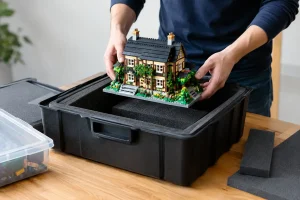
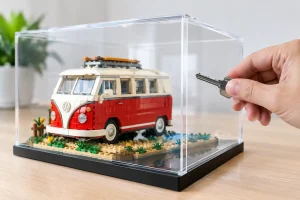
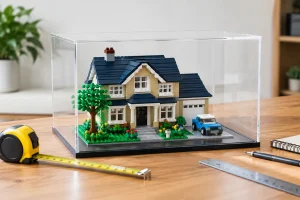
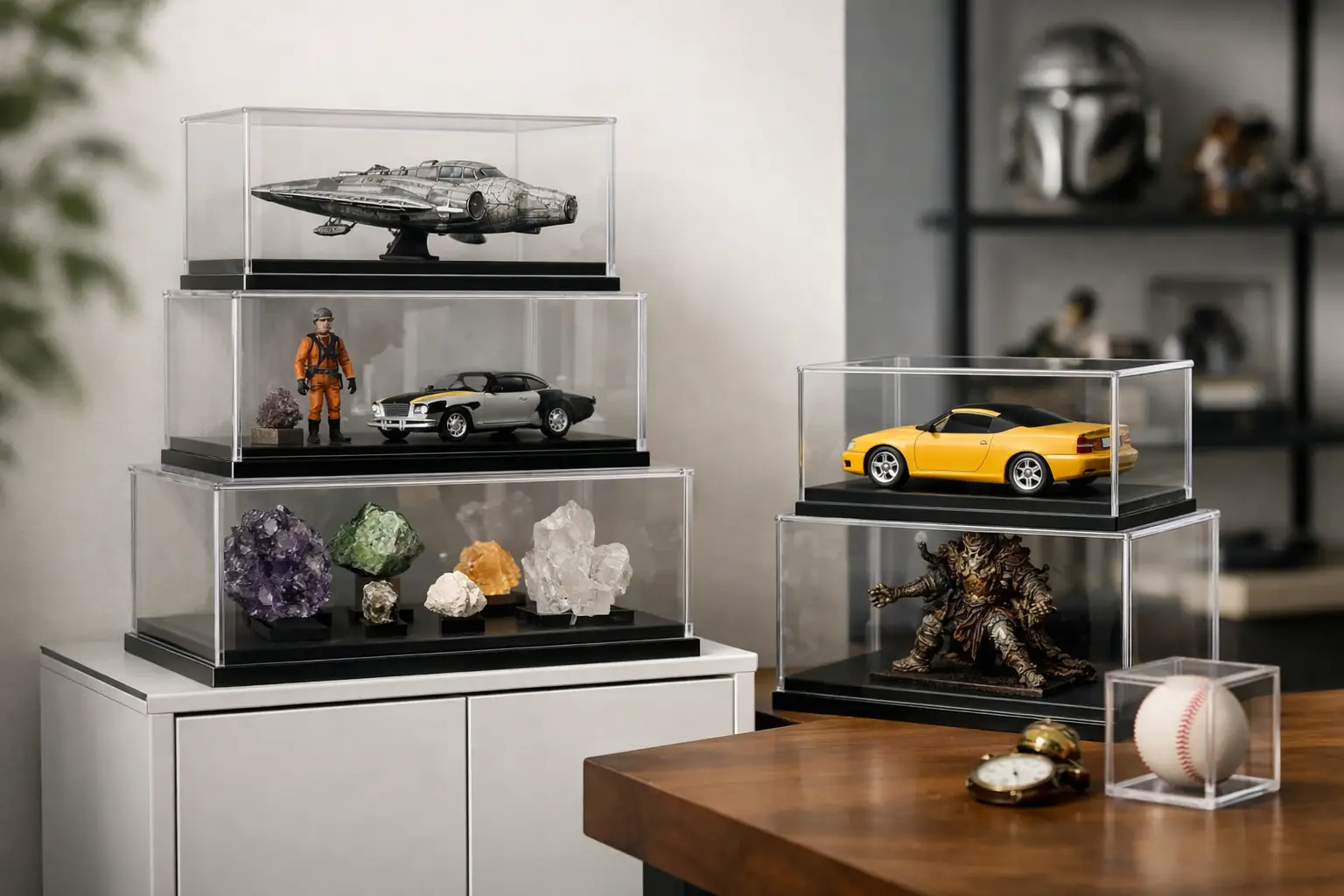
A finished LEGO set rarely stays small for long. One Star Wars helmet becomes a full row, a single modular building gains neighbours, and suddenly the shelf you once thought was generous is doing serious duty. So, are display cases stackable? Sometimes – but only when the cases, the contents and the surface beneath them are suited to the job.
Stacking can turn a limited shelf, cabinet or hobby room into a sharper, more deliberate gallery. Done badly, however, it can put pressure on acrylic panels, obstruct access to the build, create an awkward visual tower and introduce a risk no collector wants near a prized set. The right answer is not simply whether cases can sit on top of one another. It is whether they have been designed, positioned and loaded to do so safely.
Are display cases stackable for LEGO collections?
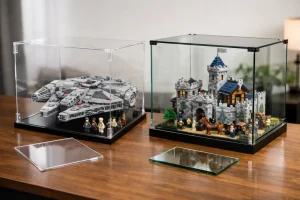
Display cases may be stackable in a practical sense, but that does not mean every acrylic case should be treated as stack-ready. A lightweight case covering a small BrickHeadz model has very different demands from a wide case housing a UCS starship, a large Technic car or a towering Hogwarts display.
The main question is where the weight travels. In a well-considered stack, the upper case should rest evenly on strong, level areas of the case below – ideally along a stable frame, base or reinforced top surface. If the upper case presses down on a broad unsupported acrylic panel, the material can flex over time. Acrylic looks beautifully clean and premium, but it is not indestructible, and it should not be asked to act like industrial shelving.
The contents matter too. A case protects the model inside, yet the model’s weight is usually carried by its base. The upper case adds its own weight to the equation, particularly if it features a printed base, UV-printed background or a larger footprint. Before building upward, consider the complete load rather than judging an empty case by hand.
For many collectors, the safest and best-looking option is to stack only compact, similarly sized cases, keeping larger and heavier set-specific displays on their own shelf level. That approach still makes excellent use of vertical space without turning a display into a balancing act.
What makes a display case safe to stack?
A stackable arrangement depends on more than thick acrylic. The case design, contact points and the furniture supporting it all play a part. Purpose-built display cases can offer a far more stable result than generic boxes because their dimensions and bases are planned around a specific model rather than a vague category.
A flat, level contact surface
The first rule is simple: both cases must sit flat. Even a slight wobble becomes more significant when there is a second case above it. Check the shelf or cabinet first, especially older units that may sag slightly in the middle. Then inspect the case itself for protective feet, raised details, uneven fastenings or decorative elements that prevent full contact.
Never use a model’s display base, a loose plaque or a decorative printed insert as a load-bearing point. These features are designed to enhance the scene, not carry another case. The load should sit on the case structure itself.
Compatible footprints
A smaller case can sometimes sit centrally on a larger, stronger case, but only if it is fully supported and cannot slide towards an edge. Matching footprints are usually easier to align and create a more intentional look.
Avoid placing a wider case on a narrower one, even if it appears stable at first. Overhang concentrates weight where the lower case has the least support, and one accidental knock while dusting or moving another set can change the picture quickly.
Sensible weight distribution
Keep the heaviest displays low. This is as much about collector comfort as material strength. A heavy case near eye level is difficult to remove safely, while a tall stack with its greatest weight at the top is inherently less stable.
Large LEGO sets can be deceptively heavy once their base, minifigures, accessories and case are combined. Consider the likes of substantial Technic vehicles, wide Star Wars builds and detailed modular scenes as lower-level displays. Smaller helmets, BrickHeadz and minifigure cases are better candidates for a higher position, provided their cases are suitable.
A secure display surface
The case stack is only as safe as the bookcase, cabinet or wall shelf beneath it. Check the manufacturer’s stated load limit where available, and remember that a long shelf can bow under a collection’s combined weight even when each individual display seems modest.
Freestanding furniture should be stable and, where appropriate, secured to the wall. Keep stacked cases away from door swings, energetic pets, busy walkways and shelves that get bumped whenever someone reaches for a controller or a favourite book.
When stacking is the wrong choice
There is no prize for fitting every set into the same space. Some cases deserve room to breathe, especially displays with dramatic printed backgrounds, wide dioramas or carefully staged minifigures. A vertical stack can conceal artwork, make lower cases harder to open and flatten the impact of a build that was meant to command attention.
Do not stack if the lower case has a flexible lid or top panel, visible bowing, loose fittings or an uncertain load rating. Equally, avoid it if you need frequent access to the model. Lifting a case off another every time you want to adjust a cockpit, reposition a minifigure or swap a seasonal display is an unnecessary risk.
Heat and sunlight are also reasons to rethink the layout. Direct sunlight can affect both LEGO elements and printed display features over time, while warm spots near radiators or electronics are not ideal for long-term presentation. Stacking may place a case closer to a heat source or a bright window than intended.
How to plan a stacked display that still looks premium
A collection should feel curated, not crammed. Start by grouping cases by theme, shape or visual weight. A neat column of helmet cases can look striking in a Star Wars display, while compact character cases can create a colourful Disney or Marvel section. Let the most cinematic builds have their own horizontal space where their background artwork and silhouette can do the talking.
Keep sightlines in mind. The centre of a display is usually the best place for the set you most want to show off. Higher positions suit builds with clear outlines and details visible from below, while lower positions suit models you want to inspect closely. If a case has a printed base or detailed scene, make sure the level above does not cast a permanent shadow across it.
It also pays to leave a little clearance around the stack. Tight gaps make cleaning difficult, and dust can still gather around case edges, shelves and ventilation spaces even when the build itself is protected. A soft microfibre cloth and a steady hand will keep acrylic looking its best – avoid harsh cleaners that may mark the surface.
A quick pre-stack check
Before placing one display case on another, pause for a proper check. Confirm that the lower case is explicitly suitable for the load or has a rigid, fully supported top. Make sure the cases are clean, aligned and sitting on a level shelf. Centre the upper case carefully, test for movement without forcing it, and check that the combined height remains easy to reach.
If any part of the arrangement feels questionable, separate the cases. A dedicated shelf level, a taller cabinet or a revised layout is a far better trade-off than risking a rare minifigure, a fragile build or the immaculate finish of a display case.
Brixbox-style set-specific presentation is all about giving each completed build the stage it has earned. Use stacking where it genuinely improves the collection, but let the biggest legends claim their own space – protected, perfectly framed and ready to be admired.
RECENT POST