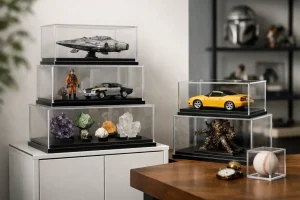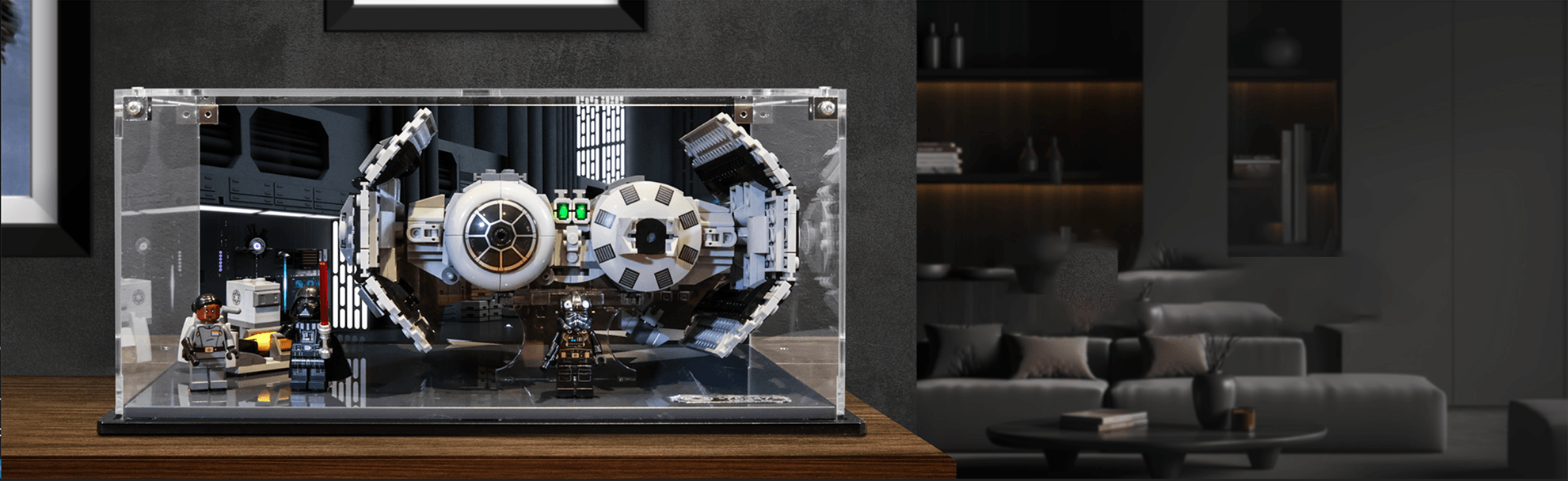
LEGO Blog
All the latest Brixbox news, straight from the team.
Acrylic LEGO Case vs Glass for Serious Collectors
A finished LEGO set should not spend its life fighting dust on an open shelf. Whether it is a UCS starship, a Technic supercar or a Hogwarts centrepiece, the acrylic LEGO case vs glass question comes down to more than what looks clearest on day one. It affects how safely you can display a build, how easily you can move it, and whether the finished model gets the presentation it deserves.
For most collectors, acrylic is the smarter material for a purpose-built display case. Glass still has a place, particularly in fitted furniture and museum-style cabinets, but it carries compromises that matter when your display contains hundreds or thousands of carefully placed bricks.
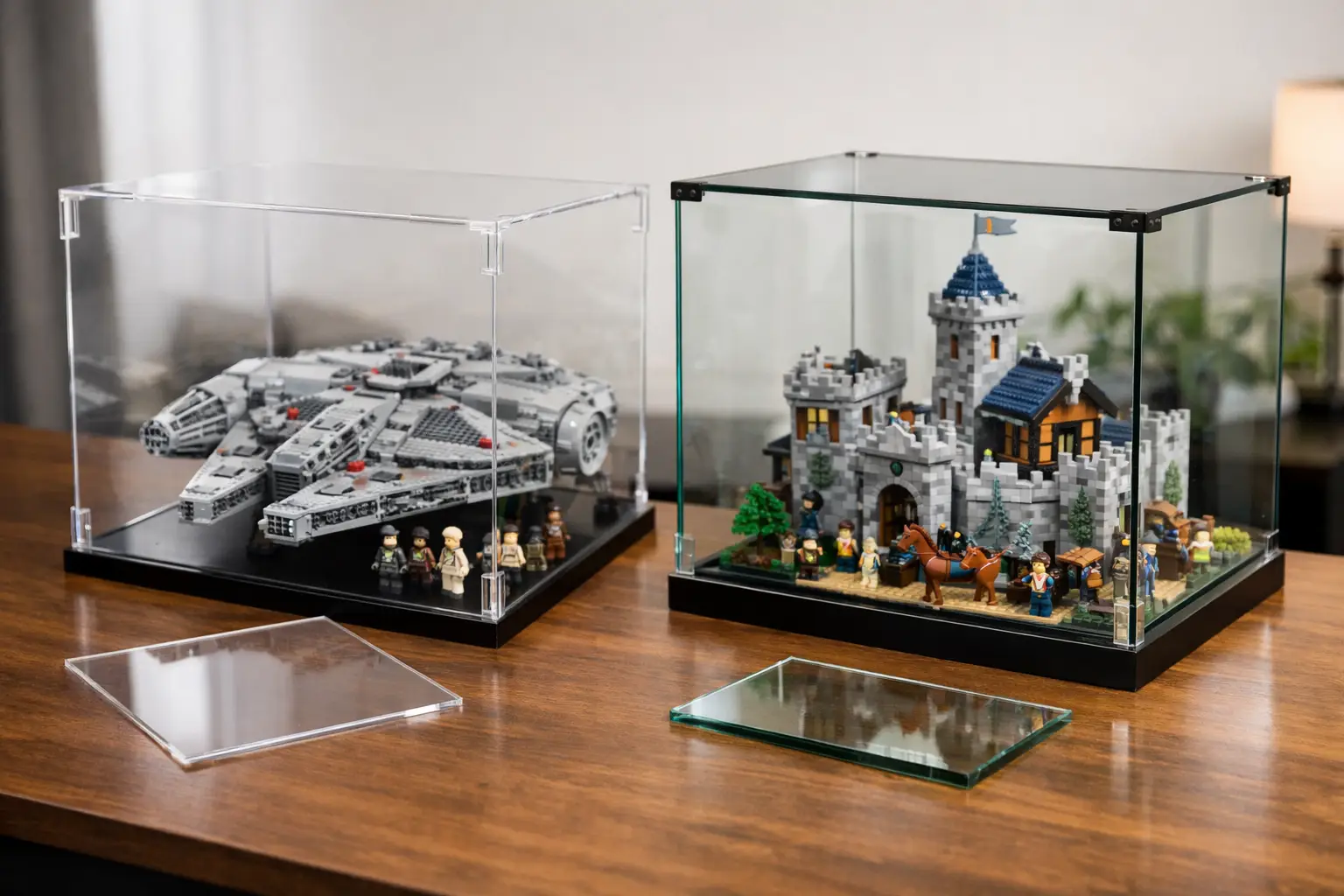
Acrylic LEGO case vs glass: the key differences
At a glance, glass may seem like the obvious premium choice. It is familiar, weighty and commonly used in cabinets. Yet high-quality acrylic offers exceptional optical clarity, a far lower weight and vastly better impact resistance. Those advantages become very real when the case sits above a hard floor, needs assembling around a detailed model, or will be moved as your collection grows.
The best choice also depends on the set. A compact helmet or BrickHeadz display presents different demands from the LEGO Titanic, the Millennium Falcon or a large modular building. Bigger builds benefit enormously from a lighter, safer enclosure that can be handled without turning every adjustment into a two-person operation.
Clarity and the look of the display
Both materials can look excellent when clean. Quality clear acrylic has a crisp, polished appearance that allows the model, rather than the case, to take centre stage. It is particularly effective when paired with a printed base or a UV-printed background, where the scene behind the set becomes part of the display rather than an afterthought.
Glass is naturally resistant to fine surface scratching and can feel more substantial in a furniture setting. However, thickness, reflections and the framework of a conventional glass cabinet can interrupt the view. A set-specific acrylic case is designed around the model’s footprint and height, creating a cleaner, more intentional silhouette.
Acrylic does require sensible care. Wiping it with a clean microfibre cloth and an acrylic-safe cleaner helps maintain that showroom finish. Abrasive cloths and harsh household sprays are not collector-friendly choices, as they can mark or cloud the surface over time.
Safety is where acrylic pulls ahead
LEGO models are delicate in ways that boxed collectibles are not. Antennas, wings, trees, minifigure accessories and slender Technic components can all catch if a heavy panel shifts during setup. Acrylic is dramatically more shatter-resistant than glass, so it is a reassuring option in busy homes, shared spaces and displays positioned at lower levels.
If glass breaks, it can damage the model and create a serious clean-up problem. Acrylic will not shatter into dangerous fragments, which makes it better suited to collectors who periodically reorganise shelves, take displays to events, or simply want less worry around a prized build.
This does not mean acrylic is indestructible. It can crack under extreme force and its surface can scratch if handled carelessly. The point is that it offers a much more forgiving margin for everyday collector life.
Weight, fitting and moving house
A glass display cabinet is often a permanent furniture decision. Once built, it is heavy, awkward to reposition and may need clearing before it can be moved. That is manageable for a single cabinet, but less appealing when your collection expands into several themed displays.
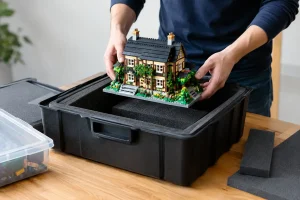
Acrylic cases are significantly lighter. That makes assembly more comfortable, lets you reposition a displayed set with greater confidence, and makes a collection easier to transport when moving home. For large premium sets, a lightweight case is not merely convenient – it helps reduce the risk of an accidental knock while you are trying to protect the model.
Dust protection matters more than the material alone
An open shelf can make even a beautifully built model look neglected surprisingly quickly. Dust settles into studs, around transparent elements and inside awkward gaps where cleaning becomes a delicate project. A well-designed enclosed case changes the routine entirely.
This is where generic glass cabinets can fall short. Their doors and edges may leave gaps, and their internal dimensions often force collectors to compromise on positioning. The model can feel lost in a large empty space, or too cramped against a shelf wall.
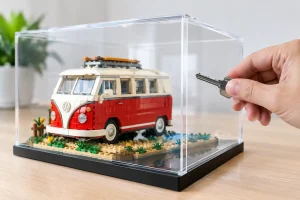
A set-specific acrylic case is built to frame the model properly. It provides a controlled display space, keeps curious hands away from fragile sections and gives a collector freedom to create a scene. A printed base can define a landing platform, racing grid or magical floor, while a themed background adds scale and atmosphere without adding another brick to dust.
Acrylic can carry a small static charge, which may attract dust on the outside surface. That is worth knowing, but it should not be confused with dust entering the case. Regular gentle cleaning solves the exterior issue, while an enclosed, close-fitting design protects the build itself far better than leaving it exposed.
Choose based on your collection, not just the room
If your priority is a fitted living-room cabinet with traditional furniture styling, glass may suit the wider interior. It offers a classic look and its harder surface copes well with frequent cleaning. Just factor in the cabinet’s weight, shelf strength, door clearance and the practical risk of placing detailed models behind heavy glass panels.
For collectors who want the display to feel made for the set, acrylic is usually the stronger choice. It works especially well for themed collections where every model deserves its own moment: Star Wars ships against a galactic backdrop, Formula 1 cars on a race-inspired base, or Hogwarts icons presented with the drama of the Wizarding World.
Consider the set’s scale and shape
Large, wide sets need generous internal dimensions and reliable stability. Tall models need clearance above antennae, spires and raised elements. A case that is technically large enough but visually cramped will make the completed build feel like storage rather than a showcase.
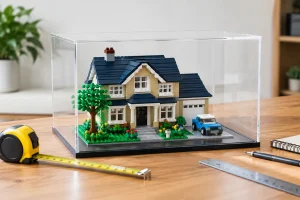
Before choosing any case, measure the finished model at its widest, tallest and deepest points, including removable accessories, display stands and minifigures positioned beside it. Allow enough space for the model to breathe, while avoiding oversized empty areas that dilute its impact.
Think about access after display
Some collectors want a sealed presentation that stays untouched for months. Others enjoy swapping minifigures, changing poses or adding seasonal details. Acrylic cases are ideal for both approaches, provided the design gives sensible access without requiring you to dismantle the whole display.
This is also why a dedicated case is often preferable to repurposing a general cabinet. The model remains protected, but it is still yours to revisit. Collecting is not only about preservation. It is about enjoying the details you spent hours building.
UV protection and long-term presentation
Sunlight is a genuine concern for collectors. Prolonged direct exposure can fade printed elements, discolour lighter bricks and dull the visual impact of a carefully chosen background. No clear case should be treated as a licence to place a prized set in full, direct sun all day.
Some acrylic display materials offer UV-filtering properties, but the level of protection varies by material and construction. If long-term preservation is a priority, keep any display away from direct sunlight and use room placement as your first line of defence. A shaded wall, controlled lighting and a case with a fitted background can make a noticeable difference.
Glass can also filter some UV light depending on its type, but ordinary glass is not automatically a complete answer. In either material, location matters as much as the panel itself.
The collector’s verdict
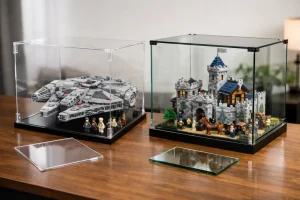
Glass looks traditional, resists surface scratches and can work beautifully as part of a permanent cabinet. Acrylic offers the better balance for most LEGO displays: clearer set-specific presentation, reduced weight, stronger impact resistance and more freedom to build a scene around the model.
That is the thinking behind Brixbox display cases. The goal is not to put your build behind a barrier. It is to give it a stage that protects the details, complements the theme and makes every glance at the shelf feel like the build has just been completed.
Choose the case that suits how you collect, where you display and how often you like to admire the tiny details. Your finished set has already earned its place in the collection – now give it a display worthy of it.
RECENT POST