LEGO Blog
All the latest Brixbox news, straight from the team.
Acrylic Case Assembly Review: Is It Worth It?
A display case should feel like the final stage of the build, not another frustrating instruction booklet waiting on the shelf. That is the real test behind any acrylic case assembly review: does the case protect a prized LEGO set, look suitably premium and come together without turning display day into a battle with fingerprints, misaligned panels and mystery fixings?
For collectors, the answer is rarely just about whether a case has clear sides. A great case needs to fit the model properly, give it a convincing setting and feel secure enough to earn its place in a carefully organised collection. Assembly matters because it determines all three.
What a good acrylic case assembly feels like
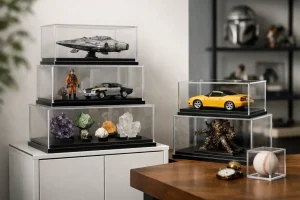
The best acrylic cases are engineered around the display experience rather than treated as generic boxes. The panels should arrive cleanly protected, the base should provide a stable foundation and the fixing method should make the finished case feel neat rather than improvised. When those details line up, the result is a sharp, gallery-style presentation that keeps dust away without hiding the build.
There is a trade-off here. A lightweight, slot-together case can be quick to assemble, but it may not offer the same planted, premium feel as a case with a substantial printed base and carefully joined panels. Likewise, a large case for a UCS starship, Technic supercar or detailed Hogwarts scene naturally requires more care than a compact minifigure display. That is not a flaw. It is simply the point where a display accessory becomes a proper piece of presentation furniture.
For most collectors, assembly should take concentration, not specialist skill. You should be able to work through it on a clean table, follow the supplied guidance and finish with a case that looks as though it belongs around the set from every angle.
Acrylic case assembly review: the details that count
Acrylic is often chosen because it offers the clarity collectors want. Unlike a cloudy storage tub or an open shelf, it lets the model remain the centre of attention. The downside is that acrylic shows dust, smudges and careless handling more readily than opaque materials. That means the assembly process should be approached as part of the display ritual.
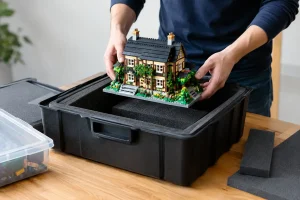
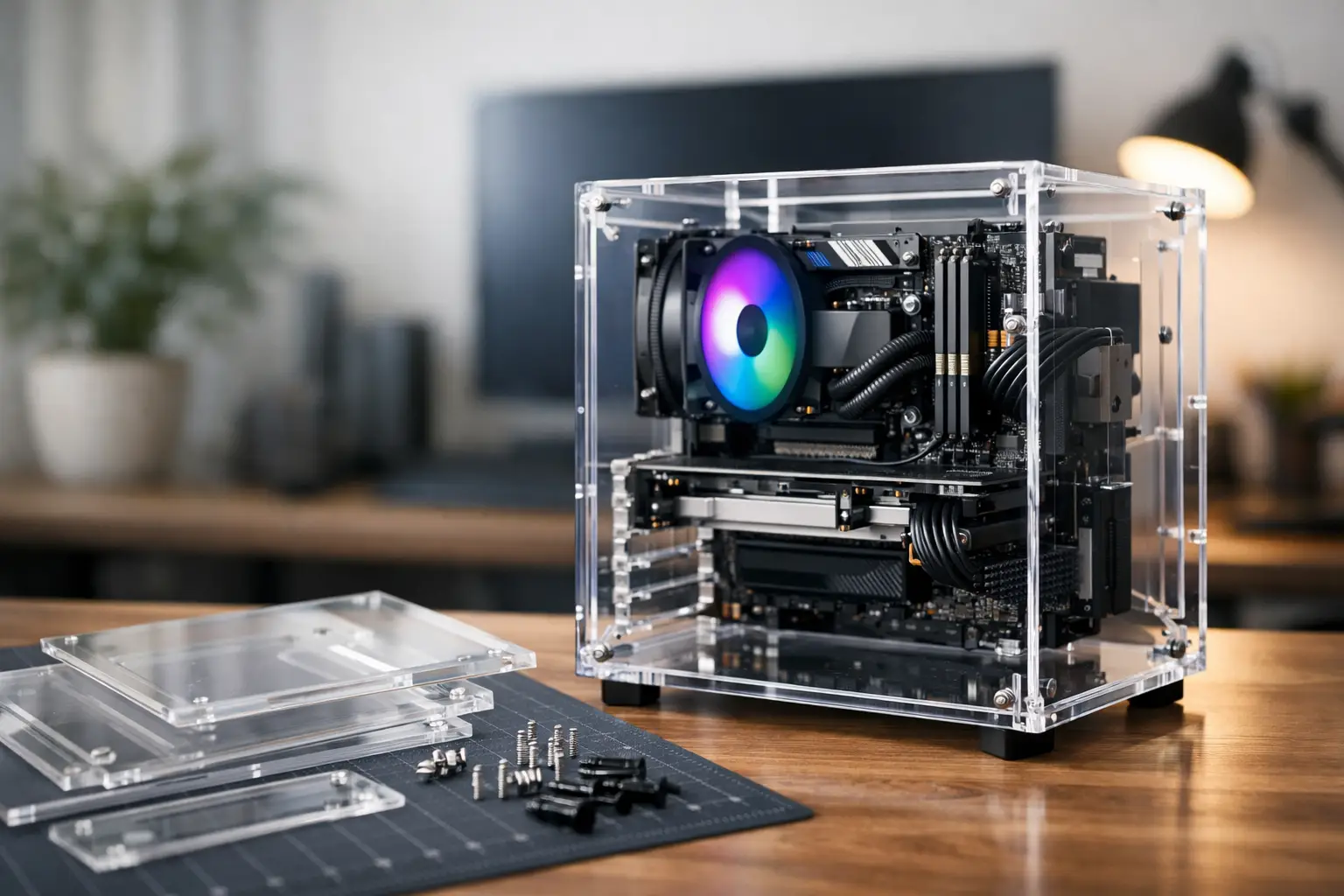
Start by clearing more room than the final footprint of the case. Panels are easier to handle when they can lie flat, and a soft, clean surface reduces the chance of picking up grit or putting fine marks into the material. Avoid building directly beside the completed LEGO model if space is tight. One unexpected panel edge near a delicate antenna, wing or foliage element can create an entirely avoidable repair job.
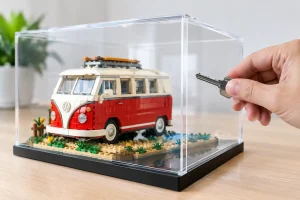
Protective film is both a blessing and a test of patience. It keeps panels fresh in transit, but it needs to be removed thoughtfully. Peel it back from a corner rather than tearing at the surface, and resist the temptation to strip every panel before you have identified where it belongs. Keeping protection on the outward-facing side until late in the process can reduce fingerprints while you fit the case together.
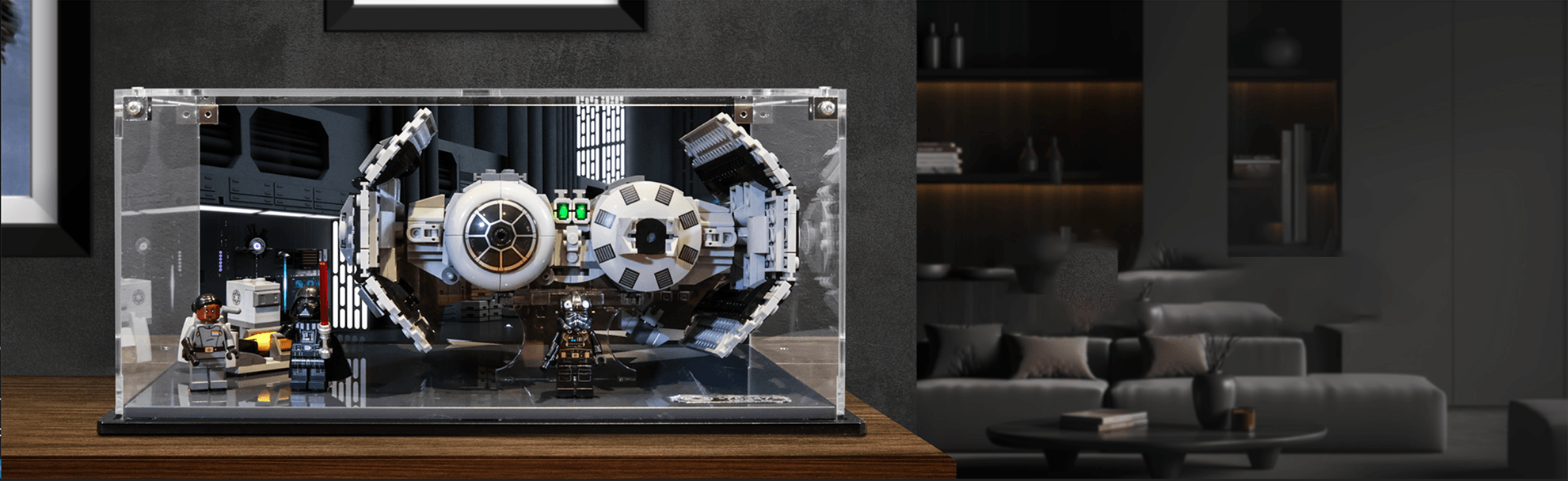
The base is where a purpose-built case earns its value. A precisely sized base gives the model boundaries, helps position it accurately and creates a finished visual frame. Printed bases and UV-printed backgrounds add even more impact. A Star Wars set can feel like it has arrived on a hangar deck, while a Harry Potter build gains atmosphere from a setting that supports its story rather than competing with it.
That artwork needs to be treated with the same care as the transparent panels. Do not drag the build across a printed surface. Lift it gently into position, ideally holding the sturdier parts of the model rather than decorative sections. For larger sets, it is sensible to have a second pair of hands nearby. This is especially true for builds with broad wings, long vehicles or tall, uneven structures.
Panel order is more important than speed
Most assembly frustrations come from rushing the order, not from the case itself. Before removing the remaining protective film, lay out the base, back panel, side panels, front panel and lid so you can identify their orientation. If a panel has cut-outs, slots or a printed face, check which way it should face before applying pressure.
A dependable approach is to seat the rear panel first, then attach the sides, followed by the front and top section where applicable. Work with light, even pressure. Acrylic is designed for display, not for being forced into place. If a panel does not align, stop and check that another piece has not been reversed or only partly seated.
This slower approach pays off in the finished look. Corners sit square, joins remain discreet and the case feels secure when moved. More importantly, it protects the clean lines that make a clear case look premium rather than temporary.
Set-specific fit changes the whole result
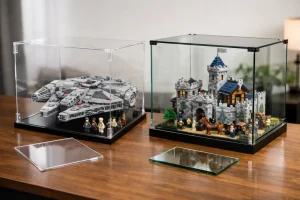
A generic case may keep some dust off, but it can also leave a favourite build looking stranded in a large empty box. Too much unused room weakens the visual effect and allows the model to appear smaller than it deserves. A case designed for a specific LEGO set number, by contrast, can account for the model’s footprint, height, display angle and key viewing sides.
That is particularly valuable for display-heavy themes. A helmet needs enough breathing room around its silhouette. A BrickHeadz character benefits from a compact presentation that keeps the personality front and centre. A detailed Star Wars diorama may need a wide front view, while a Technic car deserves space for its bodywork and mechanical details to be appreciated without visual clutter.
At Brixbox, set-specific cases are built around this collector logic: protect the model, but also give it the stage it deserves. The difference is visible before anyone even asks about dust. A close fit feels intentional, especially when the base and backdrop carry a theme that complements the set.
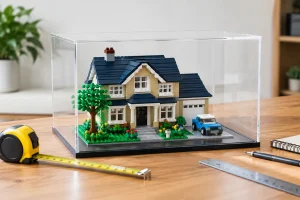
There is still a practical point to check before ordering any display case. Measure where the finished case will live, not just the LEGO set itself. Include shelf depth, headroom and the space needed to lift a lid or carefully access the model. A spectacular display case is no use if it turns out to be a few millimetres taller than the shelf it was meant for.
How long should assembly take?
For a smaller display, a careful assembly may take only a short session. Larger cases, multi-panel builds and designs with detailed backgrounds deserve more time. Expect the process to take longer if you are working around a fragile completed set, because moving the model into place is usually the stage that calls for patience.
That is a fair trade for a collector-grade result. The case is likely to stay around the build for months or years, so there is little value in saving ten minutes and finishing with marks on the acrylic or a panel that is not fully aligned. Put on good music, give yourself a clean workspace and treat it as the final chapter of the build.
The small finishing touches collectors notice
Once assembled, inspect the case from eye level rather than only from above. This is when you will spot fingerprints, a panel edge that needs reseating or a model that would look better turned a few degrees. Use a clean microfibre cloth for the acrylic and avoid household cleaners that can leave residue or affect the surface over time.
Lighting also changes the outcome. A case near a window can look fantastic, but direct sunlight may not be the best long-term home for printed elements and coloured bricks. A well-lit shelf away from harsh sun generally gives you clearer viewing and a safer environment for the collection.
The final question in an acrylic case assembly review is not whether every panel clicked together instantly. It is whether, once you step back, the case makes you look at the model with fresh pride. If it keeps dust off, frames the build with purpose and turns a shelf into a display worth showing off, the assembly time was well spent.
Give your next finished set the careful final reveal it deserves. A clean case, a themed base and a little patience can make the moment you place it on the shelf feel every bit as satisfying as fitting the last brick.
RECENT POST