LEGO Blog
All the latest Brixbox news, straight from the team.
Are Acrylic Panels Scratch Resistant for LEGO?
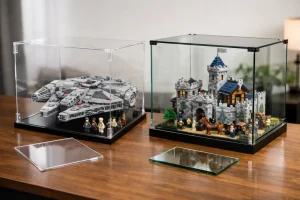
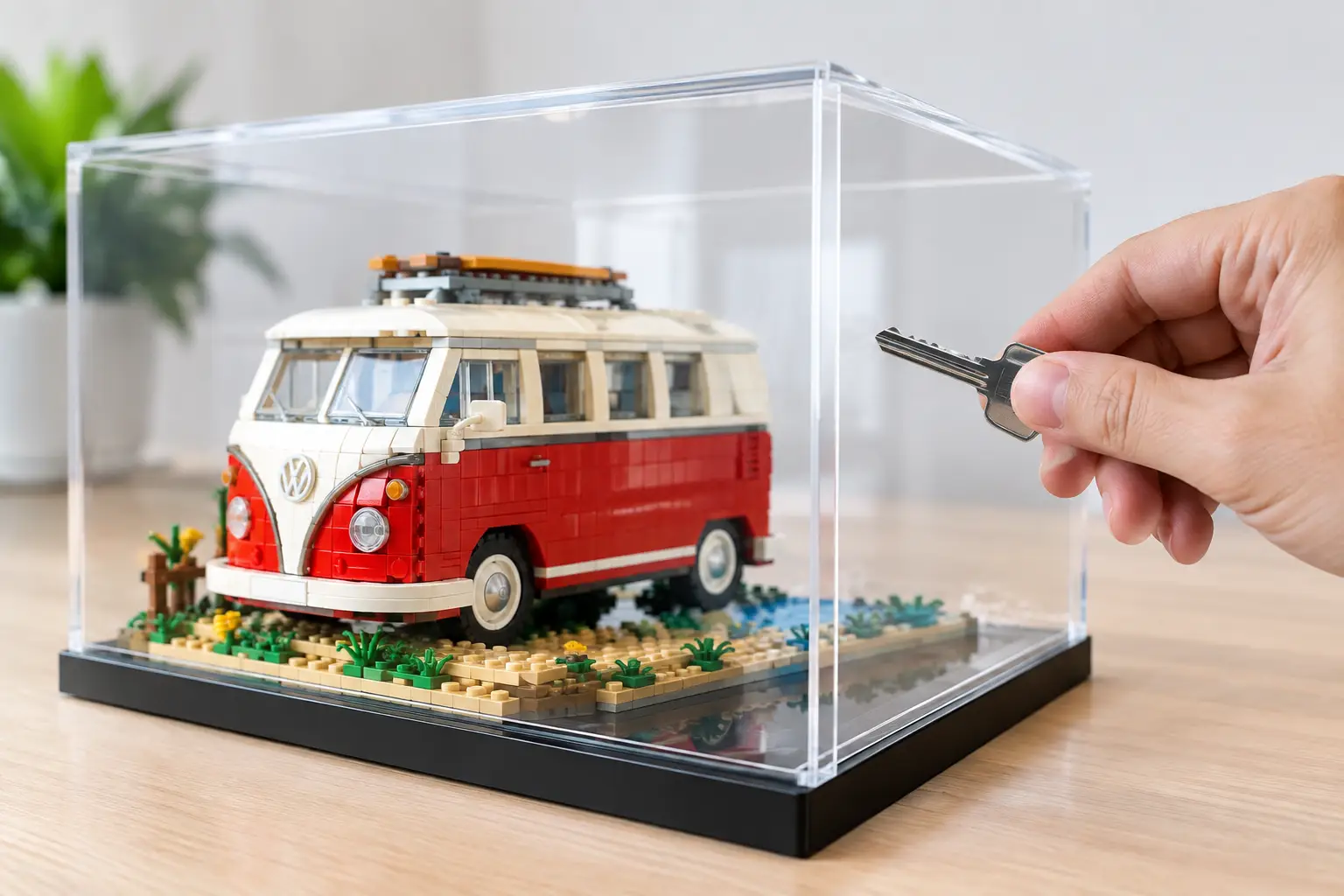
A freshly built LEGO set deserves better than a shelf where dust settles into every stud and an accidental sleeve can knock a minifigure from its scene. But are acrylic panels scratch resistant enough for a display case that will sit proudly in your home for years? The honest answer is: reasonably, but not completely. Acrylic is a brilliant display material when it is handled and cleaned correctly, yet it is not immune to marks from grit, rough cloths or careless storage.
For collectors, that distinction matters. A clear case should disappear visually, leaving the Millennium Falcon, Hogwarts Castle or a carefully posed helmet build as the main event. Keeping the acrylic clear and polished is part of protecting the display experience.
Are acrylic panels scratch resistant in everyday use?
Acrylic panels have good everyday durability. They cope well with normal household display conditions, including light dusting, occasional repositioning and the careful removal of a case to access a model. They are also far less likely than glass to shatter if knocked, which makes them a sensible choice around valuable brick-built sets.
However, acrylic is softer than glass. That means it can pick up fine surface scratches, often called micro-scratches, if abrasive particles are dragged across it. The culprit is rarely the panel itself. More often, it is the speck of dust caught in a dry cloth, a kitchen towel used in a hurry, or a case placed face-down on an unprotected worktop during assembly.
This does not make acrylic a poor choice. It simply rewards collector-level care. A quality acrylic display case is designed to protect your build from dust, curious fingers and the knocks of day-to-day life. Treat its panels as a display surface rather than a piece of ordinary packaging, and they can retain a crisp, premium finish for a very long time.
What actually scratches acrylic?
Not every mark has the same cause or the same impact on the final look. Deep scratches are usually the result of a sharp object, a hard knock or contact with an abrasive surface. Fine swirls are more common and tend to appear gradually after repeated dry wiping or unsuitable cleaning.
Dust is deceptively harsh. Individual particles can include tiny fragments of mineral grit, and rubbing them directly over clear acrylic creates faint lines that become easier to spot when light catches the panel. This is why an acrylic case can look perfect from the front but show light swirling from an angle.
The riskiest habits are using paper towels, household scourers, rough microfiber cloths that have collected grit, or cleaning sprays not intended for acrylic. Solvent-based products and harsh chemicals can do more than leave streaks. They may dull the surface, cause hazing or create fine stress marks, particularly around edges and joints.
Keep sharp LEGO tools, loose parts and metal display accessories away from the panels during setup too. A separator tool is ideal for bricks, but it is not a cleaning tool for your case.
Scratches versus cracks
Acrylic’s strength is not just about resisting scratches. It is also valued because it is lightweight and impact-resistant compared with glass. A light bump that might chip or break glass is less likely to create a dangerous mess with acrylic.
That said, acrylic can still crack under excessive force, especially if a panel is bent, overtightened or assembled on an uneven surface. Scratch resistance and impact resistance are different properties. A panel may survive a knock well while still needing gentle cleaning to preserve its clarity.
How to clean acrylic panels without leaving marks
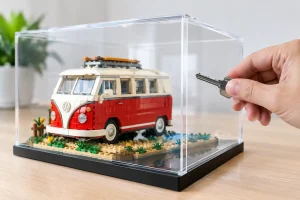
The safest cleaning routine is simple, and it takes less time than repairing avoidable swirl marks later. Start by removing loose dust without pressing it into the panel. A clean, soft microfiber cloth is the best everyday option, provided it is reserved for display cleaning and free from trapped debris.
For a panel with light dust, use a gentle touch and wipe in long, straight passes rather than firm circular rubbing. Do not chase every tiny speck with pressure. If the panel needs more than a light dust, dampen the cloth slightly with clean water. The moisture helps lift residue and reduces friction between the cloth and acrylic.
For fingerprints or more stubborn marks, use a cleaner specifically made for acrylic or plastics, following the product directions. Apply it to the cloth rather than spraying directly onto the case. This gives you more control and helps prevent liquid from collecting near printed bases, UV-printed backgrounds or panel joins.
Avoid glass cleaner unless it clearly states that it is suitable for acrylic. Many common glass products contain ingredients that are too aggressive for plastic surfaces. Also avoid acetone, alcohol-heavy solvents, ammonia-based cleaners and abrasive pastes.
After cleaning, let the panel air dry or buff it very lightly with a second clean microfiber cloth. The key word is clean. A premium display case can be marked by a cloth that has previously been used on a dusty shelf, a car interior or kitchen surfaces.
Assembly habits that protect the finish
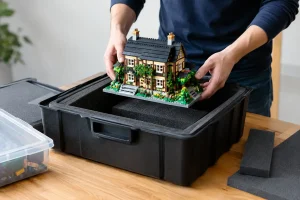
The best time to prevent scratches is before the case reaches its final display position. Build on a clean, flat and soft surface, such as a dust-free table covered with a fresh towel or protective mat. Never slide panels across bare wood, stone or laminate.
Most acrylic panels arrive with a protective film applied to both sides. Leave that film in place while you identify the components and assemble the case where practical. Peel it away slowly once the panel is ready to fit, taking care not to drag the removed film across the exposed surface. It is tempting to strip every panel at once, but doing so gives dust and loose parts more opportunity to make contact.
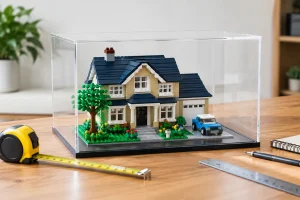
Handle each panel by its edges. Fingerprints will not damage acrylic, but fewer fingerprints mean less cleaning. If your case includes a printed base or themed backdrop, assemble it in the intended order and make sure every panel sits squarely. Forcing a part into position is never a good idea, whether you are connecting LEGO elements or fitting clear display panels.
Once built, lift the finished case rather than dragging it across a shelf. This protects both the base and the panels, and it reduces the chance of putting stress on the joins.
Can scratched acrylic be repaired?
Light surface marks can sometimes be reduced with specialist acrylic polish. These products work by gently refining the outermost surface, so they are best used sparingly and only on plain, unprinted areas. Deep scratches generally cannot be made completely invisible, particularly if they catch a fingernail.
Be cautious with any repair kit. A product that is too abrasive can turn a small local scratch into a larger dull patch. Test it in an inconspicuous area first, use a soft cloth and follow the instructions precisely. If the damage is near a printed design, coloured base or decorative panel, avoid polishing altogether unless the product is explicitly suitable for that finish.
For many collectors, prevention is the better route. It preserves the even clarity of the panel and keeps your display looking as intentional as the build inside it.
Where you place the case matters too
Acrylic cases are excellent at keeping dust off a model, but their surroundings still affect how often they need cleaning. A shelf away from cooking vapours, open windows and high-traffic areas will stay clearer for longer. Avoid placing the case where bags, coats or pets regularly brush against it.
Direct, prolonged sunlight is worth considering as well. A display case can help create a controlled presentation, but sunlight may affect the colours of LEGO elements, printed components and artwork over time. Choose a bright spot that does not receive relentless direct sun, particularly for a centrepiece set you plan to keep on display for years.
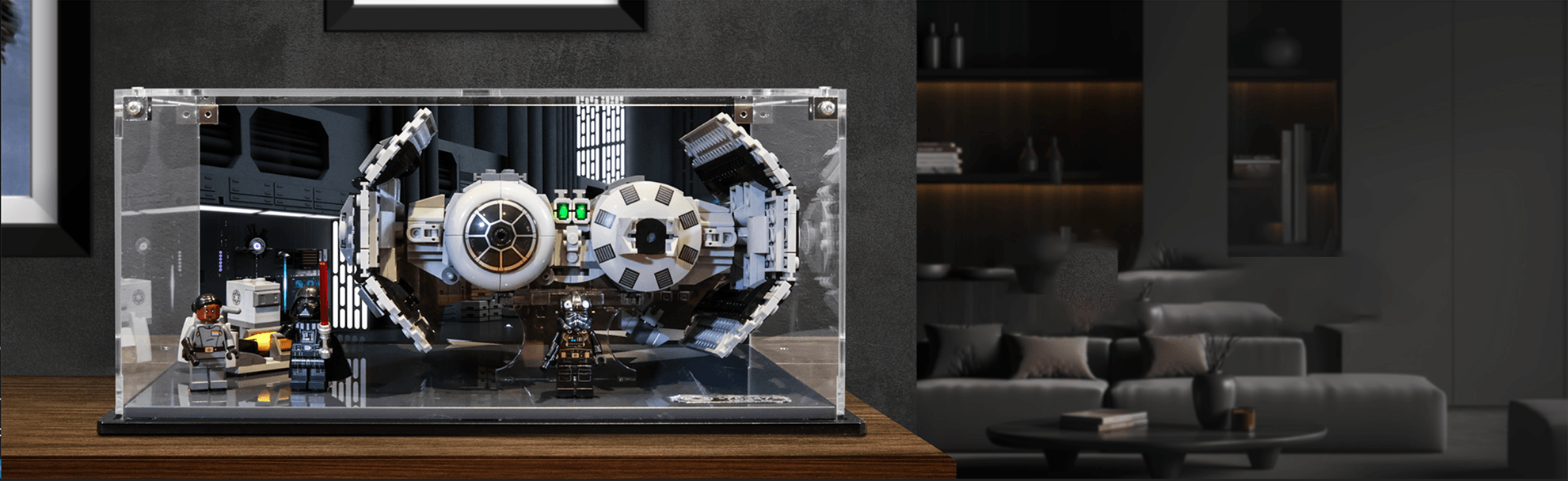
Brixbox cases are made for the part collectors care about most: giving a completed build the presentation it has earned. A clear panel, a themed backdrop and a clean base can turn a favourite set from shelf storage into a proper focal point.
The collector’s standard: clear, not indestructible
Acrylic panels are scratch resistant enough for everyday display, but they are not scratch-proof. That is a fair trade-off for a material that is lightweight, clear, safer than glass around a busy home and ideal for creating a polished, dust-protected showcase.
Use a clean microfiber cloth, avoid harsh chemicals, assemble with care and lift rather than slide the case. Those small habits protect the finish far better than an occasional aggressive clean ever could. Your build took hours to get exactly right – let the case around it keep looking just as considered.
RECENT POST