LEGO Blog
All the latest Brixbox news, straight from the team.
Custom LEGO Display Backgrounds That Complete a Set
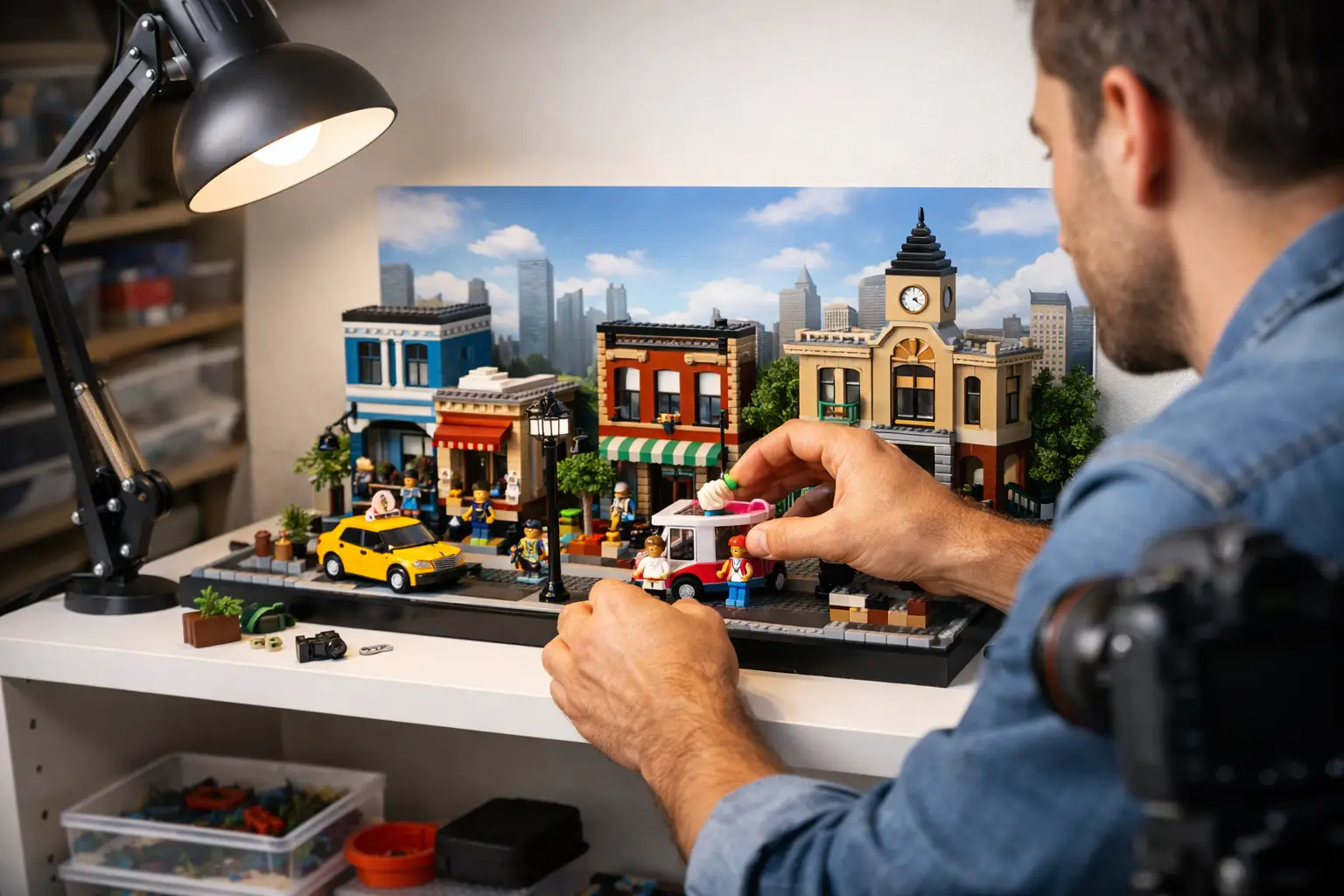
A completed LEGO set can be technically brilliant and still feel slightly unfinished on a shelf. The missing piece is often not another minifigure or a larger stand – it is the world behind it. Custom LEGO display backgrounds turn a protected model into a proper scene, giving the build context, depth and the kind of presence it deserves.
For collectors who have spent hours building a UCS starship, a detailed castle or a race-ready Technic car, presentation is not an afterthought. It is part of the hobby. A well-chosen printed background can make a set feel less like an object placed in a case and more like a moment captured from its own universe.
Why Custom LEGO Display Backgrounds Make Such a Difference
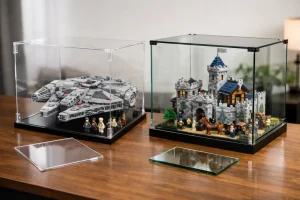
A clear acrylic display case protects a model from dust, accidental knocks and the slow fade of a once-pristine shelf display. That protection matters, particularly for larger sets with exposed studs, light-coloured elements and intricate details that are tedious to clean. But acrylic alone is deliberately neutral. It preserves the build without necessarily adding atmosphere.
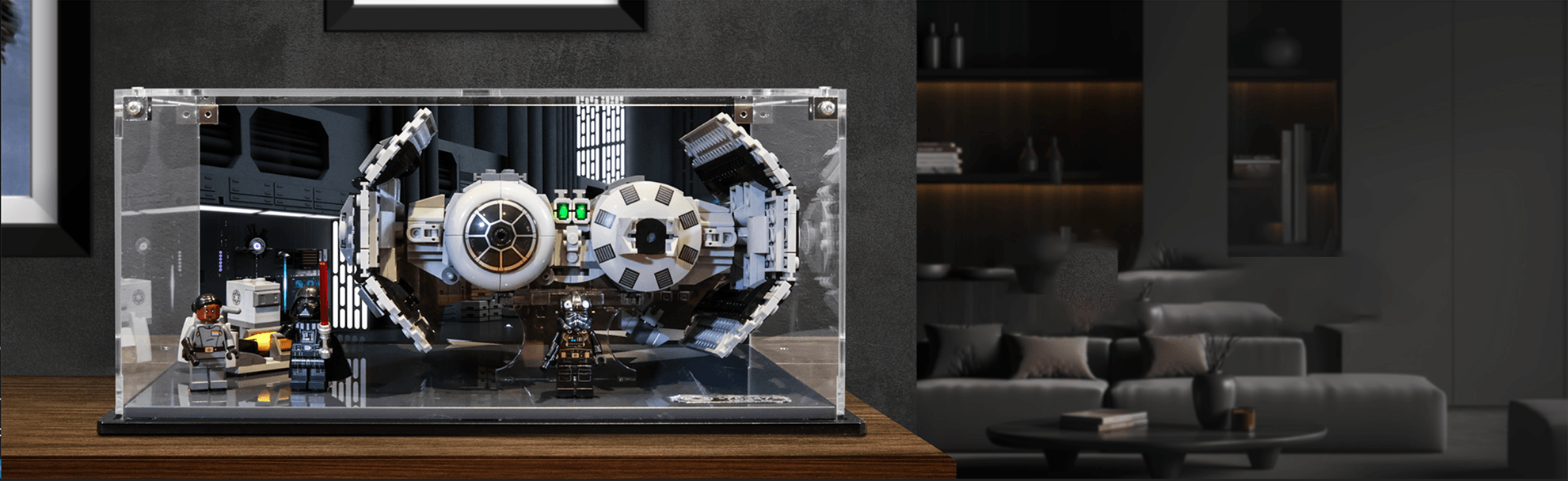
A custom background changes the visual hierarchy. Instead of your eye travelling past a transparent case to whatever happens to be behind it – a painted wall, book spines, cables or another display – it lands on artwork designed to support the model. A starfield gives a spacecraft room to fly. A dark corridor intensifies a helmet display. A grand stone setting adds scale to a fantasy build, while a paddock-inspired scene can make a Technic vehicle look ready for the grid.
This is especially valuable where the model itself is built at a smaller scale than the story it represents. A compact diorama can suddenly feel expansive when the background suggests a horizon, architecture or distant landscape. The set remains the hero, but the scene gives it somewhere to exist.
There is also a practical benefit for collectors building a coherent display wall. Backgrounds create separation between themes without needing to rearrange an entire room. A shelf containing Star Wars, Harry Potter, Marvel and motorsport sets can still feel intentional when every case has its own visual identity.
The Best Background Is Built Around the Set
The strongest custom LEGO display backgrounds are never generic. They take cues from the set’s scale, subject and viewing angle. A background that suits a LEGO helmet may be too busy for a minifigure scene; an image made for a wide starship case may overpower a narrow BrickHeadz display.
Start with the build’s main viewing position. If it will sit at eye level in a living room, the artwork should reward a straight-on view with a clear focal point behind the model. If it will be displayed higher up, bolder shapes and stronger contrast tend to read better from below. A low shelf can handle more ground detail, as the base and background are seen together rather than separately.
Scale is equally important. Huge architectural features or oversized characters can make a model look toy-like. Fine environmental details, distant structures and subtle texture usually create a greater sense of scale because they do not compete with the brick-built subject. The aim is not to recreate every part of a film still or fictional location. It is to suggest enough of the world that the model feels at home.
Set-specific cases are particularly effective here. When a display is designed around a particular LEGO set number, the dimensions, base layout and background artwork can work as one composition. The result looks considered from every angle rather than like a standard box with an image added at the back.
Match the Mood Before the Colour
Collectors often begin by matching colours: blue for space, grey for an Imperial setting, green for a magical woodland scene. Colour matters, but mood matters more. A dark, dramatic build benefits from shadow, negative space and controlled highlights. A playful Disney scene can carry brighter colour and more illustrative energy. A classic vehicle may suit understated garage textures or a clean motorsport-inspired graphic rather than a busy action scene.
Consider what first made you want the set. Was it the silhouette? A favourite character? A famous location? The engineering? That emotional connection is usually the right direction for the background. It should amplify the reason you bought the build in the first place.
Printed Backgrounds and Bases Work Best Together
A background does much of the storytelling, but the base establishes the foreground. When both are coordinated, a display gains depth quickly. A printed base can suggest terrain, a hangar floor, a road surface, a tiled interior or a platform, while the rear artwork extends that environment beyond the model.
The key is restraint. If the base and background both contain high-contrast graphics, the display can become visually noisy. A more detailed background often works best with a quieter base, and vice versa. For example, a starship might sit on a subtle dark platform with just enough linework to imply a docking bay, while the background carries the larger galactic atmosphere.
This balance is also useful for sets with dense brick detail. Models such as modular scenes, large fantasy structures and complex vehicles already provide plenty to look at. Their display graphics should frame the build, not fight it. By contrast, a simpler helmet, ship or character model can handle a more expressive setting because it has a cleaner silhouette.
At Brixbox, the appeal of UV-printed backgrounds and bases is not simply that they add colour. They give a collector a way to finish a display with the same intention that went into the build itself.
Choosing a Scene for Different LEGO Themes
Some themes naturally call for a particular visual language, though there is always room to make the display your own. Star Wars models often look strongest against cinematic darkness, starfields, hangar interiors or atmospheric planetary settings. The best scenes leave breathing room around wings, antennae and tall structures so those outlines remain crisp.
Harry Potter and fantasy displays benefit from texture and atmosphere: stonework, candlelit halls, woodland shadows and distant towers. These sets often include warm colours and intricate shaping, so a muted background can make the printed elements and minifigures stand out more clearly.
For Marvel, contrast is often the winning approach. A bold cityscape, controlled comic-inspired styling or a shadowed hero backdrop can give a display energy without making it feel like a poster. The model should remain readable at a glance, especially when it includes a recognisable character silhouette.
Technic and motorsport collectors may prefer a cleaner, more premium presentation. Trackside visuals, workshop details and subtle racing graphics give the model a sense of speed and purpose, but avoid artwork that looks overly distressed or novelty-led. A high-end build deserves a display that feels as precise as its engineering.
What Can Go Wrong With a Custom Background
More theme is not always better. The most common mistake is choosing artwork so detailed, bright or literal that it steals attention from the bricks. If someone notices the background before the model, the balance is probably wrong.
Another issue is poor alignment. A horizon line that cuts through a character’s head, a doorway blocked by the centre of a vehicle, or a light source positioned directly behind a pale model can weaken the whole composition. Purpose-designed artwork avoids these clashes by accounting for the model’s footprint and height.
Lighting deserves attention too. LEDs can make a display spectacular, but glossy surfaces and strong front-facing lights may create reflections on acrylic. Gentle lighting from above or the sides generally reveals the artwork and model without turning the case into a mirror. Darker backgrounds are particularly dramatic, though they may need a little more light to stop black elements disappearing into the scene.
Finally, think about longevity. A background based on a favourite moment will keep its appeal for years. A gimmick that feels funny for a month may not suit a premium display once your collection evolves. Choose artwork you will still be pleased to see every time you enter the room.
Give the Build Its Proper Setting
A finished LEGO model carries a story: the anticipation before release day, the satisfying final bag, the details you spotted only halfway through the build. Custom LEGO display backgrounds help keep that story visible long after the instructions are packed away.
Before choosing your next case, stand back from the shelf and look at the space behind the model. If the build deserves more than a blank wall, give it a setting worthy of the legend you built.
RECENT POST