LEGO Blog
All the latest Brixbox news, straight from the team.
Display Cabinets That Make LEGO Sets Shine
That final tile clicks into place, the minifigures take their positions and the model finally looks exactly as it should. Then it goes on an open shelf, where dust starts gathering in every cockpit, turret and tiny gap between bricks. Premium display cabinets change that ending. They give a completed LEGO build the presence it deserves while protecting the details that made the build worth your time.
For collectors, a case is not simply storage. It is the frame around the story. Whether it is a Star Wars starship, a Hogwarts landmark, a Technic supercar or a shelf full of BrickHeadz, the right presentation turns a great model into a genuine feature of the room.
Why display cabinets matter to serious collectors
LEGO sets are designed to be examined up close. The clever engineering, printed elements and tiny references to a favourite film or character are easy to lose when a model sits behind other builds or becomes coated in dust. A clear acrylic case keeps the view open while placing a physical barrier between the model and everyday life.
Dust protection is the obvious benefit, but it is not the only one. Cleaning an intricate build can mean navigating fragile antennae, exposed studs and accessories that have a habit of disappearing when moved. A display case reduces how often you need to handle the set in the first place. That matters for large, complex models as much as it does for small pieces displayed at eye level.
There is also the question of visual order. A collection can feel busy very quickly when sets of different scales, themes and colours compete across open shelving. Purpose-built cases create clean boundaries. They allow each build to have its own space, rather than becoming part of a crowded backdrop.
Display cabinets should fit the set, not the other way round
Generic cabinets can be useful for broad storage, but they rarely feel made for a collector’s centrepiece. A case that is too large leaves the model floating in empty space. One that is too tight can make access difficult and create an awkward, cramped look. The strongest option is usually a display case designed around the specific dimensions and shape of the set.
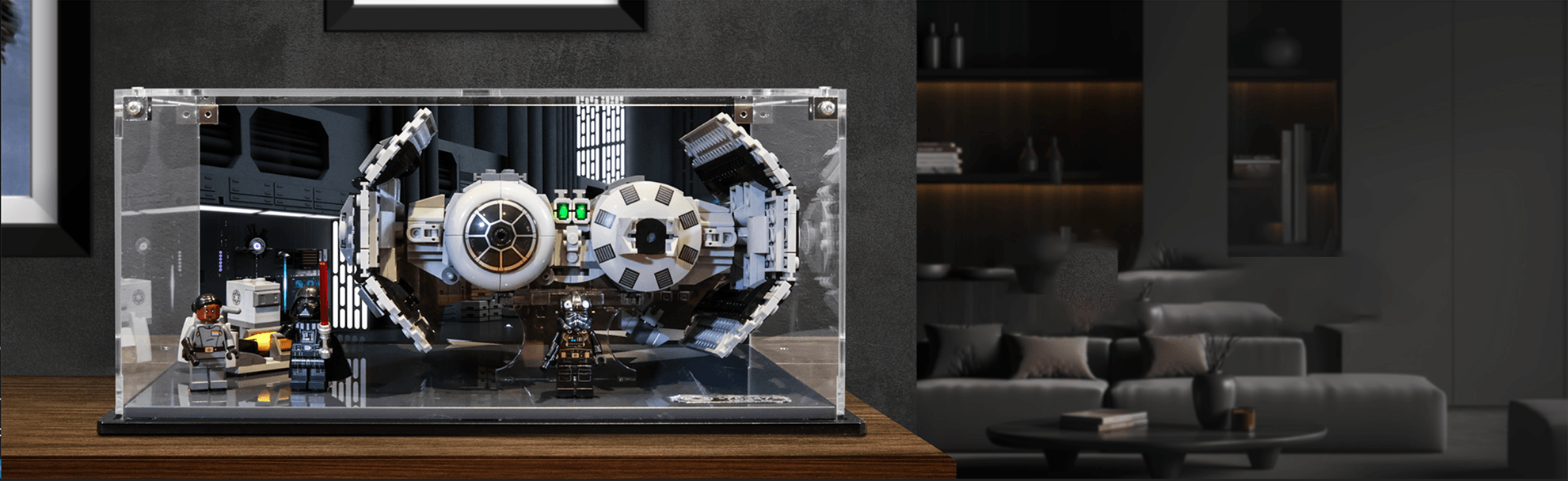
Set-specific display cabinets take account of more than length and width. They consider height, protruding wings, open doors, display stands and the footprint needed for minifigures or a carefully arranged scene. This is particularly valuable for builds with unusual silhouettes, from starfighters and helmets to tall modular-style structures.
Before choosing, check the exact set number rather than relying on a theme name alone. LEGO regularly releases models from the same franchise at very different scales. A case for one Millennium Falcon will not automatically suit another, and a compact Technic car needs a different approach from a larger vehicle with an elevated rear wing.
Leave room for the presentation
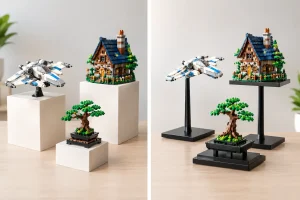
A close fit is satisfying, but a little deliberate breathing room often makes a build look more impressive. Consider whether you want to display the set exactly as built, add minifigures around it, or create a fuller scene with a printed base. If the model has a dynamic pose or comes with an angled stand, make sure the cabinet supports that display rather than flattening its impact.
For collections that change regularly, think about future additions too. A single statement case can anchor a shelf, while matching cases for smaller builds create a gallery-like run. The aim is cohesion, not identical dimensions everywhere.
Choose acrylic for clarity and everyday protection
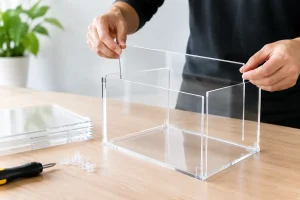
Acrylic is a natural material choice for LEGO display cases because it keeps the build visible from multiple angles without the visual weight of a solid-fronted cupboard. It is light enough to suit shelving and desks, yet creates a clear protective enclosure around delicate models.
Clarity is only part of the appeal. Acrylic display cases make it easier to appreciate a model’s silhouette, especially on a printed base or against a themed background. A dark starfield can give a spacecraft depth; a dramatic cityscape can make a superhero build feel ready for action; a subtle architectural backdrop can elevate a famous landmark without distracting from it.
That said, acrylic needs sensible care. Avoid abrasive cloths and harsh household sprays, which can mark or cloud the surface. A soft microfibre cloth and a cleaner suitable for acrylic are the safer choice. It is also worth placing cases away from direct, prolonged sunlight where possible, particularly if your model includes stickers, light-coloured pieces or printed elements you want to preserve.
Make the background part of the build
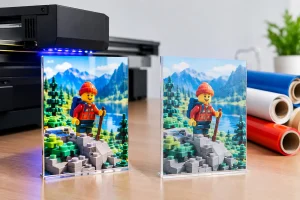
The best display cabinets do more than surround a model. They build atmosphere. A UV-printed background or base can transform an otherwise plain shelf into a scene with real identity, helping the set feel connected to its source material.
This is where themed presentation earns its place. A black base may suit almost anything, but it will not necessarily make a magical castle, a racing car or a galaxy-spanning ship feel special. Artwork chosen for the set can add scale, movement and colour while keeping the model as the clear focal point.
There is a trade-off. Highly themed artwork makes a strong statement, which is brilliant for a favourite centrepiece. If you like to rearrange models frequently or display multiple unrelated themes together, a cleaner printed base or neutral background may give you greater flexibility. Let the role of the set decide: showpiece builds can be bold, while a larger mixed collection may benefit from a more restrained visual language.
Plan your display space before ordering
A case protects a set, but its location still determines how well it works. Measure your shelf depth, available height and the clearance needed above the cabinet before committing. Remember that opening a case or lifting a lid requires room too. This simple check prevents the frustrating discovery that a perfect case does not fit beneath a shelf bracket or inside a bookcase compartment.
Think about viewing height as well. A large ship placed too high may show only its underside; a detailed building placed too low can hide its upper floors. Models with interiors, cockpits or detailed bases usually reward a position around chest or eye level. Bigger, more dramatic builds can sit lower, where their scale has room to land.
Lighting deserves attention, although it need not be complicated. Indirect light from the room can bring out the depth of transparent panels and printed details. Avoid placing strong lamps directly against the acrylic, as glare can overwhelm the view. The goal is to see the set first, not a reflection of the room.
Build a collection that looks intentional
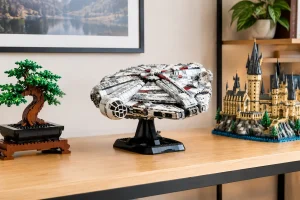
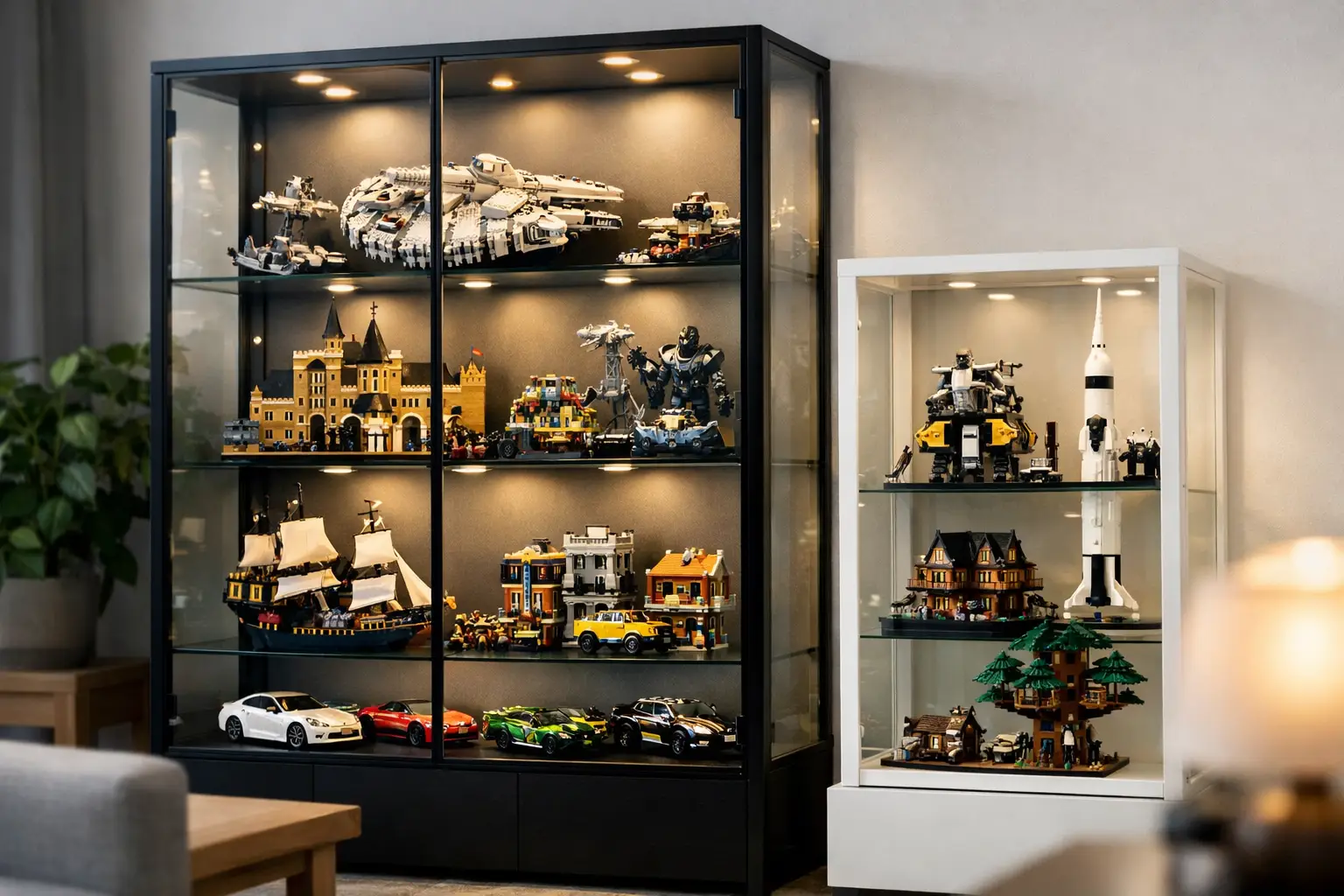
There is no single right way to arrange a LEGO collection. Some collectors group by theme, creating a dedicated Star Wars wall or a magical Harry Potter display. Others mix their favourite builds by colour, size or story. Display cabinets give you the freedom to choose because they turn individual sets into defined visual units.
For a themed shelf, matching printed bases and complementary backgrounds help models feel connected without making them look repetitive. For a mixed display, use similar case styles to create consistency, then let each background do the talking. A helmet, a micro-scale landmark and a character build can sit together convincingly when each has been given a clear, considered frame.
It is also worth deciding which models need a case most. Start with the builds that are hardest to dust, easiest to knock, most valuable, or simply most meaningful. That limited-edition set, the build completed with family, or the model you spent weeks hunting down deserves priority over something you are happy to rebuild or rotate.
Brixbox approaches display with this collector-first mindset: each case should feel like an extension of the model, not an afterthought placed around it. The difference is in the fit, the finish and the moment you step back and see the build presented properly for the first time.
A completed set should not vanish into the background of your home. Give it clean lines, a protected space and a setting worthy of the story it tells – then enjoy seeing your collection exactly as it was meant to be seen.
RECENT POST