LEGO Blog
All the latest Brixbox news, straight from the team.
LEGO Set Preservation for Displayed Builds
The final click of a build should not be the moment it begins to fade into the background. Proper LEGO set preservation keeps the details you spent hours assembling sharp, clean and ready to admire – whether it is a galaxy-spanning Star Wars flagship, a Technic supercar or a Hogwarts display packed with tiny stories.
For collectors, preservation is not about putting a model away and never enjoying it. It is about giving every completed set the right conditions to stay looking brilliant while it earns its place on display.
Why LEGO Set Preservation Matters
A finished set is more vulnerable than it appears. Dust settles into studs, between foliage pieces and across transparent elements. Direct daylight can gradually affect colours and make white, grey and clear pieces look less consistent over time. Everyday handling transfers skin oils, while an unstable shelf can turn one accidental knock into an afternoon of rebuilding.
The larger and more detailed the model, the more those small risks matter. UCS ships, modular buildings and display helmets have intricate sections that are difficult to dust properly once debris settles in. A model may still be structurally sound, yet lose the crisp, freshly built appearance that made it special in the first place.
There is also the emotional side. Many collections represent birthdays, first pay packets, shared builds and long-awaited releases. Preserving a set means respecting the time, care and excitement built into it. That is particularly true for retired sets, where a complete, well-kept model becomes increasingly difficult to replace.
Start With the Right Display Location
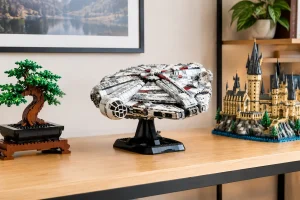
The easiest preservation win happens before a set reaches the shelf. Choose a stable surface away from radiators, fireplaces, steamy kitchens and the regular path of doors, pets or passing elbows. Heat changes, moisture and vibrations are rarely dramatic on their own, but months of exposure can affect a display far more than collectors expect.
Daylight deserves special attention. A bright room is ideal for enjoying a collection, but a sunny windowsill is not. Keep sets out of direct sun, particularly models with white pieces, printed elements, stickers and fabric capes. If daylight is unavoidable, place the display where light is indirect and rotate the models occasionally so one side does not receive all the exposure.
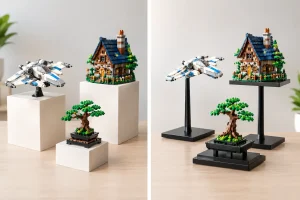
Weight matters too. Large builds need shelving that does not bow, wobble or sit at shoulder height in a busy room. Place heavier models lower down, ensure the full base is supported, and leave enough room around them that you can move nearby objects without brushing fragile antennas, wings or minifigure accessories.
Keep Dust Outside the Build
Dust is the everyday enemy of a display collection. It dulls glossy surfaces, catches on dark elements and makes transparent parts look cloudy. Worse, when dust combines with humidity or cooking residue, it can become harder to remove without repeated cleaning.
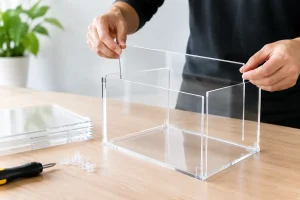
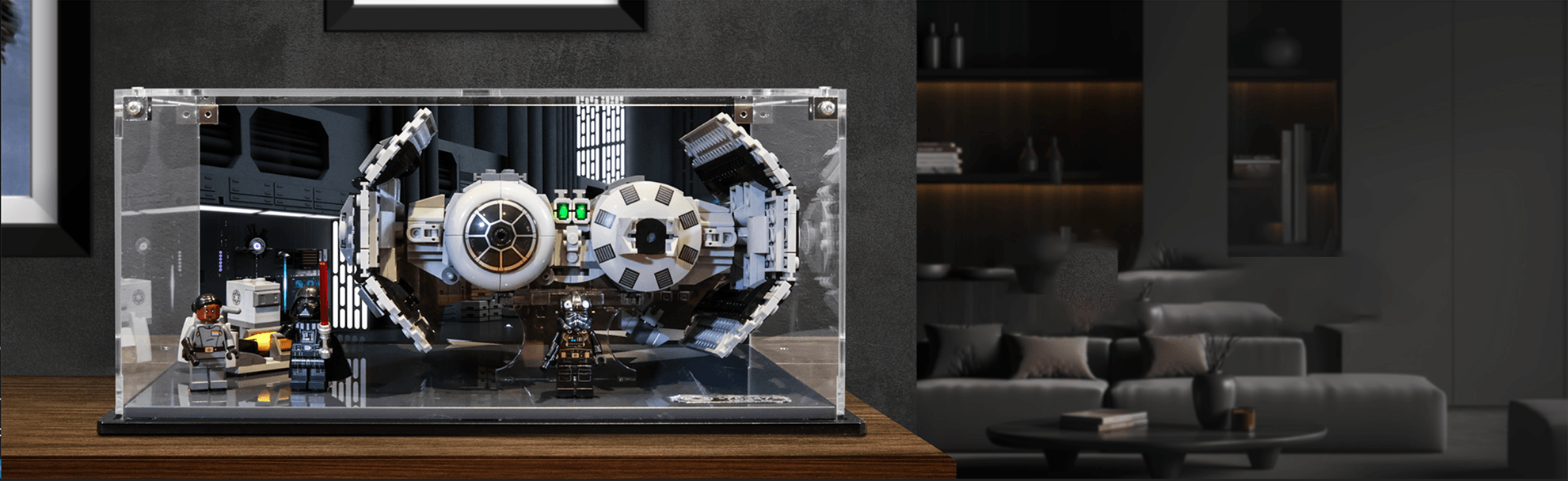
An acrylic display case is the most effective answer for sets that deserve long-term pride of place. It creates a physical barrier between the build and the room while keeping the model visible from every angle. For collectors displaying complex scenes, it also prevents loose pieces and small accessories from disappearing during routine cleaning.
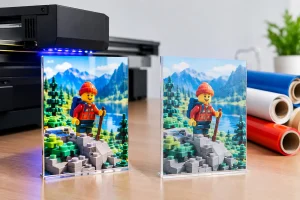
Generic cases can protect a model, but fit and presentation are equally important. A case designed around a specific set number gives the build proper clearance without leaving it looking lost in a large empty box. It can also support the model visually with a printed base or themed backdrop that turns a shelf into a proper exhibit.
For a set such as a Star Wars helmet or a Marvel display piece, a custom background can frame the model without competing with it. The result is more than tidy storage: it is a display that makes the collection feel intentional. Brixbox cases are created with this collector-first approach in mind, pairing set-specific dimensions with artwork that brings the theme to life.
Clean Carefully, Not Constantly
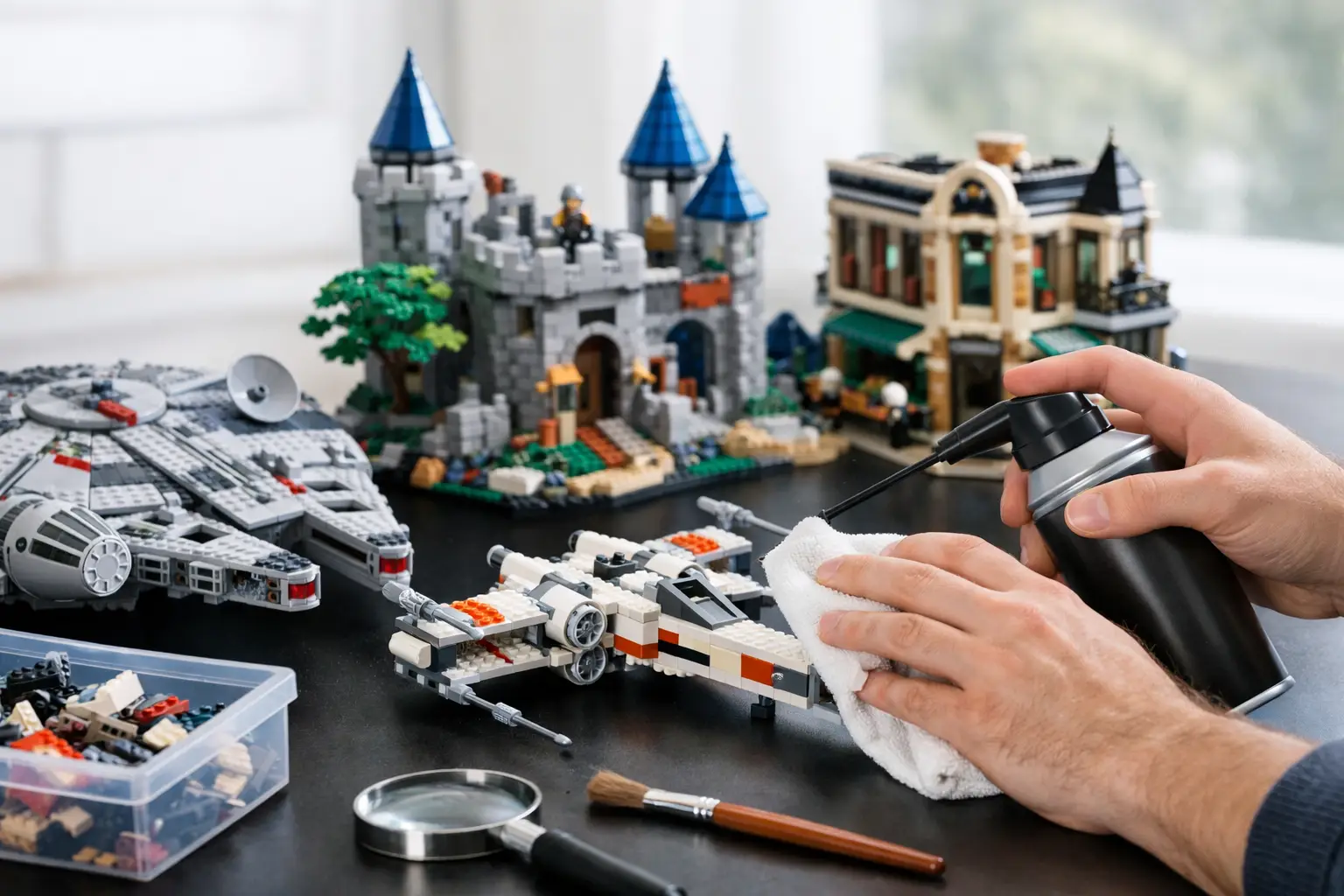
A protected set needs far less maintenance, but every display eventually needs attention. The key is to clean gently and avoid rushing. Dry dusting is preferable to using sprays, household cleaners or wet cloths near a brick-built model. Moisture can settle in gaps, and cleaning products may leave residue on transparent pieces, printed tiles or stickers.
For an open display, a soft make-up brush or clean anti-static brush is useful for sweeping dust from studs and tight corners. Work from the top down with a light touch. A hand-held air blower can help with awkward areas, although compressed-air cans should be used cautiously as they can blow pieces away or release very cold propellant if held incorrectly.
Do not pull apart half the model just to make it spotless. A little dust in an inaccessible area is usually preferable to stressing old clips, hinges or delicate connections. The right approach depends on the set: a sturdy modular building is more forgiving than a finely balanced spacecraft or a tall, narrow architecture model.
If a piece needs closer cleaning, remove it only when necessary and use lukewarm water with a tiny amount of mild washing-up liquid. Let it dry fully before rebuilding. Keep stickers and fabric elements away from soaking altogether.
Handle Builds Like Collectibles
Even durable bricks can suffer from repeated handling. Lift a model from its strongest structural points, ideally beneath the base or from reinforced sections identified during the build. Never carry a large model by a wing, roof, turret, steering wheel or decorative tower simply because it looks like a convenient grip.
Before moving a display, remove loose minifigures, detachable sections and long accessories. For very large sets, it is often safer to split the model into intended modules, move those separately and reconnect them on the new shelf. Keep the original instructions nearby for the first move, especially if the set has an unusual internal frame.
A case also helps reduce casual handling. When the model is clearly presented as part of a display, visitors are less likely to reach for it. That protection is valuable for collectors with children, pets or a home where the best display space is also a lively shared room.
Preserve the Parts You Cannot See
The build is only one part of a collectible set. Keep instruction manuals flat, dry and away from direct light. Store spare parts in a labelled bag or small compartment box, ideally with the set number noted clearly. Those tiny leftovers can become surprisingly useful after a move, a repair or an enthusiastic minifigure rearrangement.
Boxes are worth preserving too, especially for premium, retired or sentimental sets. Flattening them saves space, but only if you are happy to lose their original shape. If you keep boxes intact, store them somewhere dry and clean rather than in a loft, shed or garage where temperature swings and damp can cause warping.
For sets you plan to dismantle, photograph the completed model first and separate parts by colour, section or bag number. This makes future rebuilding more enjoyable and reduces the chance of hard-to-replace elements being mixed into general brick storage.
Know When to Display and When to Store
Not every set needs permanent shelf space. A collection should grow with you, and rotating displays can protect models from prolonged light exposure while keeping your room feeling fresh. Seasonal builds, large vehicles and themed collections work particularly well on rotation.
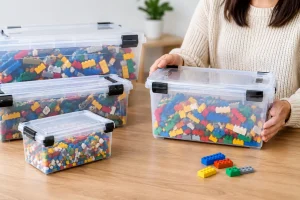
Before storing a built model, remove batteries from any powered components and protect fragile sections. A clean lidded container can work for short-term storage, but avoid packing heavy items on top of a finished build. If a model is too delicate or oversized to store safely assembled, dismantling it carefully may be the wiser choice.
Preservation is not about treating every brick like it belongs in a museum. It is about making smart choices for the sets that matter most, so the next time you stop to admire the shelf, every build still looks worthy of the moment you completed it.
RECENT POST