LEGO Blog
All the latest Brixbox news, straight from the team.
LEGO Storage and Display Solutions That Work
A UCS starfighter balanced on an open shelf looks brilliant for about a day. Then the dust settles into every stud, the wing clips catch a sleeve, and suddenly a set you were proud to finish starts looking like a maintenance job. That is exactly why good LEGO storage and display solutions matter – not just for tidiness, but for protecting the time, money and care you have already poured into the build.
For casual builders, a spare shelf and a few tubs might be enough. For collectors, especially anyone buying premium Star Wars, Technic, Harry Potter, Marvel or Disney sets, generic storage quickly shows its limits. Big models need footprint planning. Fragile models need protection from knocks. Display pieces need to look intentional, not squeezed in wherever there is a gap. The right setup does all three at once.
What good LEGO storage and display solutions actually do
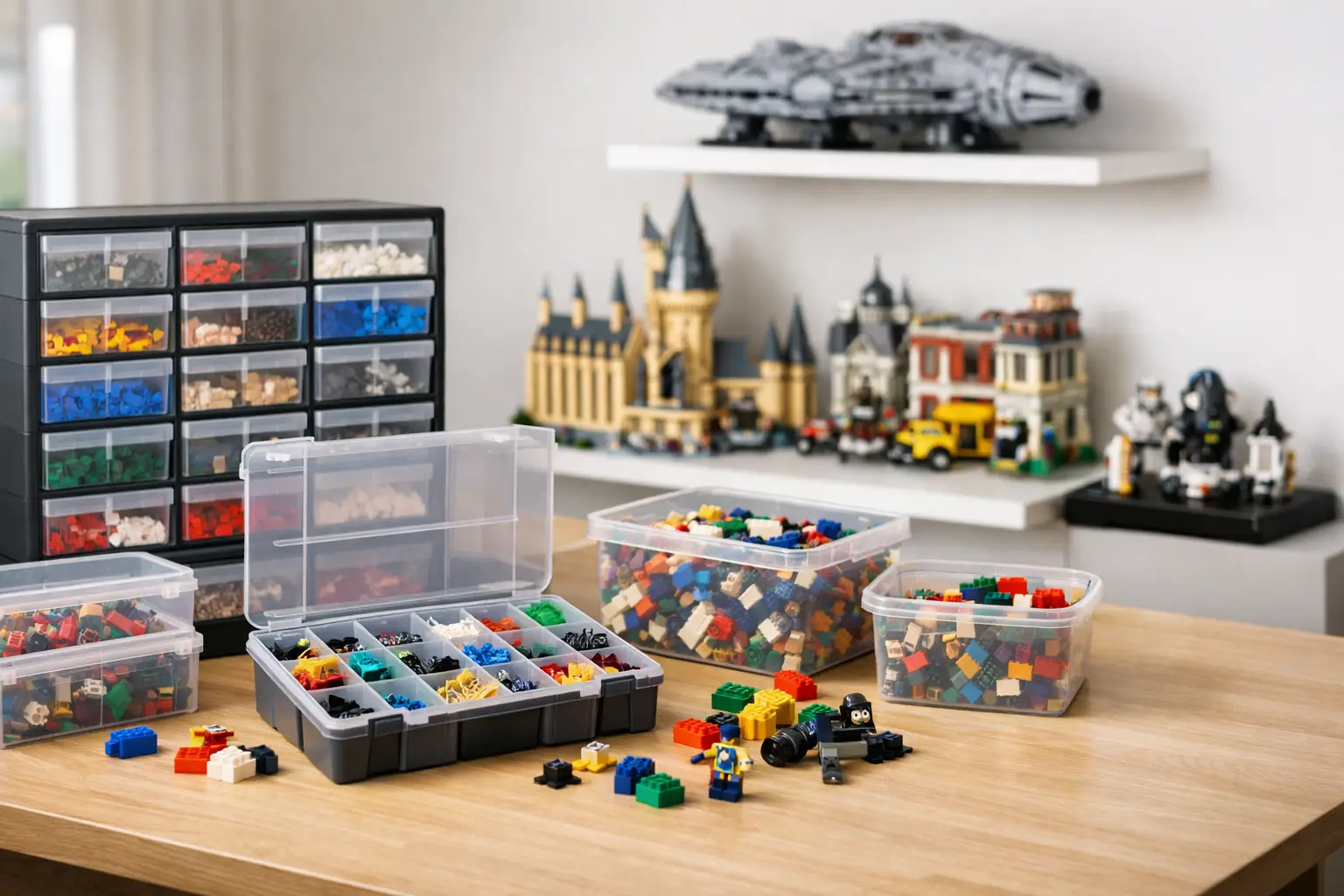
The best setups solve two different problems. First, they keep loose parts, instructions and boxed sets organised. Second, they present completed models in a way that feels worthy of the collection. Those jobs overlap, but they are not the same thing.
A drawer system is excellent for sorting spare elements, minifigure accessories and works-in-progress. It is far less effective for a finished helmet or a large-scale vehicle you want to admire every day. In the same way, an open bookcase can hold a lot of completed sets, but it does almost nothing against dust. If you are constantly cleaning, rebuilding after accidental bumps, or rotating sets off display because they take up too much room, the setup is not really working.
That is where collector-focused solutions stand apart from generic home storage. Purpose-built display cases, raised stands and set-specific layouts do more than contain a model. They improve the way it is seen. Angles become more dramatic. Background artwork adds atmosphere. The whole collection looks curated rather than crowded.
Storage first or display first?
This depends on how you collect.
If you are still building frequently, buying parts, and keeping several projects on the go, storage should come first. You need sorting trays, stackable boxes and a clear system for instructions and spare pieces. Otherwise, your building area turns into a search mission every time you need one dark bluish grey bracket.
If most of your collection is already built and you see your sets as permanent display pieces, the priority shifts. At that point, the main threats are dust, sunlight, accidental handling and visual clutter. Display-first collectors usually get better results from acrylic cases, display risers and set-specific stands than from simply adding more shelving.
For many collectors, the sweet spot is a hybrid system. Loose bricks live in organised storage out of sight. Finished sets get premium presentation in the spaces that matter most.
The main types of LEGO storage and display solutions
There is no single answer for every collection, because a Speed Champions car, a modular building and a UCS Millennium Falcon ask very different things from a display setup.
Open shelving
Open shelves are the easiest starting point. They are accessible, affordable and good for seeing a lot of sets at once. They also make rotation simple, which appeals if you like changing themes through the year.
The downside is obvious. Dust builds quickly, and larger models can look cramped unless the spacing is generous. Open shelving works best when you are displaying robust sets, you clean regularly, and you are happy with a more relaxed presentation.
Drawer and box storage
For spare elements, minifigures, sticker sheets, instructions and dismantled sets, drawer units and labelled containers are hard to beat. They help you build faster and stop parts from spreading across the house.
But they are practical, not glamorous. They support the hobby behind the scenes rather than showcasing the finished result. If you care deeply about presentation, these should sit alongside display solutions, not replace them.
Display stands
Stands are excellent when a model has strong angles that deserve to be seen properly. Starfighters, supercars and some spacecraft themes benefit immediately from being tilted or elevated. A stand can reduce the footprint on a shelf while making the set look more dynamic.
The trade-off is protection. A stand improves posture and visibility, but it does not stop dust or stray hands. If the model is valuable, delicate or in a busy room, a stand often works best inside a case.
Acrylic display cases
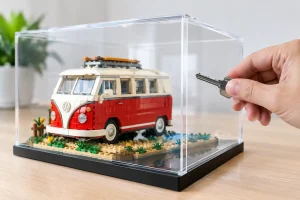
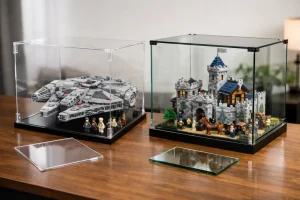
For serious collectors, this is usually where the display conversation gets interesting. Acrylic cases protect against dust, reduce handling, and create a cleaner visual frame around the set. They also make the collection feel more premium, especially when the fit is designed around a specific set rather than guessed from broad dimensions.
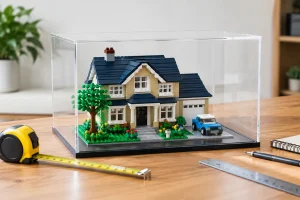
That set-specific fit matters more than people think. A case that is too tight can make placement awkward. One that is too large wastes space and makes the model look lost. Cases built for exact set sizes and themes tend to look sharper and feel more intentional.
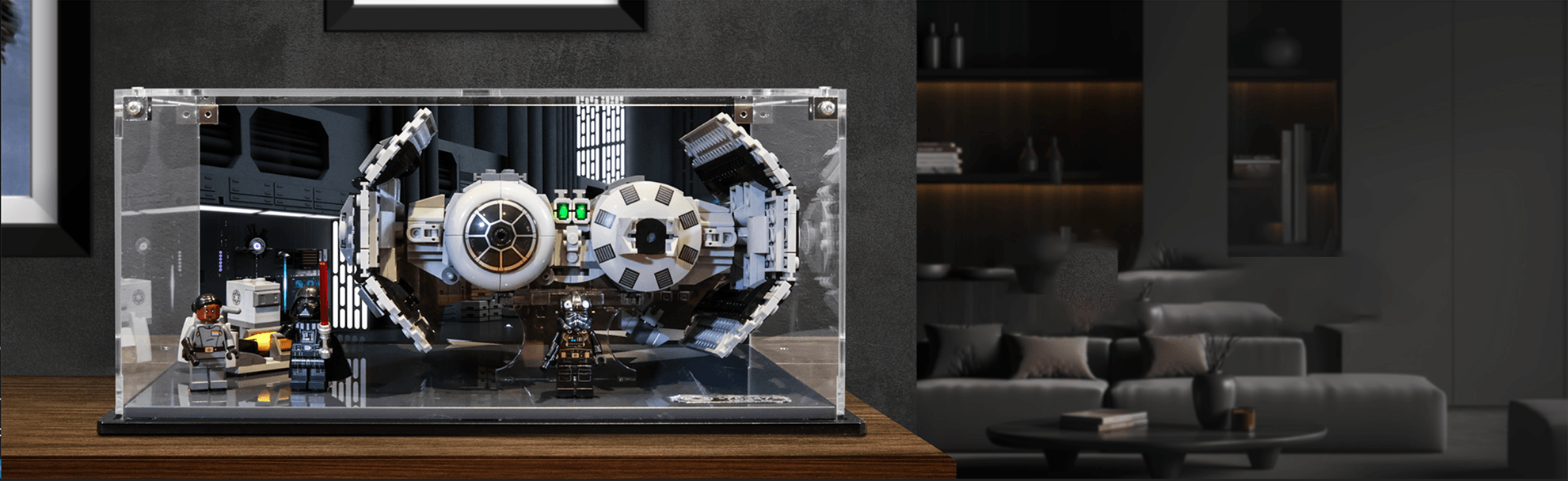
Some collectors stop at clear protection. Others want more theatre from the presentation. Printed bases and UV-printed backgrounds can completely change the effect, turning a good set into a proper centrepiece. A Star Wars build against a themed backdrop, or a Technic car presented with a polished base, has far more presence than the same model sitting flat on a plain shelf.
Why set-specific display beats generic storage
Generic storage is built around dimensions. Collector display is built around the model.
That difference shows up in the details. A set-specific display case accounts for height, width, pose and viewing angle. It can give a build enough breathing room without swallowing extra shelf space. It can complement the identity of the set instead of making every display look the same.
That matters if you collect across big licensed themes. A Marvel helmet, a Disney castle scene and a Technic race car should not all be forced into one visual template. The strongest displays respect what makes each piece exciting in the first place. They protect the build, but they also amplify it.
For collectors who want their room to feel like a gallery rather than a stockroom, that is the real upgrade.
Choosing LEGO storage and display solutions for your collection
Start with the sets you value most, not the sets you own most. There is a difference. You may have dozens of smaller models, but only a handful are sentimental, expensive or visually important enough to deserve prime display treatment.
Think about size first. Larger builds need more than just a big shelf. They need enough clearance for safe placement and comfortable viewing. Then consider fragility. If a set has exposed sections, delicate greebling or easy-to-knock appendages, it benefits from enclosed protection.
Room conditions matter too. If the display is in a living area, hallway or home office where people pass by often, open shelves carry more risk. If the room gets direct sun, you also need to think about preserving colours and printed elements over time.
Finally, consider whether the display adds to the set’s character. This is often the difference between a functional solution and one that truly elevates a collection. A premium acrylic case with a themed base does not merely store the model. It showcases the build in a way that feels complete.
When premium display is worth it
Not every set needs a case. That is the honest answer.
If the build was inexpensive, durable and likely to be dismantled soon, basic shelving may be perfectly sensible. Premium display becomes worth it when the set has lasting value – financial, sentimental or visual. UCS sets, large-scale vehicles, collector helmets, architecture pieces and limited favourites all make a strong case for stronger presentation and protection.
It is also worth it when the collection is starting to look cluttered. A few well-chosen display cases can make the whole room feel more organised, even if the number of sets stays exactly the same. That is one of the underrated benefits of better display. You are not just protecting individual models. You are improving the way the entire collection reads at a glance.
For collectors who care about that polished finish, specialist retailers such as Brixbox appeal because the focus is not just storage in the generic sense. It is fit, presentation and collector-grade impact.
Building a collection you actually enjoy looking at
The best LEGO storage and display solutions do not make your collection feel hidden away. They make it easier to enjoy. Good storage removes the frustration of lost parts and messy shelves. Good display gives your favourite builds the presence they deserve.
There is no shame in starting small. One sorted parts system, one better shelf, one proper case for the set you never want to dust again – that is often how a stronger collection setup begins. Once you see the difference between simply owning a set and showcasing it properly, it becomes much easier to decide what deserves pride of place next.
If a build was worth your time to complete, it is worth displaying in a way that lets it stand out for all the right reasons.
RECENT POST