LEGO Blog
All the latest Brixbox news, straight from the team.

How to Protect LEGO From Sunlight Properly
A bright windowsill can make a finished build look spectacular for an afternoon. Leave it there through a summer, though, and that crisp white starship, vivid red supercar or carefully matched minifigure cape may start to look less like the set you built. To protect LEGO from sunlight, treat where and how you display a model as part of the collection itself – not an afterthought once the final brick is in place.
Sunlight brings two separate risks: ultraviolet light can gradually affect colours and materials, while heat can put stress on a build. The damage is usually slow rather than dramatic, which is exactly why it catches collectors out. By the time one side of a model looks duller than the other, reversing the change is rarely possible.
Why sunlight is tough on LEGO displays
Plastic does not age in the same way in every room. Strong daylight, direct sunshine and repeated heat cycles all influence how a model looks over time. Light-coloured elements can develop a warmer or yellowed appearance, while darker and brighter colours may lose some of their original depth. Stickers, printed parts and fabric elements can also be affected, particularly on sets built for long-term display.
The risk rises when sunlight reaches the same surface every day. A UCS model parked beside a south-facing window, for example, may receive hours of direct exposure on one wing, panel or side of the cockpit. That creates uneven ageing, which is often more noticeable than a general softening of colour across the whole build.
Heat matters too. A sunlit shelf can become surprisingly warm, especially behind glass. LEGO elements are designed to fit precisely, and prolonged warmth is not ideal for large, heavy sections under tension. Think raised vehicle bonnets, long Technic beams, loaded shelves in modular buildings and delicate display stands. A single warm day is unlikely to spell disaster, but repeated exposure is not a display strategy.
The best place to protect LEGO from sunlight
The simplest protection is placement. Choose a wall that does not receive direct sun, ideally away from windows, conservatories, skylights and patio doors. A room can still feel bright and welcoming without putting your prized build in the brightest patch of the room.
Indirect daylight is generally a better choice than direct rays. Positioning a display perpendicular to a window rather than facing it can make a meaningful difference, as can moving a cabinet further into the room. If you can see a sharp strip of sun crossing the shelf during the day, the set is in the firing line.
It depends on the room, of course. Not every collector has a dedicated display space, and some sets deserve the centre stage. If your only viable shelf is near a window, focus on reducing exposure rather than accepting it. Blinds, curtains or UV-filtering window film can help, particularly during the brightest hours. They also protect the room’s artwork, books and furnishings, making them a sensible upgrade beyond the collection.
Avoid placing builds directly above radiators or close to other heat sources as well. The ideal display location is cool, stable and bright enough to appreciate the details without turning the shelf into a miniature greenhouse.
Check the light across a full day
Do not judge a display position at 8am and call it settled. Watch where the sun lands in the late morning and afternoon, when the angle changes dramatically. Take a quick photo of the shelf at different times if you are planning a larger display wall. It is a small bit of collector homework that can prevent years of uneven fading.
Seasonal shifts count too. A shelf that is sheltered in winter may receive powerful direct sun in late spring. Recheck your layout when the brighter months arrive, particularly if you display white helmets, vintage parts, rare minifigures or sets with large printed surfaces.
Use a display case as part of the protection plan
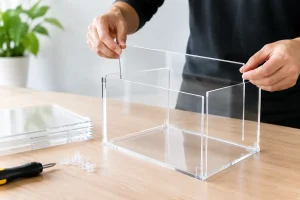
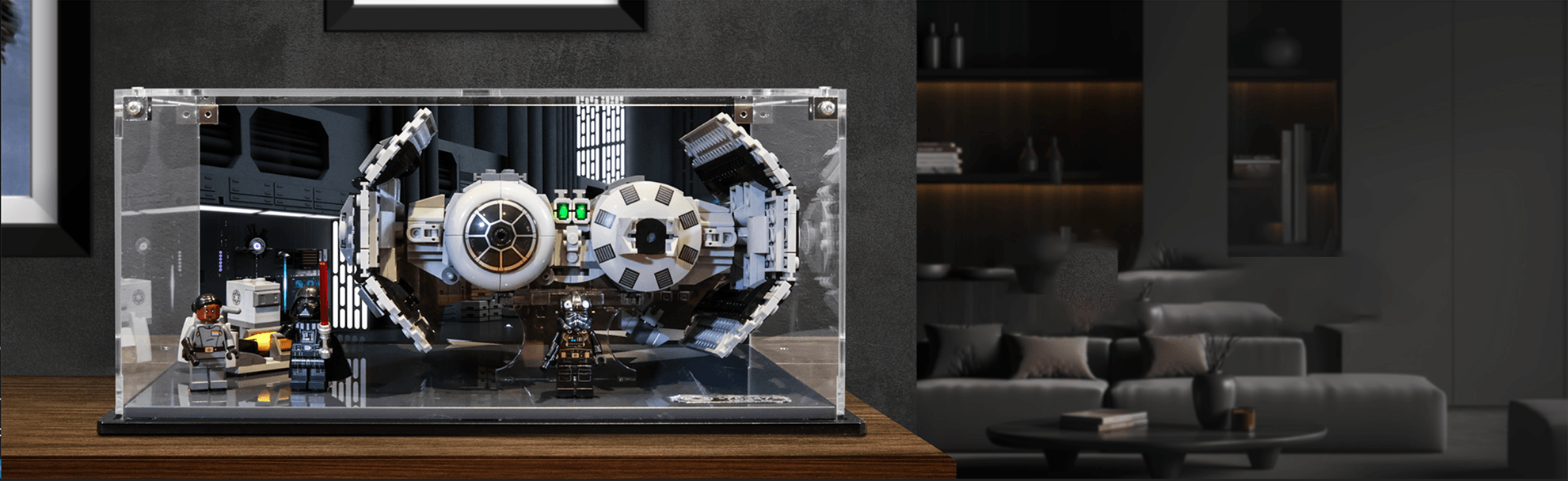
A premium display case gives a completed build a cleaner, more controlled home. It keeps dust, accidental knocks and curious hands away from the model, while giving you a clear visual boundary between the set and the room around it. For a collector piece, that presentation matters just as much as protection.
However, it is worth being precise: a standard clear acrylic case is not automatically a UV shield. Acrylic specifications vary, and the level of ultraviolet protection depends on the material used. Never assume a case alone makes a sun-facing windowsill safe. The strongest approach combines sensible room placement with a case designed for display, then manages the daylight entering the room.
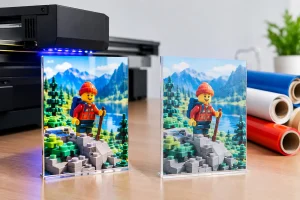
A set-specific case also helps you avoid compromising the build for the sake of fitting it onto a generic shelf. There is room for the model’s footprint, height and standout features, whether that is the broad wingspan of a Star Wars ship, the towering silhouette of a Harry Potter build or the aggressive stance of a Technic car. With a themed background or printed base, the display feels intentional rather than simply stored behind clear panels.
Brixbox display cases are designed around individual sets and collector presentation, giving your build the space to command attention while reducing everyday display risks. For especially valuable or sentimental models, that polished finish is a far better answer than leaving them exposed between books, plants and loose accessories.
Be selective with particularly vulnerable builds
Every model benefits from careful positioning, but some deserve extra caution. White and light-grey builds make colour changes easier to spot. Large licensed display sets often include printed tiles, stickers and fabric capes or sails that you will want to preserve in their best condition. Older parts, retired sets and custom creations can be difficult or expensive to replace, so prevention has real value.
Minifigures need attention as well. A figure on an open shelf may be small, but printed torsos, faces and accessories are still exposed. If you have built a scene with rows of characters, display them in a case rather than letting them sit in direct daylight for months.
For models you rotate frequently, use the rotation to your advantage. Moving a build to a lower-light location for part of the year can spread exposure more evenly, although it is not a substitute for avoiding direct sun. The aim is not to hide the collection away. It is to enjoy it without making preventable compromises.
Everyday habits that keep displays looking sharp
A protected display remains easier to enjoy when the surrounding environment is stable. Keep shelves clean, leave a little breathing room around cases, and avoid putting heavy models where they can be repeatedly moved, bumped or warmed by appliances. If a build is near a window during a short photo session, return it to its usual location afterwards rather than allowing the temporary setup to become permanent.
When cleaning, use a soft microfibre cloth on the outside of a case and follow the care guidance for acrylic. Avoid harsh household cleaners that can cloud or mark clear panels. A clean case lets the build’s colours, printed details and silhouettes do the work – exactly as they should.
It is also sensible to photograph treasured sets when they are freshly built and displayed. This is useful for insurance and collection records, but it gives you a reliable reference for colours and condition. If you ever suspect a set is receiving too much sun, comparison images can reveal subtle changes that memory misses.
If your LEGO has already faded
First, move the model out of direct sunlight and reassess its display environment. Do not try aggressive cleaning products, bleaching agents or heat treatments on assembled bricks in an effort to restore colour. They can cause further damage, affect the surface finish or create an uneven result.
Replacement may be the cleanest option for a handful of common elements, but it is less straightforward for printed pieces, rare colours and older parts. That is why prevention is the collector’s best move. A carefully chosen shelf, managed daylight and a purpose-built case cost far less effort than rebuilding sections of a model later.
Your favourite build should be seen, not hidden in a dark cupboard. Give it a display position that celebrates every detail, then let smart light control and a well-fitted case keep that moment of completion looking worthy of the shelf for years to come.
RECENT POST