LEGO Blog
All the latest Brixbox news, straight from the team.
How to Secure LEGO Models for Long-Term Display
A finished LEGO set should not have to survive life on the edge of a crowded shelf. One passing sleeve, an enthusiastic pet, a door closing too sharply or the slow build-up of dust can turn a proud display into a repair session. To secure LEGO models properly, think beyond simply finding an empty surface. The goal is to protect every carefully placed element while giving the build the presentation it deserves.
For collectors, this matters even more with large UCS spacecraft, detailed Technic cars, intricate Hogwarts scenes and display pieces packed with minifigures. These are not sets to build once and hide away. They are centrepieces. A thoughtful display approach keeps them stable, cleaner and ready to impress every time someone stops for a closer look.
Start with a stable foundation
Most display problems begin underneath the model. A shelf may look level but flex under weight, while a narrow cabinet ledge can leave a large model with too little support. Before positioning a build, check that the surface is rigid, flat and wide enough to carry the full footprint of the set or its display base.
Heavy LEGO models should sit with their weight distributed evenly. Avoid balancing a build on raised landscape sections, wheel arches or other decorative features that were never designed to carry the whole model. If the set includes a stand, make sure every contact point is seated properly and that no part of the stand overhangs the shelf edge.
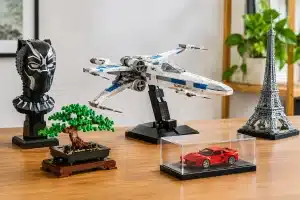
Placement matters too. Keep high-value builds away from busy walkways, doorways and the edge of desks. A model displayed at shoulder height may look dramatic, but it is more likely to be clipped by a bag, a coat or an accidental elbow. A slightly lower, more protected position is often the smarter choice, particularly for long and fragile builds such as starfighters, ships and race cars.
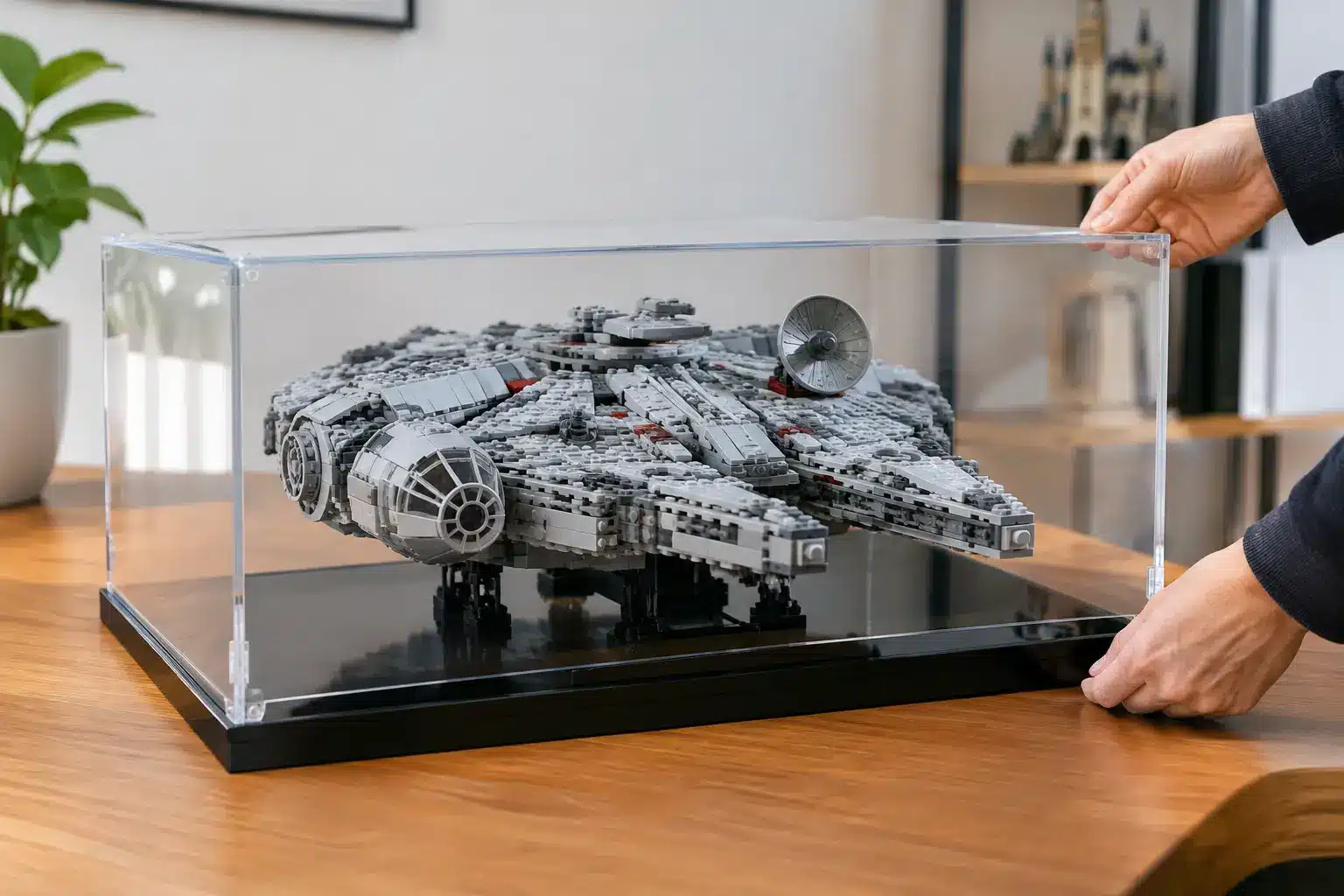
Secure LEGO models with a fitted display case
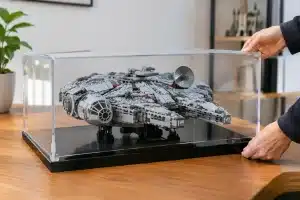
A purpose-built acrylic display case is one of the most effective ways to secure LEGO models without hiding the detail that makes them special. It creates a physical barrier against dust, curious hands and everyday knocks while keeping the model fully visible from every angle.
The best choice is a case designed around the exact set rather than a generic box with acres of unused space. Set-specific sizing gives the model room to breathe while reducing the chance of it shifting during placement. It also means the base can support the display neatly, rather than forcing a premium build onto an awkwardly sized platform.
A fitted case is especially worthwhile for models with exposed greebling, delicate antennas, loose foliage, small accessories or open cockpits. These are the details that catch dust first and detach most easily when cleaning. A case lets you enjoy the model rather than repeatedly handling it to put tiny pieces back where they belong.
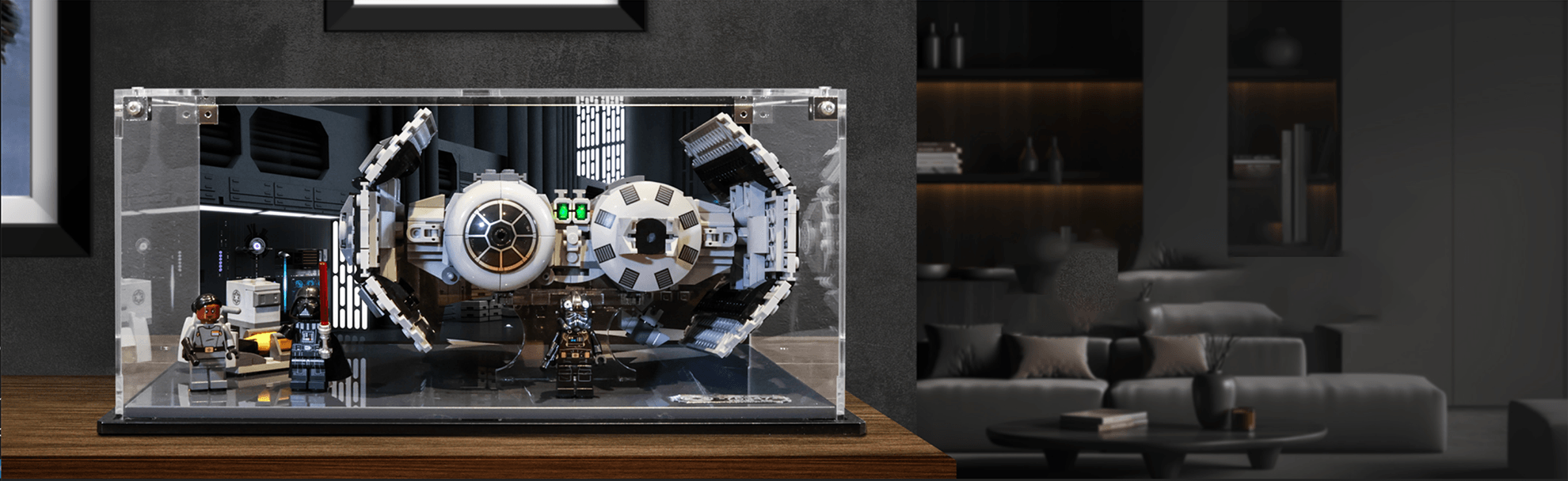
For themed collections, presentation is part of the protection story. A printed base can define the display area and help the build feel anchored, while a UV-printed background adds depth without adding clutter behind the set. Whether it is a galaxy far, far away, a wizarding corridor or a motorsport grid, the right backdrop turns shelf space into a deliberate showcase.
Protect against dust without constant handling
Dust is more than a cosmetic nuisance. Over time, it settles between studs, clings to transparent elements and dulls the crisp contrast that makes a completed build pop. Open shelves demand regular cleaning, and every cleaning session introduces a risk of dislodging smaller parts.
An enclosed case cuts down that maintenance dramatically. It will not make a model maintenance-free forever, particularly in a busy home, but it changes the job from frequent dusting to occasional careful cleaning of the case exterior. That is a much better trade-off for complicated models with hundreds of exposed details.
If a model is displayed without a case, use a soft make-up brush or dedicated anti-static brush with a light touch. Do not press down into the model, and resist the temptation to use a household duster that can snag a weapon, wing, flag or minifigure accessory. Compressed air can be useful in careful hands, but use it sparingly and at a distance. A strong blast can send small pieces across the room faster than a speeder bike.
Choose light carefully
Natural light can make a display look brilliant for a few hours, but direct sunlight is no friend to long-term collecting. Prolonged UV exposure may fade printed elements, stickers and bright colours, while heat can affect the display environment itself. A south-facing windowsill is rarely the right home for a prized set, no matter how good it looks in the afternoon.
Place models away from direct sun and avoid displaying them beside radiators, fireplaces or regularly opened windows. Temperature swings, moisture and heat are not ideal for acrylic cases, printed display elements or the sets inside them. A stable room with indirect light gives your collection the best chance of looking sharp for years.
If you want extra drama, use low-heat LED lighting positioned outside the case where possible. Aim for soft illumination rather than a harsh spotlight that creates glare across the acrylic. The point is to reveal the model’s shaping, colours and minifigure detail, not to make the display difficult to view.
Build for display, not just completion
Some LEGO sets are engineered for play as well as display, and that creates a choice. Moving functions, opening panels and articulated sections are fun, but they can also make a model less stable once it reaches the shelf. Before placing it on display, check that landing gear is locked, wheels are aligned, hinged sections are secure and any removable accessories are positioned intentionally.
For tall models, it can be worth checking the instruction manual again to confirm that support sections and internal bracing are fully connected. This is particularly useful after moving house, rearranging a room or transporting a set to a new cabinet. A model may look fine from the front while a key connection at the back has worked loose.
Do not glue bricks together if you value future rebuilding, resale flexibility or the ability to make repairs. Adhesive may seem like an easy answer for a fragile section, but it changes the set permanently and can damage elements. In most cases, stronger display placement, a proper base or an enclosed case offers a cleaner collector-friendly solution.
Move models with a plan
Even secure displays need to be moved occasionally. The safest method is to remove the model from its case only when you have prepared a clear route and a stable landing spot. Never lift a large build by its most dramatic feature, such as a wing, mast, roof or gun barrel. Support it from underneath with both hands, keeping the weight close to your body.
For very large or awkward sets, separate major modules only if the model was designed to come apart that way. Many premium sets have natural connection points that make moving easier, but forcing a separation can create more work than it saves. Photograph the model before a move if it has a complex arrangement of figures, accessories or scenery. Rebuilding the exact display composition is much easier with a reference image.
When moving a display case, lift the base rather than the acrylic cover. Acrylic is ideal for clear protection, but it should not be treated as a carrying handle. If the model is particularly valuable or fragile, move the case and the model separately.
A display worth protecting
The best way to secure a LEGO model depends on its size, fragility, location and how often you want to interact with it. A small BrickHeadz character may only need a tidy shelf, while a detailed collector set deserves a fitted case, a stable base and a carefully chosen place in the room. Brixbox display solutions are designed with that difference in mind, giving set-specific builds the protection and theatrical presentation they deserve.
Your collection tells a story about the worlds, machines and characters you love. Give each finished build a place where it can stand securely, stay cleaner for longer and look every bit as impressive as it did when the final brick clicked into place.
RECENT POST