LEGO Blog
All the latest Brixbox news, straight from the team.
How to Organise LEGO Minifigures for Display
A brilliant minifigure collection can lose its impact surprisingly quickly. The Jedi ends up beside a City firefighter, a rare collectible figure disappears into a parts tub, and somewhere beneath a pile of capes sits the accessory you were certain belonged to your favourite character. Learning how to organise LEGO minifigures is about more than finding a tidier home for them. It is how you protect the details, celebrate the stories behind each character and make every shelf feel deliberately curated.
For a handful of figures, almost any solution will do. For a growing collection of licensed characters, army builders, retired favourites and figures from expensive display sets, the best approach depends on what you want to see, preserve and reach for most often.
Start by deciding what your collection is for
Before buying storage trays or filling a wall of display cases, separate your minifigures into roles. Some deserve centre stage because they are rare, sentimental or essential to a larger build. Others are working figures: troops, duplicate characters, spare heads and useful accessories that need to be easy to find. A third group may be awaiting sorting, cleaning or a future display.
This small decision prevents a common collector mistake: treating every figure in exactly the same way. A complete 1980s-style space crew, a line-up of Marvel heroes or a set-specific cast from Hogwarts has more visual power when displayed together. Twenty identical Stormtroopers, meanwhile, often look best presented as a formation alongside the model they support, while extra troops can be stored safely nearby.
It also helps to set a realistic display limit. Shelves can become crowded, and crowding makes even premium figures look like clutter. Rotate themed groups through your main display so there is room for new builds without packing away the characters you value most.
Sort LEGO minifigures in a way you will maintain
The perfect system is not the one with the most categories. It is the one you can keep using after the next big build arrives. Begin with a broad first sort: licensed themes, LEGO themes, collectible series and miscellaneous figures. From there, choose the level of detail your collection needs.
For collectors with a modest display, sorting by theme is usually enough. Keep Star Wars, Harry Potter, Marvel, Disney and City figures in separate groups, then arrange each group by film, location, faction or set. This makes the collection feel purposeful without turning the process into archive work.
Larger collections benefit from a second layer. You might divide Star Wars figures into Jedi, Sith, Rebels, Imperial forces, Clone Troopers and droids. Harry Potter collectors might separate students, staff, villains and magical creatures. The key is to choose categories that make sense when you are looking for a figure, not categories that look clever on a label.
For complete set collections, consider organising by set number. Keep the figures, named accessories and any distinctive display elements together in a labelled compartment. If you ever rebuild, sell or move the set, everything is already accounted for. Take a quick photograph of the finished line-up before storing it, especially where multiple characters have similar heads or outfits.
Keep characters and accessories together
Loose accessories are usually the first pieces to vanish. Blasters, wands, shields, hairpieces, capes, tools and printed tiles may be tiny, but they often make a minifigure complete. Avoid tossing them into one large mixed drawer unless they are genuinely spare parts.
For stored figures, use individual compartments or small clear bags within a larger labelled container. Place each character with their signature accessory, then label the compartment by theme or set. Clear storage is especially useful because it lets you identify a figure without handling every piece.
Capes, fabric skirts and softer elements need a little extra care. Folding them sharply can leave creases, while leaving them loose in a busy tub risks snagging. Store them flat where possible, or keep the figure assembled in a compartment tall enough for the cape to sit naturally. For figures on display, make sure a weapon, shield or oversized backpack is not pressing into the fabric.
If you display figures wearing helmets or hairpieces, keep the unused alternative with the character rather than in a general accessories tray. It is a simple habit that saves a great deal of searching later.
Choose display storage for your best minifigures
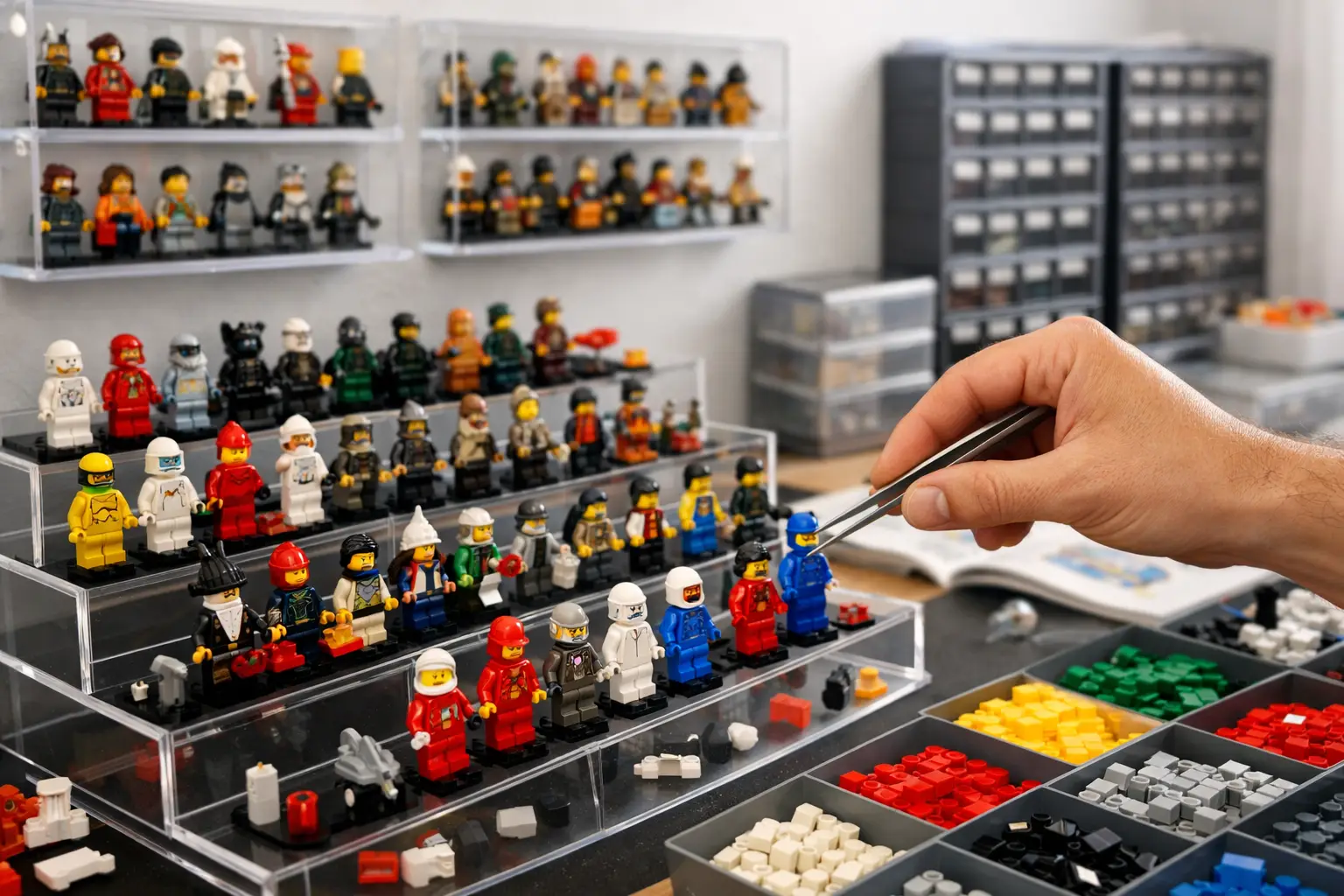
Display is the natural choice for figures with presence: exclusive characters, complete teams, memorable gifts and minifigures tied to your favourite builds. A purpose-made minifigure display case keeps them visible while protecting them from dust, accidental knocks and the constant handling that can loosen parts over time.
Look for clear, well-fitted cases with a stable base and enough internal depth for figures carrying accessories. If you are creating a themed display, a printed backdrop can transform a row of minifigures from a collection into a scene. A dark Imperial background gives Stormtroopers a proper staging ground; a magical castle setting adds atmosphere to a Harry Potter line-up; a superhero cityscape gives Marvel figures the energy they deserve.
Brixbox display solutions are designed for collectors who want that finished, set-specific look rather than a generic box on a shelf. Match the case to the scale of the display, though. A large case with only three figures can feel empty unless the presentation is intentionally minimal, while a case packed shoulder-to-shoulder makes it difficult to appreciate individual printing.
For very valuable or older figures, display away from direct sunlight. UV exposure can affect colours over time, particularly on bright white elements and printed torsos. Choose a cool, dry spot rather than a windowsill, radiator shelf or humid loft space.
Use stands to create a stronger visual order
A flat row of minifigures is tidy, but height and spacing make it far more dramatic. Tiered stands allow the back row to remain visible, which is ideal for teams, armies and collectible series. Stands also help prevent figures toppling into one another when a shelf is bumped.
Arrange characters with a little narrative in mind. Put a leading character at the centre, group allies together and place opposing factions on separate sides. For an army display, use ranks. For a complete series, organise by colour, costume style or release order. These choices are not just decorative. They make gaps obvious, so you can immediately see which character you still need to track down.
Be careful with very tight stud connections if you regularly swap figures around. Secure display is useful, but repeatedly forcing legs on and off studs can be frustrating and may mark softer elements. A stand should hold figures confidently without making changes feel like a repair job.
Label the storage you cannot see
The collection you display is only half the story. Your spare figures, duplicate troops, seasonal characters and dismantled set casts need a system that remains understandable six months from now.
Use clear labels on drawers, compartment boxes and storage tubs. Keep them brief and specific: “Star Wars – Imperial”, “CMF Series 24”, “Hogwarts Students”, or “Set 76391 Icons”. If a box contains more than one subgroup, note that on the label instead of relying on memory.
A simple inventory is worthwhile once the collection reaches the point where duplicates and missing pieces become difficult to track. This can be a notebook, spreadsheet or photo album on your phone. Record the character name, theme, set number where relevant, condition and storage location. You do not need to catalogue every standard clone helmet on day one. Start with rare figures, complete sets and the characters you are most likely to misplace.
Build a routine that keeps dust and disorder out
Organisation works best when it becomes part of collecting rather than a project you dread. After opening a new set, decide immediately whether each minifigure belongs with the build, in a themed display or in storage. Return spare accessories to their assigned compartment before they spread across the building table.
Give display cases and shelves a gentle check every few weeks. A soft brush or microfibre cloth can remove surface dust from the outside of a case. For exposed figures, handle them carefully and avoid harsh cleaners, which can affect printed parts. If you have young visitors, pets or a particularly lively household, enclosed displays offer extra peace of mind.
Most importantly, leave room for the next character. A collection should feel alive, not finished and untouchable. When every minifigure has a place – whether that is on a themed stand, inside a protective case or in a clearly labelled drawer – adding the next legendary figure becomes part of the fun, not another search through a plastic tub.
RECENT POST