LEGO Blog
All the latest Brixbox news, straight from the team.
Printed Base for LEGO Case Displays That Pop
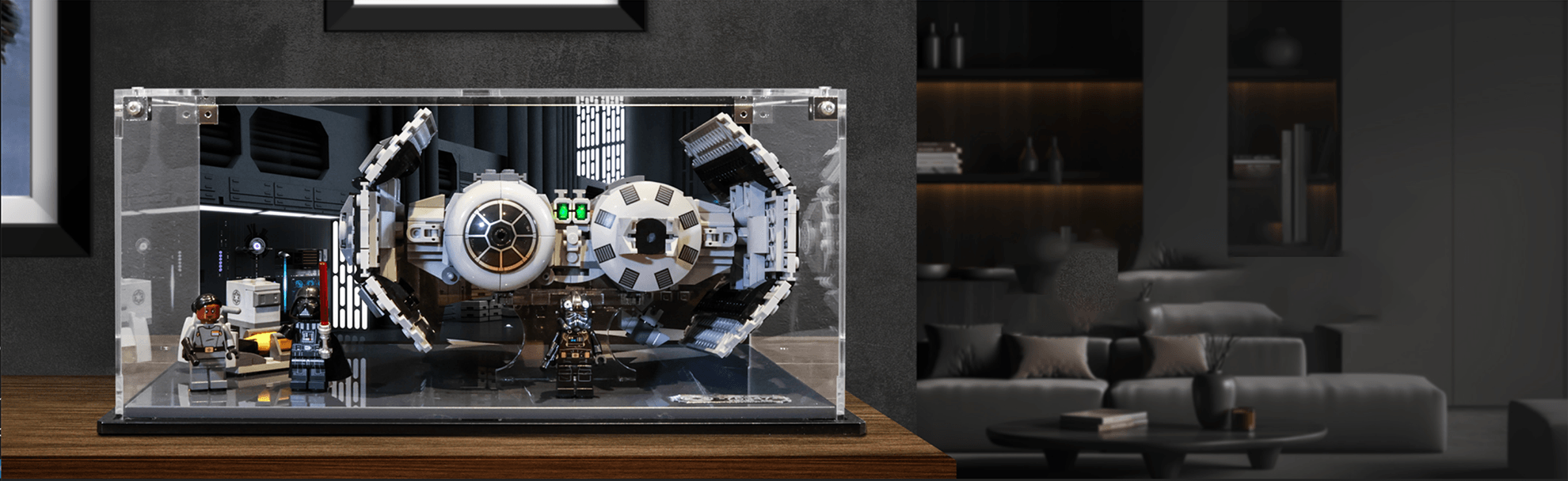
That final brick deserves better than a bare shelf. A printed base for a LEGO case gives a finished model its setting: a launch pad for a Star Wars starship, a cobbled street beneath a Harry Potter build, or a race-ready surface under a Technic car. It is a small detail with a dramatic effect, turning a protected model into a genuine centrepiece.
For collectors who have invested hours in a build, display is part of the hobby. The right case keeps dust and curious hands away; the right printed base gives the set visual weight, depth and a clear sense of place. Rather than leaving your model floating on transparent acrylic, it creates a scene that looks intentional from every angle.
Why a printed base for LEGO case displays matters
A premium build is rarely designed as a neutral object. It has a world, a story and a mood. The best display accessories respect that identity instead of treating every set as though it belongs on the same plain plinth.
A UV-printed base can bring colour and detail directly beneath the model without adding extra loose pieces to arrange or dust around. Think hangar markings beneath a Rebel ship, a dark and dramatic floor for a superhero helmet, or a route-inspired graphic beneath a motorsport icon. The artwork frames the set without competing with it.
This also changes how a collection feels as a whole. Shelves filled with different themes can become visually coherent when each model has its own purpose-built presentation. A printed base makes the display look curated, not simply stored.
There is a practical advantage, too. A defined footprint makes it easier to position a build neatly inside its case. If a set has delicate details near the edges, an accurately sized base helps you see at once where it should sit before the acrylic panels are fitted. That is especially welcome with larger builds, where moving the completed model is not a job anyone wants to repeat.
Choose artwork that serves the set
The strongest printed bases do not need to shout. They support the silhouette, colours and story of the model above them. A detailed Star Wars scene can look spectacular, but only if the design leaves enough calm space around the ship to keep the outline clear. Equally, a minimal black base may suit a sleek vehicle better than a busy graphic.
Start with the mood of the set. Fantasy builds often suit stonework, maps, forest textures or architectural details. Spacecraft feel at home over star fields, landing bays and industrial surfaces. For vehicles, track-inspired lines and subtle technical graphics can give motion to a stationary model. Character-led sets may benefit from colours or motifs that echo the source material rather than a full illustrated scene.
Scale matters just as much as theme. Large display cases can carry more environmental detail because the artwork has room to breathe. A compact helmet or BrickHeadz display needs a simpler approach. Too much pattern around a small model can make the whole case feel crowded, particularly when viewed from a distance.
It is also worth considering where the case will live. In a darker games room, a black or deep-coloured base can create a cinematic look. On a bright living-room shelf, a lighter design may stop the display from disappearing into shadow. If your collection includes several cases side by side, repeat a few tones across the range while allowing each set’s artwork to remain distinctive.
Printed base or printed background?
These two upgrades work brilliantly together, but they do different jobs. The base grounds the build and is most visible when you look down into the case or view it from the front at shelf height. A printed background creates depth behind the model, making it particularly effective for ships, castles and scenes with a strong front-facing profile.
If you are choosing only one, look at how you normally view the set. A model displayed high on a wall unit may benefit most from a background. A low coffee-table display, desk case or wide vehicle model often gains more from a base. For the full collector-grade effect, a coordinated printed base and background can transform a case into a compact diorama without altering the original build.
Fit is not a detail to overlook
A themed design only works when the case itself is made for the model. Generic acrylic boxes may provide basic dust protection, but a loose fit can leave too much empty space, obscure the intended proportions or make the display feel improvised.
Set-specific cases are designed around the footprint and height of the completed build. That allows the printed base to align with the model rather than merely sitting underneath it. It also means enough clearance for antennae, wings, foliage and other fragile details that tend to extend beyond the obvious dimensions.
Before choosing a display, check the exact set number as well as the set name. LEGO releases can share a theme, vehicle or character while having very different footprints. A case designed for one version is not automatically right for another. This is particularly relevant for UCS models, Technic cars and modular-style builds, where a few centimetres can make a real difference to the finished presentation.
Consider future additions, too. If you plan to display accompanying minifigures, a stand, a plaque or a second small model within the same case, choose a configuration made for that arrangement. More space is not always better. The goal is room for every element to be seen clearly, not a large empty border that dilutes the impact of the build.
Getting the placement right
A printed base is designed to make assembly straightforward, but the final positioning is worth doing carefully. Prepare a clean, level surface and make sure the base is free from grit before placing the model down. Even a tiny loose element can create an unwanted bump beneath a large build.
Lift the model from its strongest points rather than by the most eye-catching ones. Wings, masts, roof sections and decorative arches may look sturdy but are often the first parts to flex. For a large or intricate set, it can be safer to remove a detachable section, position the main build, then replace it once everything is centred.
Use the artwork as a visual guide. Centre lines, platform edges and printed scenery help establish the intended placement. Stand back before fitting the case panels and check the display from the angle at which it will usually be seen. A model can be technically centred yet look slightly off if its most prominent feature points away from the front.
Avoid sliding the build across the printed surface once it is down. Lift, adjust and place it again instead. This protects both delicate elements and the clean presentation you are creating.
Keep the case looking collector-ready
The printed surface is made for display, but a little care preserves that freshly assembled look. Dust the acrylic case with a soft microfibre cloth and use gentle, suitable cleaning methods for clear panels. Avoid abrasive cloths or harsh cleaners that can mark acrylic and distract from the view of the model inside.
The base itself should be treated as part of the display, not a workbench. Do not rest tools, spare pieces or drinks on it while building nearby. If you need to rearrange your collection, remove the case components and lift the model with patience rather than trying to manoeuvre it through a narrow opening.
Sunlight is another consideration. A bright room can make a collection look superb, but prolonged direct sun is rarely ideal for bricks, printed artwork or acrylic. Position displays where they benefit from the room’s light without spending every afternoon in the strongest rays.
Build the display your set deserves
A printed base will not replace the thrill of completing a legendary set. What it does is give that achievement a proper stage. The difference is most noticeable with models that have a strong setting, striking silhouette or sentimental place in your collection.
At Brixbox, the best display choices begin with the set itself: its scale, its story and the details that made you want to build it in the first place. Choose a design that lets those details lead, then let the case protect the result. Your favourite build should not merely sit on a shelf. It should look ready for its next admiring glance.
RECENT POST