LEGO Blog
All the latest Brixbox news, straight from the team.

LEGO Plinth Review – Is It Worth the Space?
A finished LEGO set can look brilliant on a shelf and still feel unfinished. The model may be technically complete, but a bare surface leaves it exposed to dust, accidental knocks and the visual clutter of everything around it. This LEGO plinth review looks at what a purpose-built display base really adds – and when it is worth giving your build that extra stage.
For collectors, a plinth is not simply a block that sits beneath a model. It creates a deliberate boundary around the build, gives it visual weight and turns a favourite set into a display piece. Whether you are presenting a Star Wars helmet, a detailed Technic car or an iconic scene from Harry Potter, that difference is immediately noticeable.
What a LEGO plinth changes on display
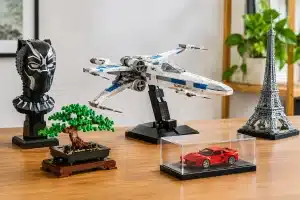
The most obvious benefit is presentation. A plinth lifts a set from the shelf, literally and visually, separating it from the background and drawing the eye towards the model. It gives even a compact build a more permanent, gallery-style presence, while larger sets gain the foundation they need to look considered rather than simply placed.
That matters most with sets that have strong silhouettes or storytelling built into them. A landspeeder, racing car or superhero vehicle often looks better when its footprint is clearly framed. A printed base can push this further, adding a themed surface that complements the build without competing for attention. The result is a display with atmosphere, not just a collection of bricks.
A good plinth also creates a cleaner visual rhythm when several sets share a cabinet or shelving unit. Instead of models sitting at slightly different angles with loose accessories around them, each display has a defined space. For collectors building a themed wall of helmets, BrickHeadz or minifigures, this consistency can make a surprisingly big difference.
LEGO plinth review: the practical benefits
Presentation earns the first impression, but practicality is what makes a plinth useful long after the photos have been taken. A correctly sized base supports the footprint of a model and makes it easier to handle the display area without catching small details, wheels, wings or minifigure accessories.
This is especially valuable for builds with fragile outer edges. Anyone who has tried to dust around a large UCS model or move a detailed diorama knows that one misplaced hand can send a carefully positioned element skidding across the shelf. A plinth gives you a safer perimeter to work around. If paired with a display case, it also provides the stable foundation that holds the whole presentation together.
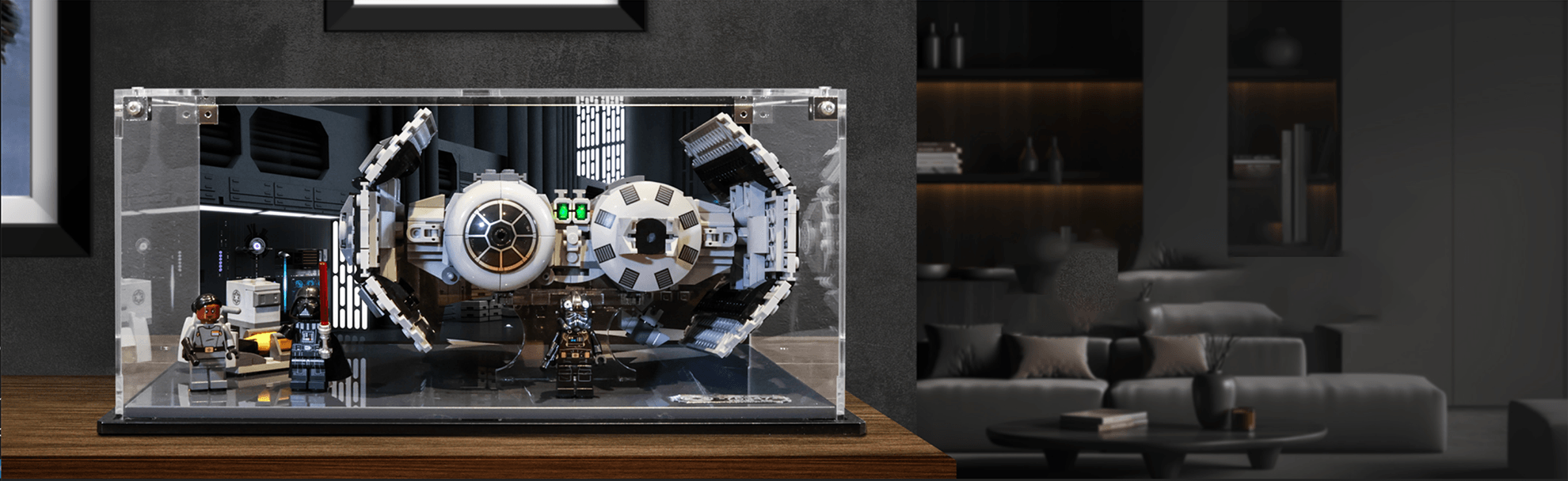
Dust protection is where expectations need to be realistic. A plinth alone does not stop dust settling on your build. It does, however, prevent the model from feeling lost against the shelf surface and makes cleaning around it less awkward. For true long-term protection, particularly on premium sets with intricate interiors, light-coloured elements or exposed stickers, a plinth works best as part of an acrylic display case setup.
There is a second practical advantage: placement. A base helps you commit to the right position before the model goes on show. Once a set sits centred on a plinth, with a background or case around it, you are less likely to keep shifting it a few centimetres at a time. That sounds minor, but it helps preserve delicate builds and keeps a display looking intentional.
When a display base is worth buying
A plinth is most worthwhile when the set means something beyond its parts count. It could be a flagship purchase you saved for, a gift that marks an occasion or a model that represents your favourite film, team or franchise. These are the builds that deserve to be seen properly rather than squeezed into the nearest spare space.
It also makes sense for sets with a modest footprint but a big visual identity. Helmets, ships on stands, vehicles and character models can all gain more presence from a tailored base. The upgrade does not need to be enormous to be effective. Sometimes a crisp black surround and a carefully chosen printed design are enough to make the set feel like the centrepiece it is.
For collectors with limited room, a plinth can be a smarter choice than buying a large case for every build. It gives priority models a finished look while keeping shelving flexible. Just remember that it does not offer the same protection as enclosed acrylic. If dust, pets, young children or regular shelf cleaning are a concern, a case remains the stronger investment.
Fit, materials and finish matter more than size
Not all display bases deliver the same result. A generic board may give a model some height, but it can look oversized, undersized or disconnected from the set. Set-specific design is where the upgrade becomes convincing. The base should frame the model with enough breathing room to look premium, without creating a large empty border that wastes valuable display space.
The finish matters too. A clean acrylic base gives a sharp, contemporary look and suits almost every theme. Printed elements bring more personality, whether that means a track-inspired surface beneath a motorsport build, a starfield behind a spacecraft or a location-based scene that reinforces a diorama’s story. The strongest designs use colour and detail with restraint. Your LEGO set should always remain the hero.
Look closely at the edge treatment and how the model sits on the surface. A quality plinth should feel solid and level, with neat joins and no visual distraction from rough cuts or awkward proportions. It should also be easy to position the build without forcing elements into place. A display accessory should reduce the risk of damage, not introduce it.
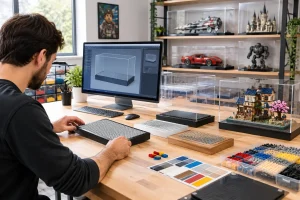
At Brixbox, the appeal of set-specific display solutions lies in this attention to fit and finish. The right base is designed as an extension of the model, not an afterthought added once the build is complete.
The trade-offs collectors should consider
The main trade-off is space. A plinth increases the overall footprint of a set, sometimes by more than you expect. Measure the shelf, cabinet or bookcase before choosing one, including the clearance needed to lift a display case on and off comfortably. A spectacular display is less satisfying if it forces you to crowd every other model.
Cost is the other consideration. If you own dozens of sets, upgrading everything at once is rarely necessary. Start with the builds you display at eye level, the ones with sentimental value or the sets that currently disappear into a busy room. A few well-presented centrepieces often have more impact than a shelf full of identical upgrades.
There is also a style question. Minimal collectors may prefer a plain base that creates definition without adding artwork. Fans building a theatrical Star Wars, Marvel or Disney display may want printed backgrounds and themed details that bring the legend to life. Neither approach is better. It depends on whether you want your collection to feel like a curated gallery or an immersive scene.
How to get the best result from a plinth
Start with the display location, not the product. Consider viewing height, nearby lighting and what sits behind the model. A darker background can make pale builds pop, while a busy wallpaper pattern may call for a simpler presentation. Avoid placing valuable sets in direct sunlight, as prolonged exposure can affect colours over time.
Then give the model room to breathe. A plinth works best when the surrounding shelf is not packed edge to edge with unrelated objects. Even a small gap around the base helps the silhouette read clearly. If you are grouping sets by theme, repeat one or two visual details – matching base colours, similar case heights or coordinated printed artwork – rather than trying to make every display identical.
Finally, think about the future of the collection. If a build is likely to move into a case later, choose a display approach that supports that plan. A plinth can be the first step towards a more polished setup, giving the model a proper home now and a natural foundation for further protection later.
A great LEGO display should make you pause when you walk past it. If a plinth gives a favourite build that extra sense of presence, protection and pride, it has earned far more than a little shelf space.
RECENT POST