LEGO Blog
All the latest Brixbox news, straight from the team.
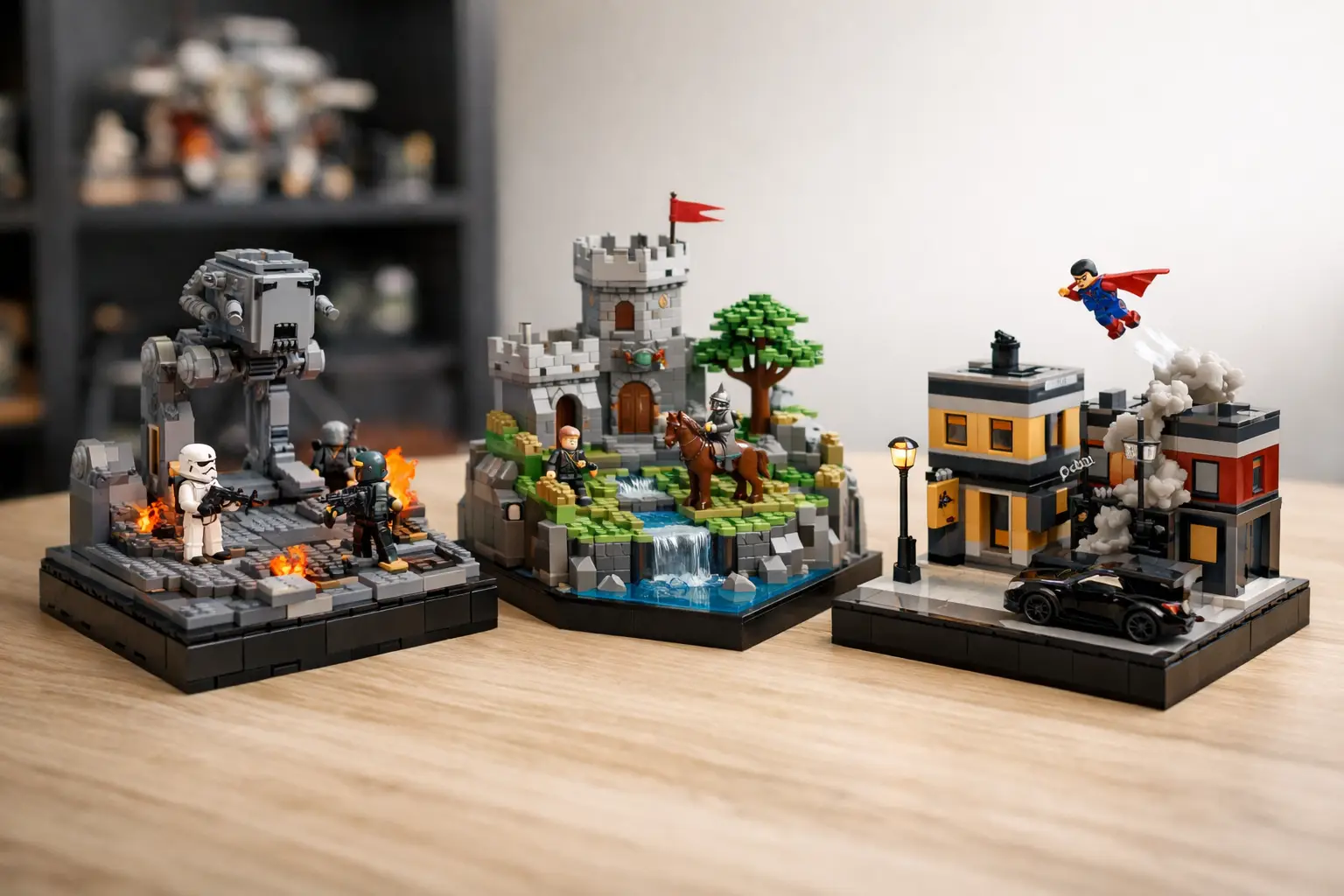
Best LEGO Scene Bases for Show-Stopping Displays
A premium LEGO set deserves more than a spare patch of shelving. The best LEGO scene bases give a finished build a proper setting: a trench run beneath a Star Wars ship, a misty woodland floor for a fantasy display, or a clean circuit-inspired platform beneath a Technic supercar. They turn a model from something you have built into something you want to stop and admire every time you pass it.
For collectors, a scene base is not merely decoration. It defines the footprint of the display, creates visual order around the model, and helps the set feel intentional rather than temporarily parked. Get the choice right and even a familiar build gains a new sense of scale, atmosphere and presence.
What Makes the Best LEGO Scene Bases?
The strongest scene bases do three jobs at once. They support the model securely, add a themed visual story, and leave enough breathing room for the build to be seen properly. A base that is too small can make a large model look cramped. One that is overly busy can compete with the set instead of framing it.
Start with the set itself. A compact helmet, BrickHeadz character or minifigure scene usually benefits from a focused printed platform that keeps attention on one central subject. Larger display pieces, such as UCS Star Wars models, Hogwarts sections, Marvel vehicles or Technic cars, need a broader composition. The base should make their footprint feel deliberate while creating a clean border around the outermost elements.
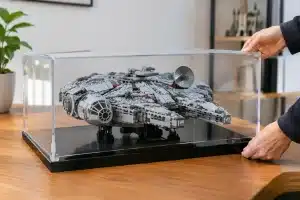
Material matters too. A well-made acrylic display base provides a crisp, premium foundation that holds its shape and is easy to keep looking smart. Paired with a purpose-designed display case, it also helps protect the model from the dust, accidental knocks and everyday handling that can slowly dull a prized build.
A Printed Base Should Add Story, Not Noise
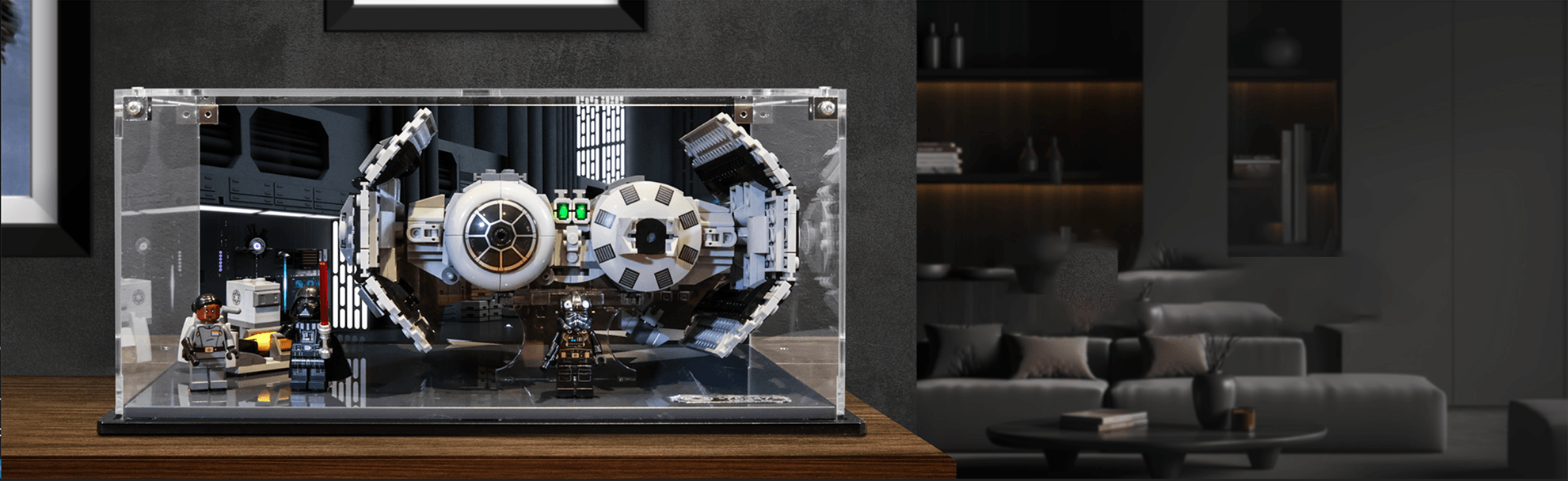
A printed scene base is often the quickest way to make a set feel at home. The right artwork can suggest a location without requiring hundreds of extra loose pieces: weathered stone beneath a medieval build, hyperspace detailing under a starfighter, or a racing grid under a motorsport icon.
The best designs use colour and texture with restraint. Dark tones can make brightly coloured models stand forward, while lighter detailing gives black or grey builds more definition. Consider the viewing distance as well. Fine printed detail can look superb up close, but the overall composition must still read clearly from across a room.
For licensed themes, recognition is part of the appeal. A base that echoes the visual language of a galaxy far, far away, a wizarding world or a superhero universe creates an immediate connection without taking focus away from the official model. It is a display upgrade that feels made for the collection, not borrowed from somewhere else.
Choose a Scene Base That Fits the Set
A generic base can be useful for sorting or temporary presentation, but serious display pieces benefit from set-specific thinking. Measure the actual footprint, including wings, extended doors, overhanging plates, stands and any minifigure arrangement you want to retain. Do not rely only on the dimensions shown on a set box.
Leave a visible margin around the build. For smaller models, a narrow border often looks neat and gallery-like. For large vehicles and scenes, more space can improve the sense of scale and create room for a title plaque, figures or key accessories. The goal is balance, not simply the largest possible platform.
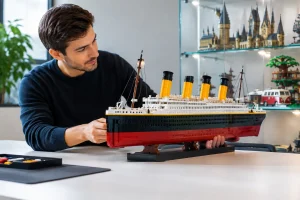
Height is another consideration. A low-profile base keeps attention on the set and is particularly effective for cars, ships and architectural models. A raised base can give a display more authority, especially when used inside a clear case, but it needs to suit the shelf height available. If your collection sits in a bookcase or cabinet, check the full height of the model, base and case before committing.
Match the Base to the Display Environment
Your display room influences the best choice. A dark, cinematic printed base can look exceptional against pale walls or within a bright cabinet. In a darker gaming room, office or media space, a lighter edge or background may help the model remain clearly visible.
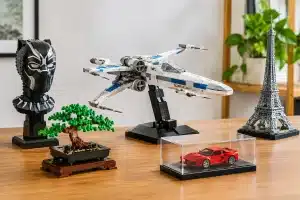
If several sets share one shelf, consistency becomes just as valuable as individual flair. Similar base depths, matching case styles and coordinated artwork can turn separate themes into a carefully curated collection. This does not mean every display must look identical. A Star Wars fleet can feel dramatic in dark space-inspired surroundings, while a colourful Disney build may suit brighter, more playful presentation. The visual standard should be consistent, even when the themes are not.
Collectors with limited shelf space should favour bases that create definition without adding unnecessary width. A precisely fitted platform is often more impressive than an oversized scene that forces the rest of the collection into clutter. There is real satisfaction in a shelf where every build has room to breathe.
Printed Scenery or a Clean Display Base?
This decision comes down to the kind of collection you want to build. Printed scenery brings instant atmosphere. It is ideal for a centrepiece set, a favourite fandom display, or any model whose appeal is rooted in a recognisable location or action scene. It can make a single set feel more complete without the cost, time and maintenance of building a large custom diorama.
A clean display base takes a different approach. It gives the set a premium, museum-style presentation and suits collectors who prefer the official model to do all the visual talking. This option works particularly well for intricate Technic builds, helmets, statues, architecture and models with strong sculptural silhouettes.
There is no universal winner. A printed base may be perfect for a dramatic Millennium Falcon display but unnecessary beneath a car whose curves deserve an uncluttered platform. Consider the model’s story, your existing décor and whether you want each set to stand alone or contribute to a bigger themed shelf.
The Case and Base Work Better Together
A scene base looks its best when it is part of a complete display solution. The base gives the build a visual foundation; an acrylic case protects the whole presentation and creates a sharp, finished outline. Together, they help prevent the familiar collector frustrations of dust settling into studs, loose details being nudged out of place, and models losing impact among everyday household clutter.
Set-specific cases are especially useful because fit affects the final look. Too much empty space can weaken the composition, while a cramped case risks catching delicate elements when the model is placed inside or removed for adjustment. A purpose-built case allows the set, printed base and background to work as one display rather than a collection of separate accessories.
Backgrounds add another layer when used carefully. A strong vertical backdrop can make a ship appear in flight or add depth behind a castle, but it is not required for every model. Low, wide builds often benefit most from a base alone. Taller models or displays with a dramatic front-facing view can gain real impact from a coordinated background.
Details That Separate a Good Display From a Great One
Before positioning a set, give it a final inspection. Straighten antennas, align wheels, secure minifigures and remove any small crumbs or dust trapped between plates. These tiny adjustments are far more noticeable once the model is framed by a clean base and clear acrylic.
Think about the main viewing angle too. Most collectors see their displays from the front and slightly above, so arrange figures, printed details and the model itself for that perspective. A vehicle can be angled slightly to show its profile, while a diorama may look stronger when its key action faces the room rather than the wall.
Lighting should flatter the display rather than wash it out. Soft shelf lighting can bring out printed scenery and transparent elements, while direct sunlight is best avoided. It can heat a display, create glare on acrylic and expose colours to prolonged UV light. A case with considered UV protection adds useful reassurance for sets that earn a permanent place in your collection.
Finally, give the display a reason to exist beyond storage. Maybe it marks the set you saved for, the film you watched on repeat, or the build that brought you back to LEGO collecting. The right scene base makes that connection visible. With a purpose-built base, themed artwork and a precision-fit case from Brixbox, your favourite build can look every bit as special after the final brick clicks into place.
RECENT POST