LEGO Blog
All the latest Brixbox news, straight from the team.
Collector Guide to Acrylic Cases for LEGO Displays
A finished LEGO set should not disappear into the background the moment the last brick clicks into place. For collectors who have invested time, money and proper care into a build, the right display turns it into part of the room. This collector guide to acrylic cases explains what separates a worthwhile case from a generic clear box, and how to choose one that protects the build while giving it the presence it deserves.
Why acrylic cases earn their place in a collection
Dust is the obvious enemy. It settles into cockpit canopies, between Technic panels, around minifigure capes and across every stud of a large build. Cleaning a display model can be slow work, especially on sets with delicate antennas, foliage, wings or exposed mechanical details. An acrylic case creates a practical barrier, so the set stays cleaner for longer and needs less handling.
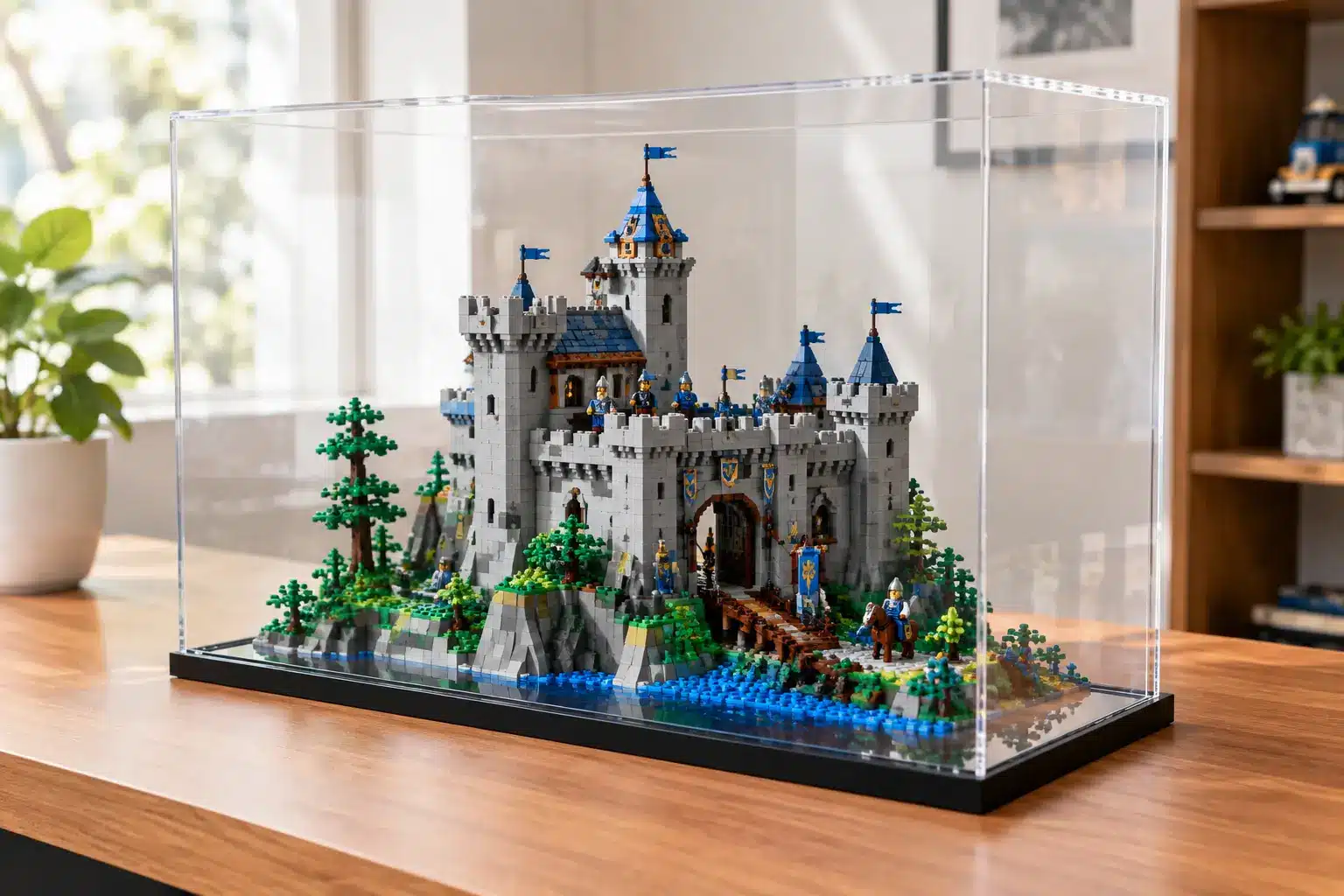
Protection is only half the story. Premium sets are designed with drama in mind: a starship banking through space, a castle rising from a rocky base, a supercar low and purposeful on the shelf. Leaving that model on an open bookcase can flatten the effect. A clear case gives the build its own defined space, keeping visual clutter at a distance and making the model feel intentional rather than simply stored.
For collectors with limited room, cases also bring order. Matching display heights, clean edges and purpose-built bases can make a mixed collection of helmets, vehicles and scenes look curated. That matters whether the display lives in a dedicated hobby room, a living room cabinet or the one clear stretch of shelving you have managed to claim.
Start with the set, not the shelf
The first rule is simple: buy for the model you own. A case may look large enough in a product image but still leave a wingtip pressed close to the acrylic, prevent a raised display base from fitting, or offer too much unused room around a smaller model. Set-specific cases remove that guesswork by accounting for the real footprint, height and shape of a completed build.
This is particularly valuable with licensed display pieces. A UCS-style Star Wars build, a Harry Potter scene or a Technic supercar often has an unusual silhouette. A generic cube might contain it, but it rarely frames it well. The strongest displays leave enough visual breathing room for the model while keeping proportions tight enough to feel made for it.
Measure your intended location before choosing a case. Include shelf depth, vertical clearance and room to lift the cover if the case uses a separate acrylic hood. If it will sit beneath a low cabinet or on a shelf with a front lip, those details can decide whether a display works beautifully or becomes a frustrating fit.
Think about viewing angles
A case is not only a protective cover. It controls how you experience the set. Consider where people will stand when looking at it. A model displayed at eye level can carry a detailed printed backdrop without losing its impact. A model placed high on a shelf may benefit more from a clean base and open sides, because the top and front will do most of the visual work.
The orientation matters too. Long vehicles and starships generally look best when displayed side-on or at a slight angle that shows their length. Character scenes, dioramas and modular sections often reward a front-facing position. If the model has a particularly strong rear detail, make sure the case can be viewed from more than one side rather than pushing it tight against a wall.
Choosing the right acrylic case materials and finish
Not all clear display cases deliver the same result. Look for clear acrylic panels that present the model sharply rather than making colours appear dull or distorted. Clean-cut edges, precisely placed fixings and a stable base are not minor details. They determine whether the case feels like a premium part of your collection or an afterthought around it.
A rigid base is especially useful for larger or more intricate models. It gives the display a defined foundation and makes the finished piece easier to move when you need to dust the shelf or rearrange the room. For sets built on their own display stand, check whether the case base is intended to hold the stand in position. The last thing a collector wants is a model sliding slightly every time the display is moved.
There is a trade-off with ultra-tight fit. A compact case looks refined and conserves shelf space, but you still need clearance to place the model inside without catching a fragile element. Larger cases offer more room for positioning and accessories, although too much empty space can reduce the impact. The sweet spot is a purposeful fit: protected, balanced and comfortable to access.
Printed bases and backgrounds change the whole display
A plain case can protect a set. A printed base or UV-printed background can tell its story.
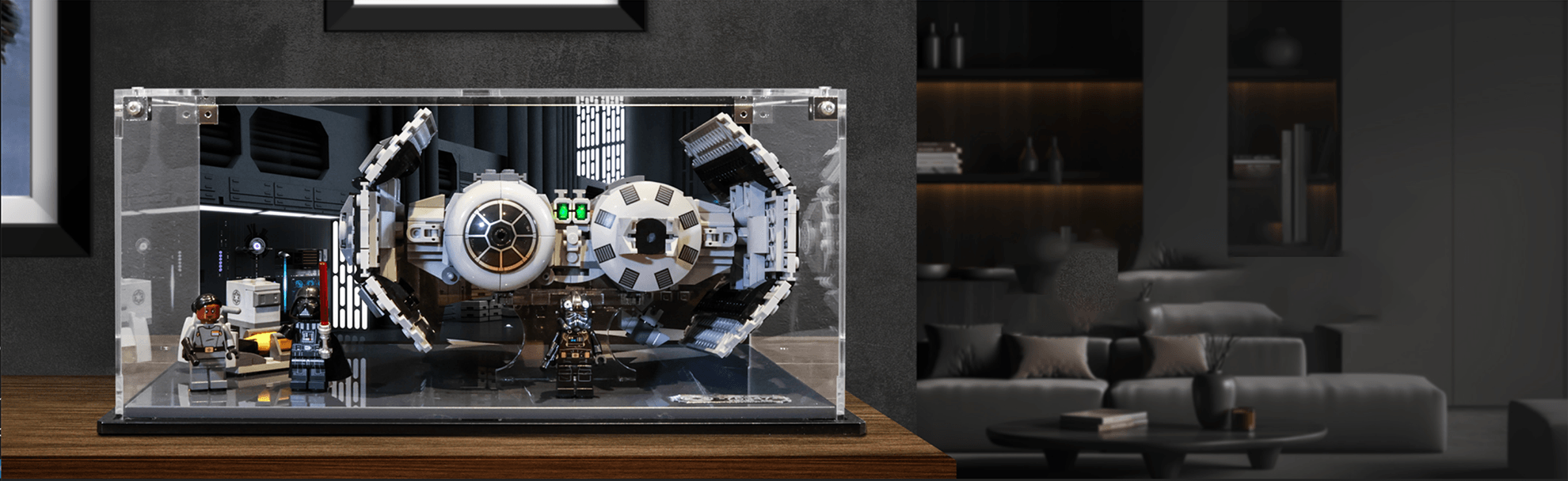
For Star Wars collectors, a space, desert or hangar-inspired backdrop can make a ship feel in motion even while it is safely displayed. For Harry Potter models, a themed setting can bring the atmosphere of the build forward without adding extra loose scenery. A printed base can also hide the visual interruption of shelf surfaces, giving vehicles and helmets a more polished platform.
Choose themed artwork that supports the set rather than competes with it. Highly detailed models often benefit from a background with depth but restrained colours. Simpler silhouettes, such as helmets or BrickHeadz, can carry a bolder graphic treatment. It depends on whether your goal is a museum-clean display or a full fandom moment.
Placement: keep the case looking its best
Acrylic display cases are built to reduce dust and handling, not to make any location risk-free. Avoid placing prized builds in direct, prolonged sunlight where possible. Strong light can affect printed elements, stickers and colours over time, while heat is never ideal for a carefully assembled model. A bright room is fine, but filtered light or a position away from the window is the safer choice.
Keep displays clear of radiators, humid kitchens and busy routes where a sleeve, bag or curious pet can catch an exposed corner. Cases add a welcome layer of defence, but a stable shelf remains the foundation of sensible collection care.
If you are creating a larger wall of displays, vary the height carefully. Putting every case on the same level can make even an impressive collection look flat. Use taller cases for landmark builds, then frame them with lower vehicle, helmet or minifigure displays. Leave a little gap between cases too. The negative space helps each set read as its own achievement.
Assembly and care without the stress
Before assembly, clear a soft, clean workspace larger than the case itself. Remove protective film slowly and only when you are ready to fit each panel, as acrylic can pick up fingerprints and fine dust surprisingly quickly. Handle panels by their edges where possible.
When cleaning, use a soft microfibre cloth with gentle pressure. Avoid rough paper towels or abrasive cleaners, which can mark clear panels and reduce that crisp, glass-like finish collectors want. For a stubborn fingerprint, use a cleaner suitable for acrylic rather than reaching for whatever happens to be under the sink.
It is also worth deciding whether to case the set before or after its final detail check. For a complex model, inspect loose tiles, angled panels and minifigure placement first. Once the case is on, you should be able to enjoy the display rather than immediately needing to lift the cover again.
A collector guide to acrylic cases by display goal
The right choice changes with the collection. If your priority is preservation, select a precisely fitting case with dependable coverage and a stable base. If you are building a statement shelf, prioritise artwork, proportion and a layout that gives the model centre-stage presence. If you rotate sets regularly, favour a design that is straightforward to access and move without dismantling half the room.
For collectors displaying a single flagship build, a custom backdrop and printed base can make the case feel like part of the set itself. For a growing collection, consistency may matter more: coordinated cases create a smart gallery effect even when the themes range from Marvel to motorsport. Brixbox cases are designed around that collector-first balance, pairing set-specific fit with presentation that lets the personality of each build lead.
A good acrylic case does more than keep dust off the bricks. It gives your favourite build a permanent place in the story of your collection – one you will be pleased to look at every time you walk past it.
RECENT POST