LEGO Blog
All the latest Brixbox news, straight from the team.
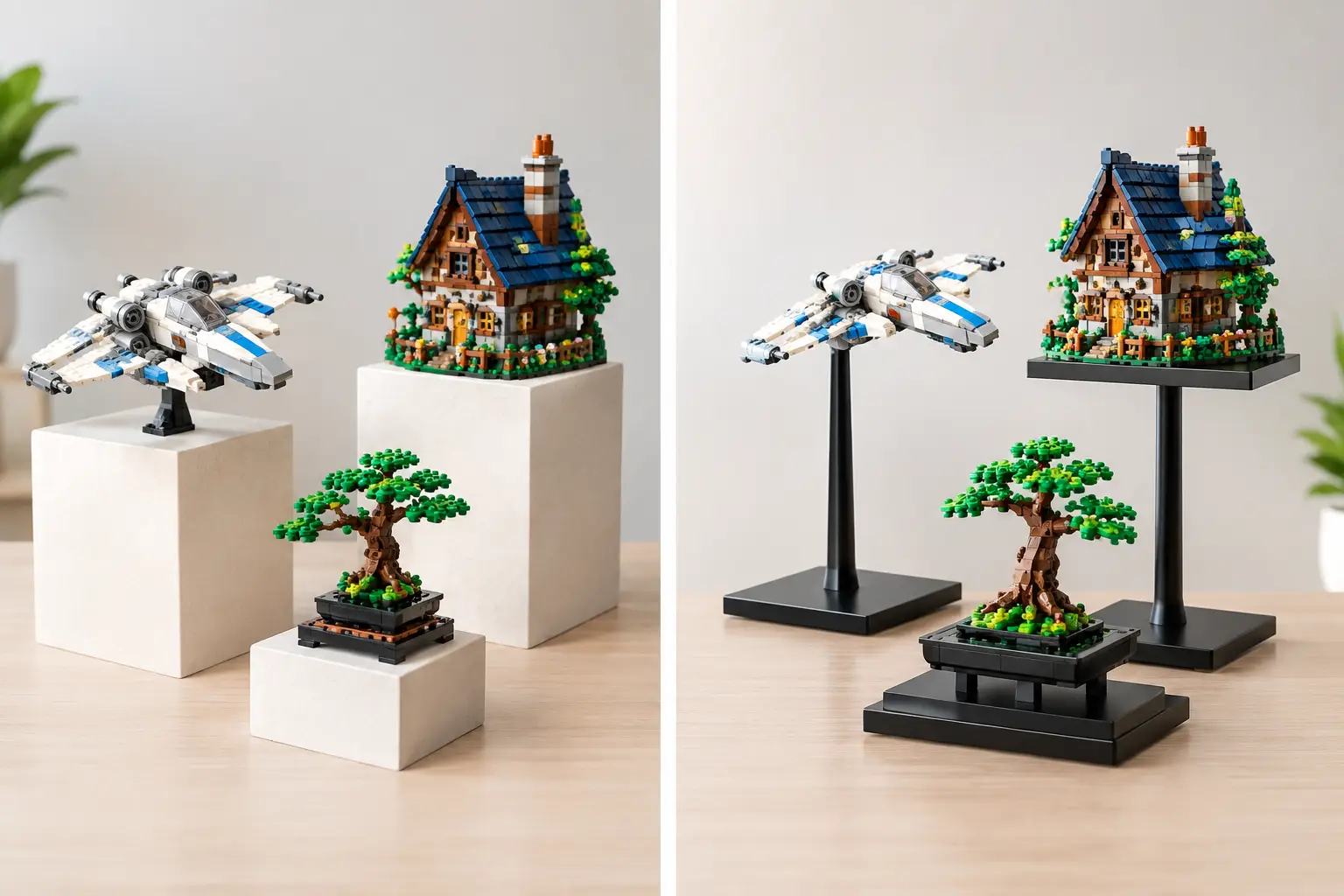
LEGO Plinths Versus Display Stands Compared
A finished LEGO set should not disappear into the background of a bookshelf. Whether it is the sweeping wing of an X-wing, the intricate mechanics of a Technic supercar or a row of treasured helmets, the way you present it changes how it feels to own. When collectors compare LEGO plinths versus display stands, the real question is not which accessory is better in every situation. It is which one gives that particular build the presence, protection and viewpoint it deserves.
LEGO plinths versus display stands: the key difference
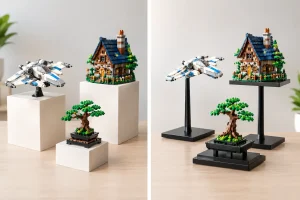
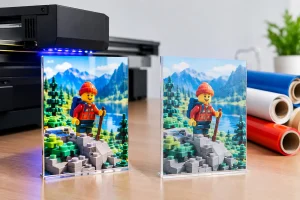
A plinth is a purpose-built base that gives a model a defined stage. It usually sits beneath the set, creating a clean boundary between the build and the furniture below it. Premium plinths may include printed details, themed artwork, a title panel or a carefully designed footprint that frames the set without competing with it.
A display stand supports a model in a raised, angled or vertical position. Its job is to alter the model’s orientation, show off an otherwise hidden side and make more efficient use of shelf space. Think of a Star Wars starship posed as though it is in flight, or a car tilted to reveal its underbody and wheel detail.
They solve different display problems. A plinth grounds a set. A stand brings movement and drama. Some of the most impressive collector displays use both: a stable, printed base below and a precision stand above, often enclosed by an acrylic case.
When a plinth is the stronger choice
Plinths shine when a set already has a natural display position. Large vehicles, modular buildings, dioramas and character models are designed to be admired from a stable base. Elevating them unnecessarily can interrupt the visual story, particularly if the set includes ground detail, scenery or a carefully shaped display base of its own.
A plinth also gives a collection a more considered, gallery-style finish. Rather than placing a model directly on a shelf, you create a deliberate presentation zone around it. This is especially effective for premium sets with broad footprints, such as UCS vehicles, large Technic builds and cinematic scenes. A black or themed printed base can make colours appear sharper while disguising the visual clutter of a busy shelf.
For collectors who value identity as much as organisation, a printed plinth can add genuine atmosphere. A model from a galaxy far, far away looks more at home against a starfield-inspired presentation than it does against a plain wall. A Hogwarts display benefits from a magical backdrop or title treatment that makes the finished build feel like part of the wider world it represents.
There is a practical reason to choose a plinth too. It is generally the simplest option for a heavy, wide or irregularly shaped model. The weight is spread over a larger surface, the centre of gravity remains low, and there is no need to rely on a small connection point. If the model is regularly moved for cleaning or rearranging, a fitted base makes handling feel more controlled.
Plinths work best for scene-building
A plinth is not only a support surface. It can turn a build into a display piece with a beginning and an edge. That matters for sets which tell a story: a dramatic duel, a street scene, a racing car on the grid or a line-up of minifigures. It gives the eye somewhere to start, then guides it back to the model.
The trade-off is footprint. A plinth usually asks for more horizontal space than the set alone. On a deep cabinet or dedicated display shelf, that extra border looks intentional. On a narrow bookcase, it can make an already substantial build feel crowded. Measure the furniture, not just the set, before deciding.
When a display stand earns its place
Display stands are made for models with a great angle hiding in plain sight. Flying vehicles are the obvious example. A ship placed flat on a shelf may look impressive, but a stand can show its silhouette, wing shape and underside in one view. It introduces the sense that the model is travelling through space rather than parked between books.
They are equally useful for vehicles and models with strong technical detail below the chassis. A carefully engineered angled stand can reveal suspension, exhausts, tyres and mechanical features that would otherwise be lost to the shelf. For collectors with limited room, lifting a model also creates valuable visual space around it, making the display feel less dense.
A stand can transform how a collection reads from across the room. Instead of every set sitting at the same height and angle, you gain variation. One model becomes the focal point, while others provide a supporting line around it. This works brilliantly for a themed cabinet, particularly where ships, speeders, cars or helmets need a clear hierarchy.
However, not every build wants to fly. Large, fragile models with broad wings, loose panels or an uneven weight distribution need a stand designed specifically for them. A generic support might look adequate at first, yet place strain on connection points or leave the model vulnerable to an accidental knock. The best display stands follow the set’s structure, supporting it where it is strongest rather than where it is merely convenient.
Stability matters more than spectacle
An elevated display always introduces a little more risk than a set resting on a base. That does not mean stands are unsuitable for valuable models. It means precision matters. Look for a solid base, clear instructions, secure contact points and an angle that feels natural for the model’s weight and shape.
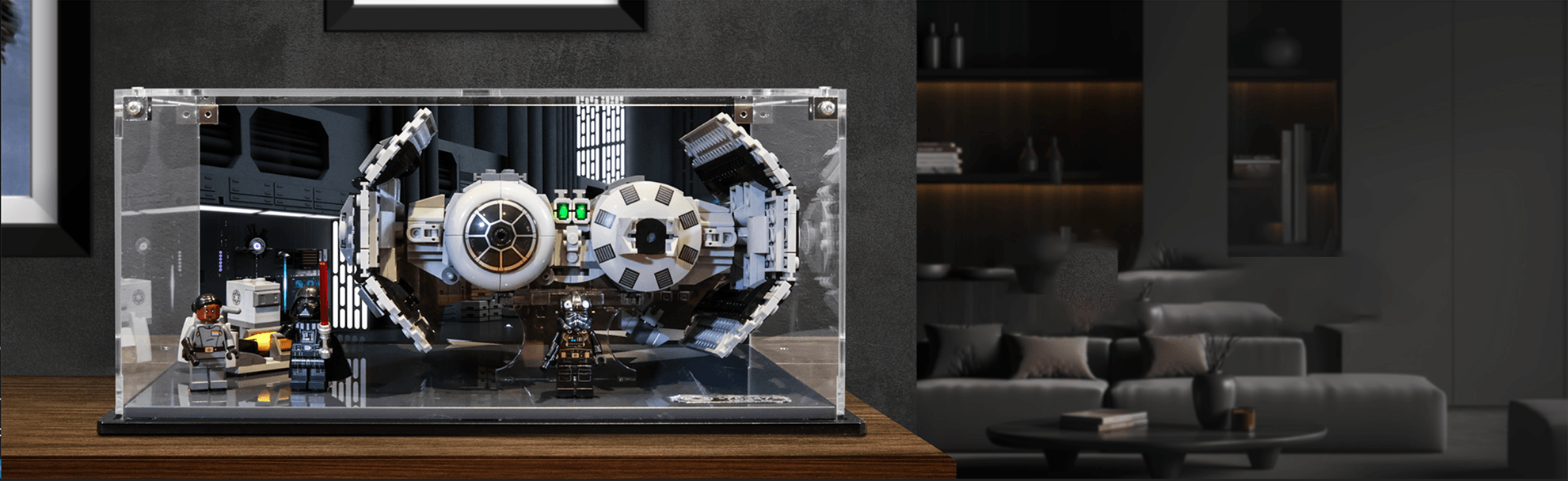
Placement matters too. A stand-mounted set is best kept away from the edge of a shelf, energetic pets, door swings and the spot where somebody drops their keys at the end of the day. If you display in a shared living space, an acrylic case adds another layer of reassurance while keeping dust off exposed studs, canopies and intricate interiors.
Dust protection changes the decision
A plinth alone does not protect a LEGO set from dust. It makes the display look finished, but open displays still collect the fine layer that settles into studs and difficult-to-reach details. A stand alone has the same limitation, and angled models can make cleaning more awkward because their surfaces are less accessible.
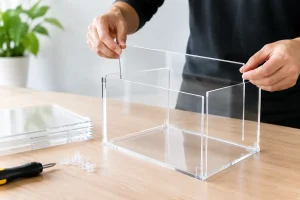
For long-term presentation, the strongest solution is often a set-specific acrylic display case paired with the right internal presentation. A printed base or plinth creates the scene; a stand gives the model its ideal pose; the case shields the finished result from dust, curious fingers and the small knocks that happen in a busy home.
This combination is particularly worthwhile for sets that take hours to build, cost a significant amount or carry personal meaning. Collectors do not put that care into every tile, sticker and minifigure only to let the finished model become another surface to dust each weekend.
Choose for the set, then for the room
Start with the model’s intended visual story. If its strength is detail across a wide, grounded scene, choose a plinth. If its defining feature is motion, an aggressive driving angle or a sculptural underside, choose a display stand. If both descriptions fit, look for a display solution that combines them rather than forcing a compromise.
Next, consider viewing height. A low shelf favours a raised or angled stand because it brings the best details into sight. At eye level, a plinth can be all a model needs, especially if the build already has a dramatic silhouette. In a glass cabinet, mixing heights can prevent a collection from becoming a flat row of similarly posed sets.
Finally, be honest about the level of finish you want. A simple stand may be perfect for a rotating display or a model you frequently rebuild. But for the set you saved for, built over a long weekend and cannot stop looking at, presentation deserves the same thought as the build itself. Brixbox display solutions are designed around that collector instinct: the idea that the final brick is not the end of the experience, but the beginning of how you showcase it.
Give each model the display it calls for. The right plinth or stand does more than hold a LEGO set in place – it makes room for the story, craftsmanship and pride already built into every piece.
RECENT POST