LEGO Blog
All the latest Brixbox news, straight from the team.
UV Printing Versus Vinyl for LEGO Displays
A completed LEGO set deserves more than a spare shelf and a weekly dusting. When choosing UV printing versus vinyl for a display case, the difference is not merely decorative. It affects how the artwork sits behind your build, how well it stands up to everyday display, and whether the finished piece feels like a collector’s centrepiece or an afterthought.
For a detailed UCS Star Wars model, a cinematic Harry Potter scene or a Technic supercar, the right printed finish can turn a clear acrylic case into a setting worthy of the build itself. Both UV printing and vinyl have a place, but they create very different results.
UV printing versus vinyl: the key difference
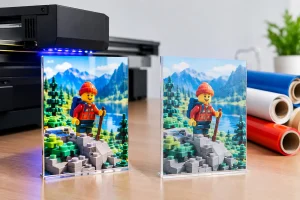
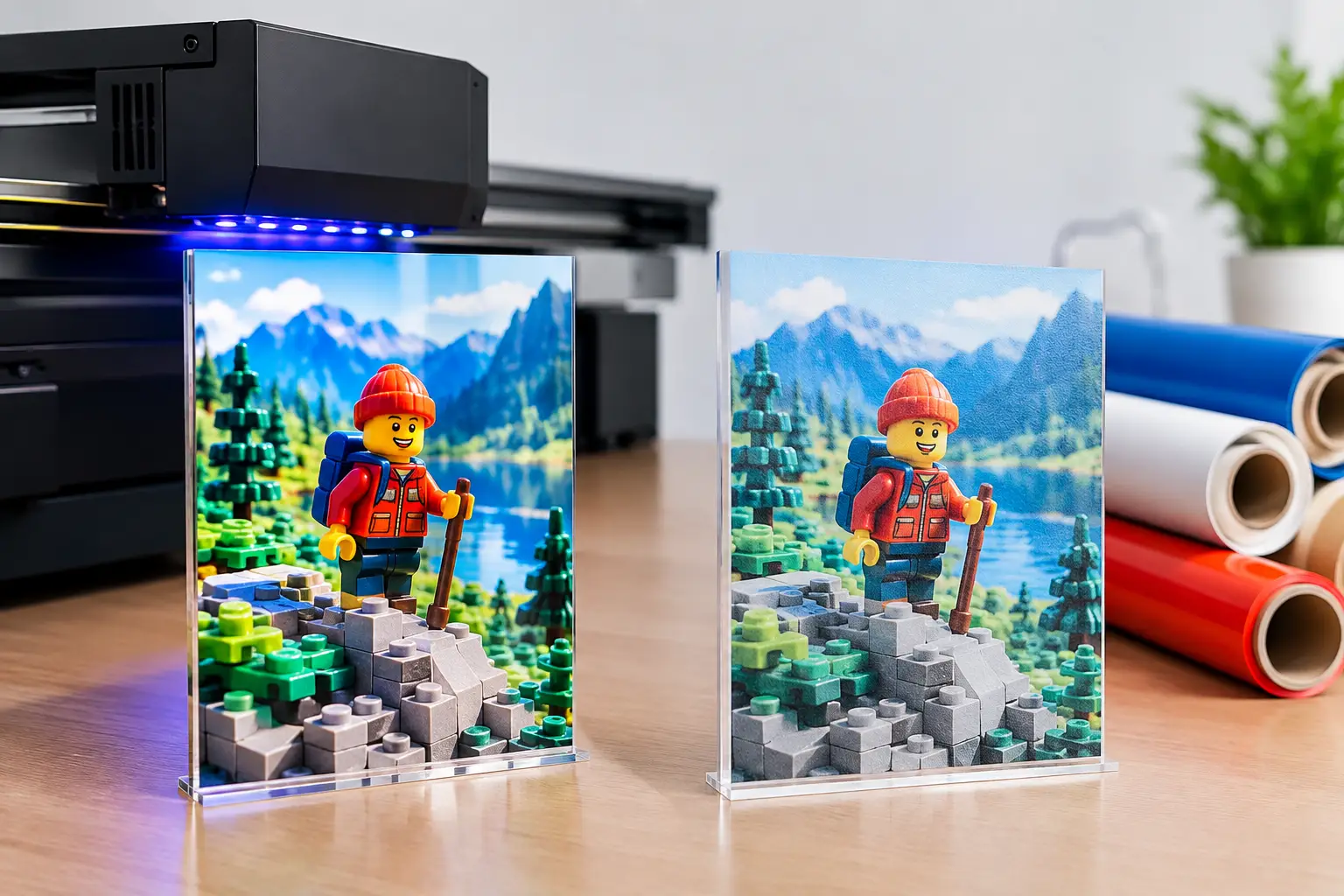
UV printing applies ink directly onto the chosen surface, such as an acrylic display base or background panel. The ink is cured immediately with ultraviolet light, creating a crisp, durable printed design that becomes part of the display component itself.
Vinyl is a separate printed or coloured film. It is applied to a surface after production, usually with an adhesive backing. It can produce bold graphics and is familiar to anyone who has seen decals, vehicle wraps or cut lettering, but its physical presence remains distinct from the panel beneath it.
That distinction matters when your display is designed around a specific set. A printed base can frame the landing gear of a LEGO Star Wars ship, create a road surface beneath a Technic car or add a themed setting around a minifigure scene without looking like a sticker placed on at the last moment. Vinyl can still look smart, especially when expertly applied, but UV printing generally delivers the more integrated, premium finish.
Why UV printing suits collector display cases
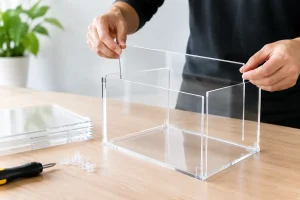
Acrylic display cases are all about clean lines, clarity and precision. UV printing complements that approach because the artwork can be positioned exactly where it needs to be. Rather than adding another layer to the surface, the print sits directly on the panel, preserving a tidy, made-for-the-set appearance.
The level of detail is a major advantage. Fine architecture behind a LEGO Hogwarts build, a galaxy backdrop for a helmet collection or technical graphics for a motorsport model can be reproduced with sharp lines, vivid colour and carefully placed highlights. White ink can also be used beneath colours where needed, helping artwork remain bright and legible on clear or coloured materials.
There is also a practical benefit. A quality UV-printed panel has no vinyl edges to catch, peel or collect dust around. For collectors who regularly clean their display shelves, that is a small but satisfying detail. The artwork remains protected inside the case, while the smooth panel is straightforward to wipe around with a soft, suitable cloth.
Most importantly, UV printing looks intentional. A set-specific display should enhance the model without competing with it. The best designs add atmosphere, scale and context, then let the bricks remain the star of the show.
Printed bases create a stronger sense of place
A background sets the scene, but a printed base grounds the model within it. This is especially effective for sets with a strong sense of movement or location. A Batmobile benefits from a dark city-inspired surface; a Formula 1 car looks at home on a circuit-style base; a fantasy build can feel more complete with terrain, stonework or map-inspired detailing beneath it.
It is not only about spectacle. A base design can visually organise a display, defining where the model belongs and helping the whole case look balanced. On a shelf filled with different themes, that extra structure makes a collection feel curated rather than crowded.
Where vinyl still makes sense
Vinyl is not automatically the lesser choice. It can be the right option when flexibility matters more than a permanent, integrated presentation. If you enjoy changing the look of a cabinet, adding temporary labels or experimenting with a custom arrangement, vinyl offers a practical route.
It is also useful for simple graphics, lettering and larger blocks of colour. A carefully fitted vinyl design can give a clean result, particularly on flat surfaces with minimal handling. For a display project that is not tied to one specific set, or for a collector who expects to refresh the design later, its replaceable nature can be a genuine advantage.
The trade-off is that vinyl needs excellent application. Even a premium print can lose impact if there are air bubbles, misaligned edges, creases or visible seams. Adhesive films can also be more vulnerable at corners over time, particularly if the item is moved frequently, exposed to heat or repeatedly cleaned around the edges.
For a permanent display case built to celebrate one prized set, these compromises are often why collectors lean towards UV printing. For a changeable display surface or temporary personalisation, vinyl remains a useful tool.
Comparing finish, durability and design freedom
The choice becomes clearer when you focus on how the display will be used. UV printing is usually the stronger option for a polished, long-term presentation. It offers a flat, professional finish, fine detail and artwork that is designed into the panel. Vinyl offers more freedom to remove, replace or reposition the graphic, but it introduces an additional material layer and adhesive into the equation.
Durability depends on the environment and care given to the display. Neither method is a reason to place a treasured model in harsh direct sunlight or near a heat source. Yet UV-cured printing is particularly well suited to display components that will remain in place for years, because there is no applied film working loose at the edges.
Design freedom is more nuanced. Vinyl is flexible in the sense that it can be swapped out. UV printing is flexible in the sense that the artwork itself can be highly detailed, layered and tailored to the geometry of a particular base or backdrop. If your vision is a one-off themed presentation for a specific LEGO set, that second type of freedom is often more valuable.
Match the finish to the set you are displaying
A small BrickHeadz figure or minifigure display may only need a subtle printed nameplate or graphic detail. Here, either method can work, depending on whether you want to update the labels later.
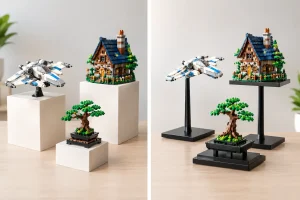
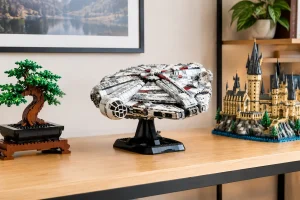
For larger centrepiece sets, UV printing earns its place quickly. The scale of a UCS ship, a large Disney castle, a Lord of the Rings scene or a detailed Technic model calls for presentation that feels equally considered. A bespoke background can add depth behind the build, while a printed base can create visual drama without adding loose accessories that compete for space inside the case.
Consider the viewing angle too. A background is most effective when the case will be viewed mainly from the front, such as on a bookcase, desk or media unit. A printed base has impact from more angles and is often ideal for freestanding displays. For the full collector treatment, the two can work together: a backdrop to set the story, and a base to anchor the build.
Questions to ask before choosing
Before settling on a finish, think about whether the display is permanent, how often you expect to move it and what you want people to notice first. If the answer is the LEGO model itself, choose artwork that supports its colours, shape and theme rather than overwhelming it.
Ask whether you are displaying a single hero set or building a broader collection. A single hero model can carry a more dramatic scene. A row of cases may benefit from consistent base treatments and restrained backgrounds, creating a gallery-like result across the shelf.
Finally, be realistic about application. If you want a faultless finish without the challenge of applying a film yourself, direct UV printing removes much of the uncertainty. This is one reason purpose-built display solutions are so satisfying: the dimensions, artwork and presentation are considered together from the start.
A great display does more than keep dust off your build. It gives the hours spent building, collecting and admiring it a proper place in your home. Choose vinyl when changeability is the priority; choose UV printing when you want the display to feel as considered and collectable as the set inside it.
RECENT POST