LEGO Blog
All the latest Brixbox news, straight from the team.
LEGO Displays That Make Every Build Worth Seeing
A finished build deserves more than a spare patch of shelf between books, cables and everyday clutter. The best LEGO displays turn the final click of the last brick into the start of something new: a proper showcase that protects the model, frames its story and makes you stop to admire it every time you walk past.
For collectors, this matters most with the sets that took hours to build, carry real sentimental value or command serious space and investment. Whether it is a Star Wars UCS ship, a detailed Technic supercar, Hogwarts architecture or a row of characterful BrickHeadz, presentation is part of the collecting experience. A well-planned display gives every build the attention it earned.
What makes LEGO displays feel premium?
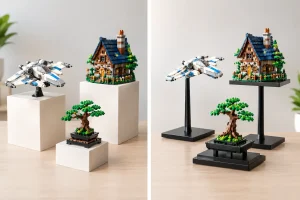
The difference between storage and display is intention. Storage keeps a set out of the way. A display makes it the focal point. It gives the model breathing room, removes visual distractions and protects the fine details that can disappear when a build is surrounded by household dust.
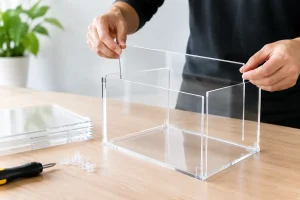
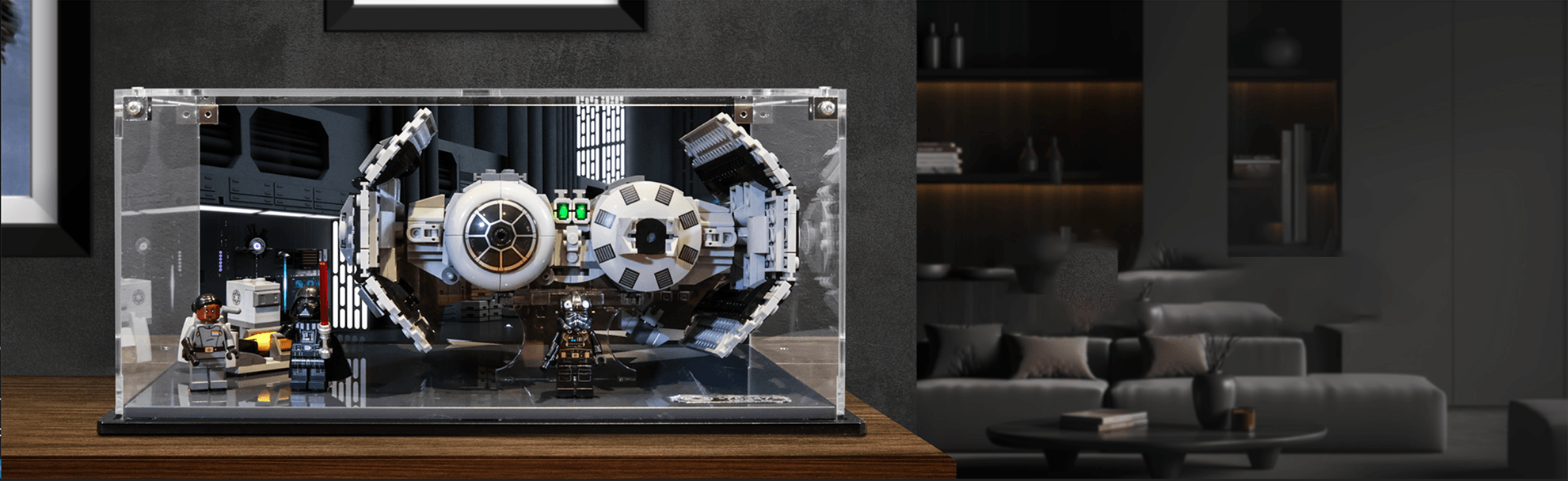
A set-specific acrylic case is often the strongest starting point because it is designed around the model rather than asking the model to fit a generic box. The right footprint avoids awkward empty space, while enough height and depth allow wings, antennae, raised sections and dramatic silhouettes to be seen clearly. It also creates a physical boundary, which is particularly useful for models displayed in busy rooms, homes with pets, or shelves within easy reach of curious hands.
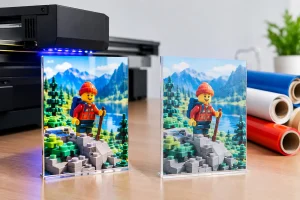
Then there is the base. A plain shelf can work for a minimal collection, but a printed base gives the build context. A racing-inspired floor beneath a Technic car, a dark hangar-style setting for a starship or a magical backdrop behind a Harry Potter set adds depth without crowding the model itself. It should support the scene, not compete with it.
Plan your LEGO display before choosing a case
A brilliant case cannot solve a rushed layout. Before measuring a shelf or clearing a cabinet, decide how you want the collection to be experienced. Some collectors prefer one headline set per surface, while others enjoy a carefully organised themed wall. Neither approach is wrong, but they require different choices around scale, spacing and lighting.
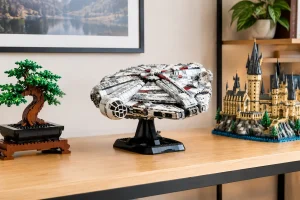
Start with the model that matters most. It may be your largest build, your newest centrepiece or the set you would be most disappointed to see covered in dust. Give that build the best sightline first, ideally at eye level or just below it. A large set placed too high loses its detail, while a small but meaningful model can become invisible when it is surrounded by bigger builds.
Leave room for the collection to grow
The temptation is to fill every available shelf. It looks satisfying for a week, then the next must-have set arrives. Leave space around a centrepiece and, if possible, reserve one or two future positions. This keeps the arrangement calm and gives you freedom to rotate seasonal favourites, newly completed projects or builds that deserve a fresh moment in the spotlight.
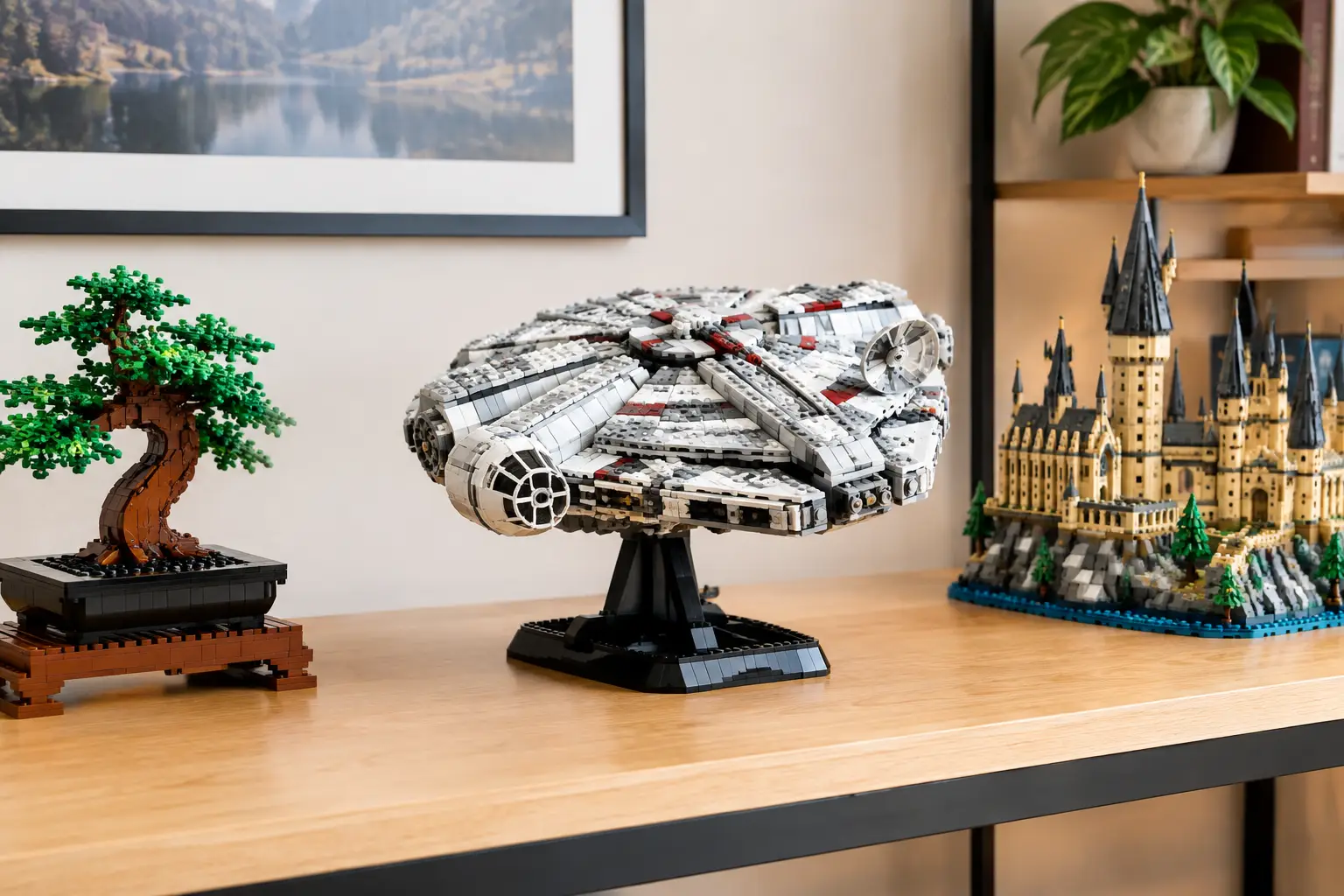
Scale is equally important. A collection of helmets, vehicles and minifigures can look spectacular together, but only if each category has its own visual rhythm. Grouping similar heights creates a cleaner line, while deliberately placing a larger model at the centre can create a gallery-style focal point. Think in layers too: taller models work well at the rear, with smaller display stands or minifigures brought forward where they remain visible.
Measure the complete build, not the box
Set dimensions are useful, but a display case should be chosen for the built model and the way you want it positioned. Measure the widest, tallest and deepest points, including protruding elements. If you plan to angle a vehicle, pose a figure or add a minifigure scene alongside the main build, account for that extra space before ordering.
Also measure the display surface itself. Check shelf depth, cabinet height and clearance for lifting the case on and off. Acrylic cases offer excellent visibility, but they still need sensible access for cleaning, repositioning and enjoying the model up close. A case that technically fits yet leaves no room to handle comfortably will soon become frustrating.
Open shelves or enclosed display cases?
Open shelving has one obvious advantage: it is easy. You can place a model down, rearrange it whenever inspiration strikes and keep the initial outlay low. For frequently handled builds, casual creations or sets that are regularly rebuilt, this flexibility can be exactly right.
The trade-off is dust. It settles in studs, between transparent elements, across decals and inside detailed interiors with surprising speed. Cleaning a large model is not always a quick job. It often means navigating delicate parts, loose accessories and areas that cannot be reached without partially dismantling the build. Sunlight, accidental knocks and airborne grease in kitchens or high-traffic spaces can add further risks.
Enclosed LEGO displays ask you to make a more deliberate commitment, but they reward that decision with a neater, more permanent presentation. Clear acrylic keeps the model visible from multiple angles while helping to reduce dust and casual handling. For premium, intricate or sentimental sets, the case becomes part of the collection rather than an afterthought.
It does depend on the set. A small desk model may only need a compact stand. A large collector set with exposed mechanisms, fine greebling or lots of white elements benefits far more from enclosed protection. The goal is not to case every brick you own. It is to give your display-worthy builds the level of care they deserve.
Build a scene, not just a shelf
Themed presentation is where a collection starts to feel personal. A background can suggest a galaxy far away, a wizarding world, a dramatic city skyline or the energy of the racetrack, while a printed base grounds the model in a believable setting. The best designs leave the model as the hero, using colour, texture and perspective to amplify what is already there.
This is especially effective when a set has a strong identity. A spacecraft gains impact from a deep-space or hangar backdrop. A superhero build can look more cinematic against a city-inspired scene. A Disney display can feel playful without becoming childish. For collectors who have spent years choosing themes with care, a backdrop gives each build a visual home.
Lighting can complete the effect, but restraint pays off. Soft ambient light around the display shelf is usually kinder to acrylic and easier on the eye than harsh spotlights aimed directly at the case. Avoid placing prized models in prolonged direct sunlight, particularly if your display includes bright colours, printed elements or stickers you want to preserve.
Four display mistakes worth avoiding
There are a few habits that make even an exceptional collection feel less considered:
- Packing sets edge to edge, which hides details and makes dusting difficult.
- Choosing a generic case with too much empty volume or too little clearance for fragile features.
- Mixing every theme, scale and colour on one surface without a clear focal point.
- Treating backgrounds as decoration alone instead of selecting artwork that complements the build.
A better display usually comes from editing, not adding. Give the collection a hierarchy. Decide what leads, what supports it and what can move to another shelf. A smaller arrangement with strong spacing, protection and a coherent theme will nearly always look more impressive than a crowded room full of remarkable sets competing for attention.
Make the finished build the reward
Building is only half the ritual. The final stage is placing the model where it can be appreciated, remembered and protected. Brixbox display cases, stands and themed presentation options are designed for collectors who want that moment to feel as considered as the build itself.
Choose a display that suits the model, the room and the way you collect. Give a treasured set space to tell its story, keep the dust at bay and let every detail do what it was designed to do: make you look twice.
RECENT POST