LEGO Blog
All the latest Brixbox news, straight from the team.
How to Protect LEGO from Dust Properly
You finish the build, place it on the shelf, step back to admire it – and a few weeks later the magic has gone slightly flat. Dust settles into studs, clings to minifigures, dulls transparent parts and somehow finds every awkward gap in the model. If you have been wondering how to protect LEGO from dust without turning display into a constant maintenance job, the answer starts with how and where you showcase it.
For casual builds, a quick dust now and then might be enough. For collector sets, retired models, and display pieces you genuinely care about, that approach gets old fast. Dust is more than a cosmetic annoyance. It softens detail, makes colours look tired, and turns cleaning into a risky job on delicate assemblies. The better your display solution, the less often you need to touch the set at all.
Why dust is such a problem for LEGO displays
LEGO is brilliant to build and awkward to clean. That is the trade-off. Studs, textured surfaces, greebling, exposed interiors and tiny printed elements all give a set its character, but they also give dust plenty of places to settle.
Once dust has been sitting for a while, it stops being the light, easy-to-remove layer most people imagine. It can cling to slopes, gather in corners, and become surprisingly stubborn around transparent canopies, vehicle windscreens and display plaques. In homes with pets, open windows or regular foot traffic, that build-up happens even faster.
The bigger issue is handling. Every cleaning session increases the chance of knocking off a blaster, antenna, wing panel or decorative sub-build. If you collect UCS ships, helmets, modular buildings or Technic models, you already know that some sets look solid until you try to clean them. Then one small brushstroke becomes an unplanned rebuild.
The best answer to how to protect LEGO from dust
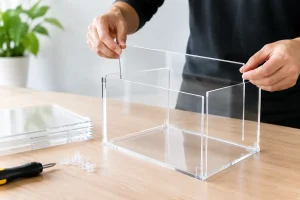
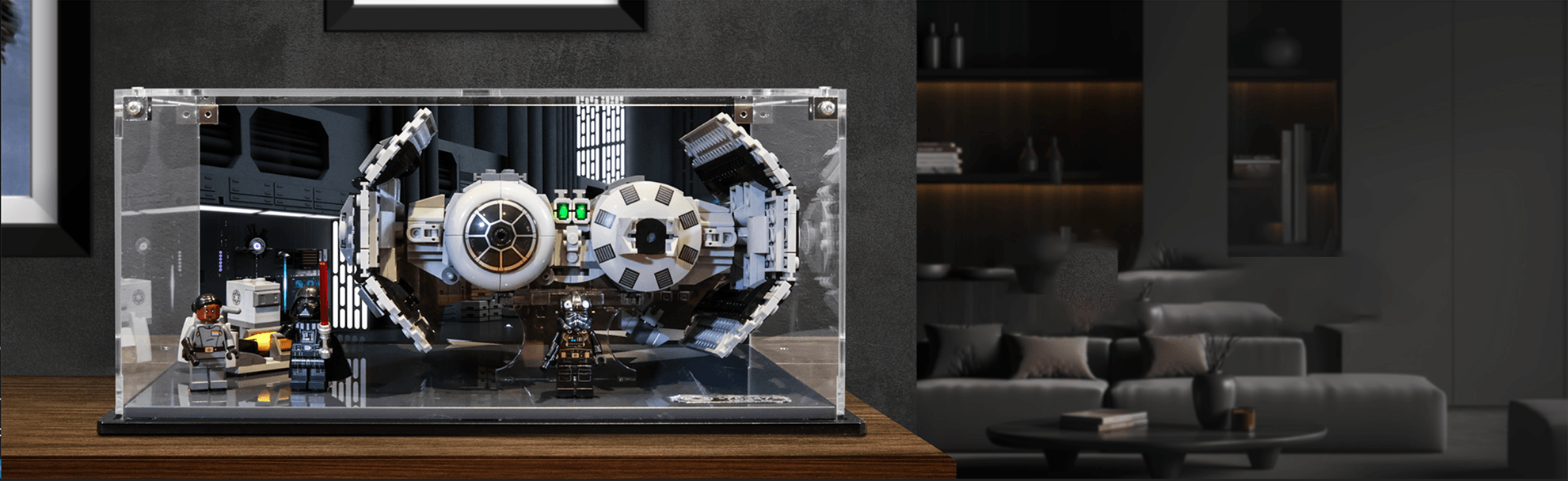
If you want the most effective answer to how to protect LEGO from dust, it is simple: keep the model enclosed. An acrylic display case does what regular open shelving cannot. It creates a physical barrier between your set and the room, dramatically reducing dust build-up while also protecting the model from accidental knocks, curious hands and general wear.
This matters even more for collectors who display premium sets in living rooms, offices or bedrooms rather than dedicated hobby spaces. Open shelves may look tidy on day one, but over time they ask a lot from you. Cases shift the effort from repeated cleaning to proper presentation.
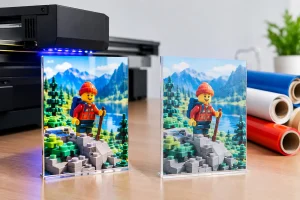
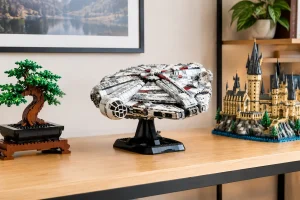
A good case also improves the look of the set. That part is often overlooked. Protection is practical, but display quality is emotional. A well-fitted acrylic case with a printed base or themed background makes the build feel finished, almost museum-like, while keeping the set cleaner for longer. For collectors who care about showing off a Millennium Falcon, Hogwarts Castle, a helmet line-up or a favourite Technic car properly, that difference is huge.
Open shelves, cabinets and cases – what actually works?
Not every display method performs the same way. Open shelving is the least protective option. It is cheap, accessible and easy to rearrange, but it leaves every exposed surface vulnerable. If your collection is on open shelves, dusting will become part of the hobby whether you like it or not.
A household cabinet with doors is better than open display, but it still depends on the fit. Many standard furniture cabinets are not sealed closely enough to keep dust out over time, and they are rarely designed around the footprint or height of specific LEGO sets. That can leave your display feeling cramped, generic or visually disconnected.
A purpose-built acrylic case is the strongest option because it is designed around the model rather than treating it as an afterthought. The fit is cleaner, the presentation is sharper, and the set remains visible without being exposed. That balance matters if you want protection without hiding the build away.
Where you place your LEGO matters
Even with a case, location still affects how much maintenance your collection needs. Sets displayed near radiators, open windows, busy hallways or soft furnishings tend to collect more airborne particles. Kitchens are especially tough environments because grease and dust can combine into a film that is harder to remove. If possible, keep prized models away from cooking areas and heavy traffic zones.
Sunlight is another consideration. Dust may be the immediate problem, but long-term display also means thinking about fading. Direct sun can affect printed elements, stickers and brighter colours over time. A display case helps reduce handling and dust, but placement still plays a major part in preservation.
If you are arranging a room from scratch, aim for a stable surface in a lower-traffic area with controlled light. It does not need to be a dedicated collector room. It just needs to work with the set instead of against it.
How to clean LEGO safely when dust does appear
Even the best setup is not completely maintenance-free. Some dust may still appear during building, repositioning or occasional case opening. When that happens, gentle cleaning is the key.
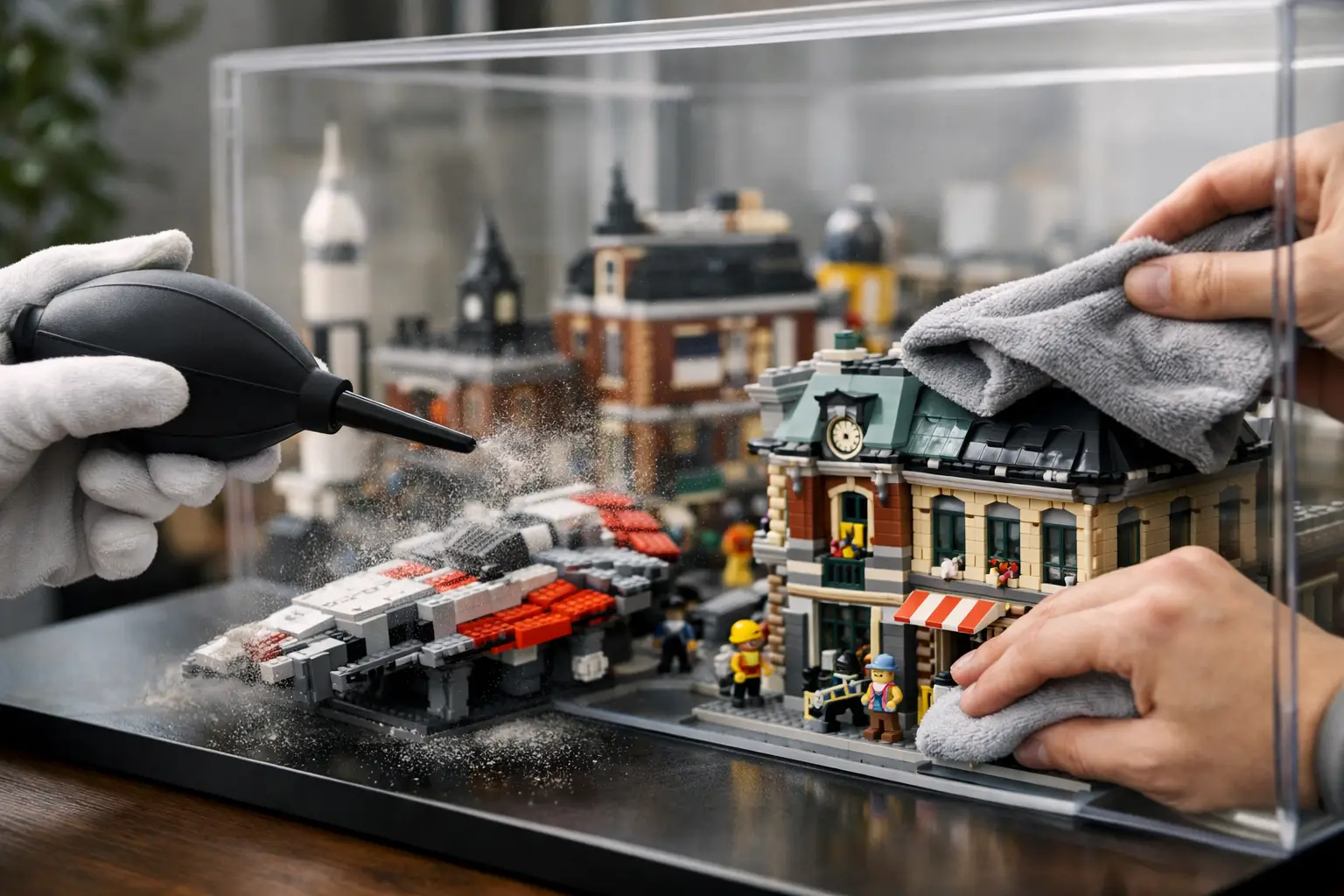
Start with the least aggressive method. A soft make-up brush or clean anti-static brush is usually enough for light dust on exposed areas. Brush slowly and support fragile sections with your other hand if needed. Quick, rough movements are where small details get dislodged.
Compressed air can help in tight areas, but use it carefully. Too much force can shift lightweight parts or scatter loose elements. If you are dealing with a delicate display model, brushing is often safer than blasting air into every gap.
Microfibre cloths are useful for the outside of acrylic cases, not for complicated LEGO surfaces. On the set itself, cloths can snag on protruding elements. For transparent parts, a very gentle touch is essential because smudges and scratches show up quickly.
If a set has been left exposed for months and the dust has really settled in, cleaning becomes slower and less satisfying. That is exactly why prevention is better than repeated rescue missions.
Protecting built sets versus stored sets
There is a difference between display protection and storage protection. If a model is built and meant to be seen, dust control should support presentation. That points strongly towards enclosed display. If a set is being stored for a move, renovation or rotation, the priority shifts to stability and separation.
For stored built sets, avoid wrapping them tightly in materials that shed fibres or press against delicate sections. Loose boxing can protect from dust, but it is not ideal for long-term presentation because the model is out of sight and more vulnerable to pressure damage when moved.
Collectors with rotating seasonal or themed displays often do best with a mix of solutions – premium cases for hero sets and careful boxed storage for secondary builds waiting their turn.
Why serious collectors choose display-first protection
There is a point where dusting stops feeling like upkeep and starts feeling like a tax on the hobby. That usually happens when your collection includes larger sets, rarer models or display pieces with real sentimental value. At that stage, proper protection is not overkill. It is the sensible next step.
Display-first protection respects the time you spent building, the money you spent collecting, and the visual impact the set is supposed to have. It keeps details crisp, reduces cleaning risk and makes the whole collection feel more intentional. That is why serious collectors increasingly treat cases and stands as part of the finished display rather than an optional extra.
For set-specific presentation, brands such as Brixbox have pushed that idea further by creating cases designed around exact models and themes, with premium finishes that protect and elevate the build at the same time. For collectors, that is the sweet spot – less dust, less handling, and a display that looks like it belongs in the collection from the start.
How to protect LEGO from dust for the long term
Long-term protection is really about reducing contact. Less airborne dust, fewer fingers on the build, fewer emergency cleans, fewer accidental breaks. Every choice should move in that direction.
If you only remember one thing, make it this: the more exposed your set is, the more often you will need to interfere with it. And the more often you interfere with it, the more likely you are to damage the details you were trying to preserve.
The best LEGO displays do not just show the model off. They let it stay sharp, clean and impressive long after the final brick clicks into place. Give your favourite builds that kind of finish, and you can spend less time dusting and more time enjoying the view.
RECENT POST